 Indietro
Water: Structure, Properties, and Biological Significance
Guida di studio - Note intelligenti
 Appunti personalizzati basati sui tuoi materiali, ampliati con definizioni chiave, esempi e contesto.
Water: Structure and Hydrogen Bonding
Structure of Water Molecule
Water is a small, polar molecule composed of two hydrogen atoms and one oxygen atom (H2O). The oxygen atom is more electronegative, resulting in partial negative (δ-) and partial positive (δ+) charges on the molecule. - Polarity: The uneven distribution of electrons creates a dipole, making water polar. - Hydrogen Bonds: Water molecules form hydrogen bonds with each other, which are weak attractions between the hydrogen atom of one molecule and the oxygen atom of another. - Example: Hydrogen bonding is responsible for many of water's unique properties. 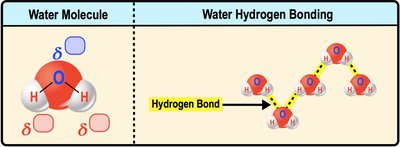
Emergent Properties of Water
Overview of Emergent Properties
Water's hydrogen bonding gives rise to several emergent properties essential for life. These include cohesion, adhesion, surface tension, lower density of ice compared to liquid water, high specific heat, high heat of vaporization, and its role as a universal solvent. - Cohesion: Water molecules stick to each other. - Adhesion: Water molecules stick to other substances. - Surface Tension: The difficulty in breaking the surface of water due to cohesive forces. - Density: Ice is less dense than liquid water, allowing it to float. - Specific Heat: Water resists temperature changes. - Heat of Vaporization: Water requires significant energy to evaporate. - Universal Solvent: Water dissolves many substances, facilitating chemical reactions. 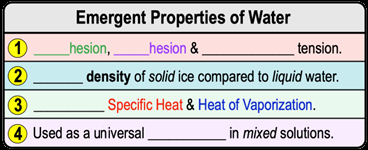
Cohesion, Adhesion, and Surface Tension
Cohesion and Adhesion
Cohesion refers to water molecules sticking to each other, while adhesion refers to water molecules sticking to other polar or charged substances. These properties are critical for processes like capillary action in plants. - Surface Tension: The result of cohesive forces at the surface of water, allowing small objects or organisms to rest on the surface without sinking. - Example: A spider walking on water or a paperclip floating on water demonstrates surface tension. 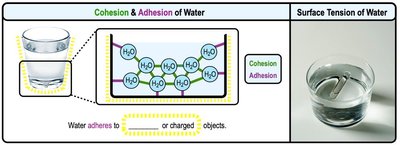
Density of Water: Liquid vs. Solid
Density Differences and Biological Importance
Liquid water molecules are closely packed and constantly form and break hydrogen bonds. In solid ice, molecules are arranged in a stable lattice, making ice less dense than liquid water. - Ice Floats: The lower density of ice allows it to float, insulating the water below and supporting aquatic life during freezing temperatures. - Example: Icebergs float because of the stable hydrogen bond lattice in ice. 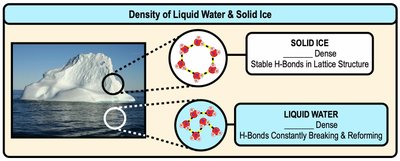
Thermal Properties of Water
Kinetic Energy, Temperature, and Thermal Energy
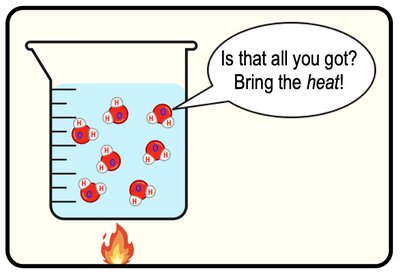
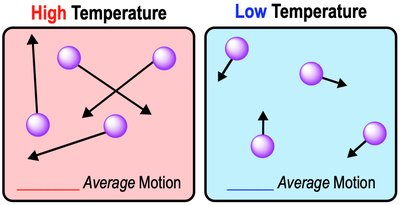
Kinetic energy is the energy of motion, and temperature measures the average kinetic energy of molecules. Thermal energy is the total kinetic energy in a substance. - High Specific Heat: Water's high specific heat means it can absorb or release large amounts of heat with little change in temperature, stabilizing environments. - Formula: (where Q = heat, m = mass, c = specific heat, ΔT = temperature change) - Example: Lakes heat up and cool down more slowly than the surrounding environment. 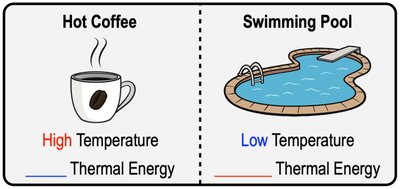
Heat of Vaporization
Water's high heat of vaporization is due to the abundance of hydrogen bonds, requiring significant energy to convert liquid water to vapor. - Evaporation: The phase transition from liquid to gas. - Biological Importance: Evaporation helps organisms cool down (e.g., sweating). 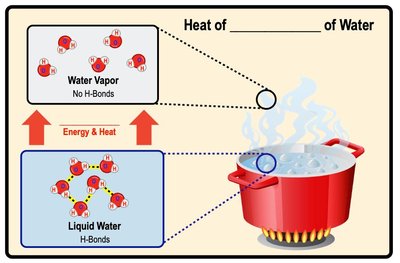
Water as the Universal Solvent
Solvent Properties and Solution Formation
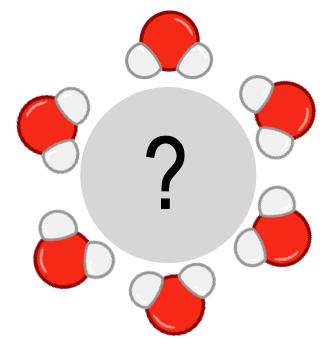
Water is called the "universal solvent" because it dissolves many substances, especially polar and ionic compounds. - Solvent: The substance doing the dissolving (usually water). - Solute: The substance being dissolved. - Solution: A homogeneous mixture of solute and solvent. - Hydration Shell: Water molecules surround solute ions, stabilizing them in solution. 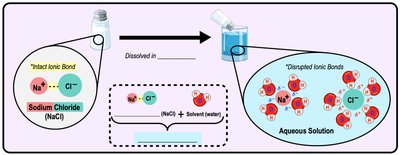
Homogeneous vs. Heterogeneous Solutions
Homogeneous solutions are uniformly mixed, while heterogeneous solutions are unevenly mixed. - Example: Salt water is homogeneous; oil and water is heterogeneous. 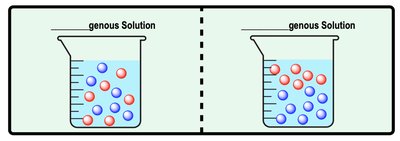
Hydrophilic vs. Hydrophobic Substances
Hydrophilic substances dissolve in water due to their affinity for it (polar or charged molecules). Hydrophobic substances do not dissolve in water (non-polar molecules like fats and oils). 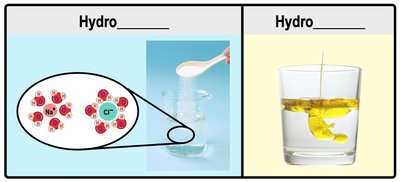
Acids, Bases, and pH
Acids and Bases
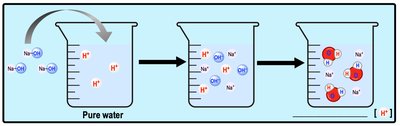
Acids increase the concentration of H+ ions in solution, while bases decrease it (often by increasing OH- ions). - Acid Example: Hydrochloric acid (HCl) dissociates in water to release H+. - Base Example: Sodium hydroxide (NaOH) dissociates in water to release OH-. 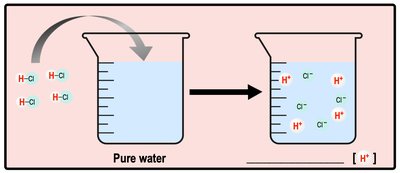
pH Scale
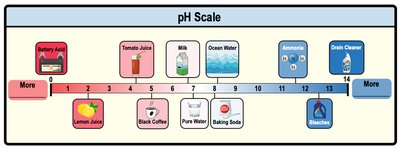
The pH scale measures the concentration of H+ ions in solution, ranging from 0 (acidic) to 14 (basic), with 7 being neutral. - Formula: - Neutral Solution: [H+] = [OH-] - Acidic Solution: [H+] > [OH-] - Basic Solution: [H+] < [OH-] 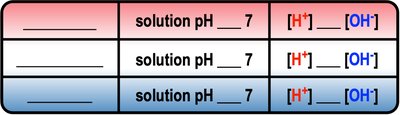
Buffers and Biological Importance
Buffer Systems
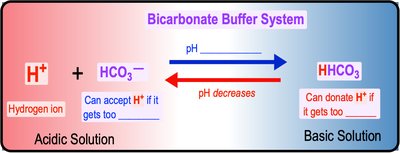
Buffers are substances that resist changes in pH when acids or bases are added. They help maintain homeostasis in organisms. - Bicarbonate Buffer System: In blood, the bicarbonate buffer system maintains pH by accepting or donating H+ ions as needed. - Example: The reaction: 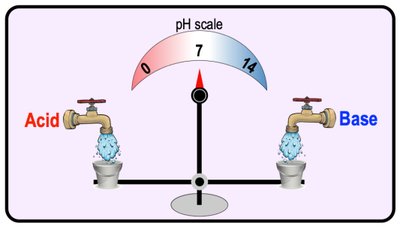
Summary Table: Properties of Water
Property | Description | Biological Importance |
|---|---|---|
Cohesion | Water molecules stick to each other | Enables transport in plants |
Adhesion | Water molecules stick to other substances | Capillary action |
Surface Tension | Difficulty breaking water's surface | Allows small organisms to walk on water |
Density | Ice is less dense than liquid water | Ice floats, insulating aquatic life |
Specific Heat | Resists temperature changes | Stabilizes environments |
Heat of Vaporization | Requires much energy to evaporate | Cooling mechanism (sweating) |
Universal Solvent | Dissolves many substances | Facilitates chemical reactions |
Additional info:
- Water's unique properties are fundamental to life, influencing climate, biological processes, and cellular function. - The pH scale is logarithmic; a change of one unit represents a tenfold change in H+ concentration. - Buffers are critical in maintaining physiological pH, especially in blood and cellular environments.
