 Indietro
Calculus I: Derivatives – Definitions, Rules, and Applications
Guida di studio - Note intelligenti
 Appunti personalizzati basati sui tuoi materiali, ampliati con definizioni chiave, esempi e contesto.
Section 3.1: Introducing the Derivative
Tangent Lines
The concept of the tangent line is fundamental in calculus. The tangent line to a curve at a given point is the straight line that just "touches" the curve at that point and has the same instantaneous direction as the curve.
Point of Tangency: The point (a, f(a)) where the tangent line touches the curve.
Equation of a Line: To write the equation of a tangent line, we need a point and the slope at that point.
Secant Line: A line passing through two points on the curve. As the two points get closer, the secant line approaches the tangent line.
Limit Process: The slope of the tangent line is found as the limit of the slopes of secant lines as the two points merge.
Definition (Tangent Line): The tangent line to f at a is the line through (a, f(a)) with slope
or equivalently,
provided this limit exists.
Example 1
Find the equation of the tangent line to the graph of at .
Find .
Compute the slope using the limit definition:
Equation:
Example 2
Find the equation of the tangent line to at .
Find .
Compute the slope:
Equation:
The Derivative of a Function at a Point
The derivative of a function at a point measures the instantaneous rate of change of the function at that point.
Definition: The derivative of at is
or
The process of finding a derivative is called differentiation.
Example 3
For , find .
Simplify numerator:
So
Velocities and Rates of Change
Derivatives are used to describe rates of change in various contexts, such as physics.
Position Function: gives the position of an object at time .
Average Velocity:
Instantaneous Velocity:
Example 4
A projectile is shot upward with initial velocity 120 ft/sec. Its position is .
A. Average velocity between and :
B. Average velocity between and :
C. Average velocity between and :
D. Instantaneous velocity at :
, so ft/sec
Example 5
Given for , find the instantaneous rate of change at (midnight).
At , °F/hour
Section 3.2: The Derivative as a Function
Derivative Function
The derivative function gives the slope of the tangent line to the graph of at any point where the derivative exists.
Definition:
Alternate Notations: , , ,
Example 1
Find the derivative of by the limit process.
At , the slope is
Example 2
Find the derivative of by the limit process.
At , the slope is
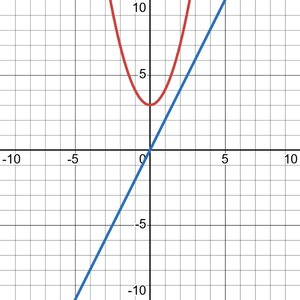
Graphing a Derivative
Given the graph of a function, the graph of its derivative shows the slope of the tangent line at each point.
For , is a straight line through the origin with slope 2.
Derivatives and Continuity
A function is differentiable at if exists.
If is differentiable at , then is continuous at .
However, continuity does not guarantee differentiability (e.g., corners, cusps, vertical tangents).
Example 4
Given , find .
Check left and right limits for the derivative at .
Example 5
Is differentiable at ? No, because the graph has a vertical tangent at .
Places where a function is not differentiable:
Corners and cusps
Discontinuities
Vertical tangent lines
Section 3.3: Rules of Differentiation
Basic Differentiation Rules
Constant Rule: The derivative of a constant is 0.
Power Rule: for any real number .
Constant Multiple Rule:
Sum and Difference Rules:
Examples
Derivative of the Natural Exponential Function
For , (by product rule)
Higher-Order Derivatives
The first derivative:
The second derivative:
The nth derivative:
Example
For ,
Section 3.4: The Product and Quotient Rules
The Product Rule
If and are differentiable, then
Example
For ,
The Quotient Rule
If and are differentiable and , then
Mnemonic: "Low D High minus High D Low, all over Low squared"
Example
For , apply the quotient rule.
Section 3.5: Derivatives of Trigonometric Functions
Basic Trigonometric Derivatives
Example
(by chain rule)
Section 3.7: The Chain Rule
The Chain Rule
The chain rule is used to differentiate composite functions.
If , then
Or, for
Example
For ,
Section 3.8: Implicit Differentiation
Implicit Differentiation
Used when is not isolated on one side of the equation.
Differentiate both sides with respect to .
Collect all terms on one side.
Solve for .
Example
For , differentiate:
Logarithmic Differentiation
Take the natural logarithm of both sides.
Expand using log properties.
Differentiate implicitly.
Solve for .
Example
For , , so , thus
Section 3.9: Derivatives of Logarithmic and Exponential Functions
Exponential and Logarithmic Derivatives
for
Example
For ,
For ,
