 Indietro
Cellular Energy Metabolism: Cellular Respiration, Fermentation, and Energy Coupling
Guida di studio - Note intelligenti
 Appunti personalizzati basati sui tuoi materiali, ampliati con definizioni chiave, esempi e contesto.
Energy Metabolism in Cells
Overview of Cellular Energy Transformations
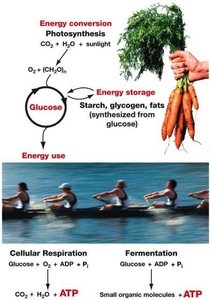
Cells require energy to perform essential functions such as growth, division, and maintenance. Energy metabolism encompasses the chemical reactions that transform energy from food or sunlight into usable cellular energy, primarily in the form of ATP.
Phototrophs convert light energy into chemical energy via photosynthesis.
Chemotrophs convert chemical energy from ingested or absorbed molecules into other forms of chemical energy.
Cellular respiration and fermentation are processes that transform the energy in glucose into ATP and other energy carriers.
ATP is the universal energy currency used to power cellular work.
ATP: The Energy Currency of the Cell
ATP Synthesis and Utilization
ATP (adenosine triphosphate) is a nucleoside triphosphate that stores and transfers energy within cells. It is produced through several metabolic pathways and used to drive endergonic (energy-requiring) reactions.
ATP is synthesized by three main mechanisms:
Substrate-level phosphorylation: Direct transfer of a phosphate group to ADP from a phosphorylated intermediate.
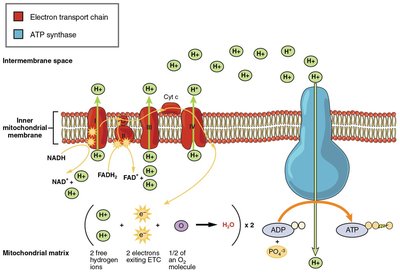
Oxidative phosphorylation: ATP synthesis powered by the transfer of electrons through the electron transport chain and the resulting proton gradient.
Photophosphorylation: ATP synthesis using light energy (in photosynthetic organisms).
ATP hydrolysis releases energy that can be coupled to cellular work.
Energy Coupling and Phosphorylation
Coupling Exergonic and Endergonic Reactions
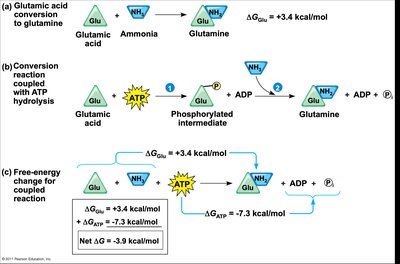
Cells couple exergonic (energy-releasing) reactions to endergonic (energy-consuming) reactions to drive essential processes. This is often achieved through the transfer of phosphate groups (phosphorylation) or electrons.
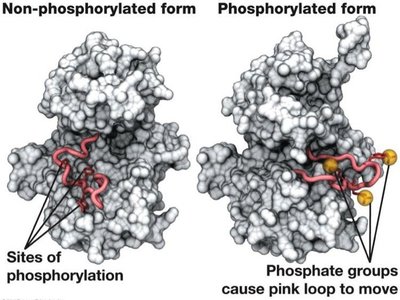
Phosphorylation increases the potential energy of a reactant, creating an "activated" intermediate.
ATP powers cellular work by transferring phosphate groups to other molecules (substrates or proteins).
Protein phosphorylation can regulate protein activity and is essential for processes such as transport and signaling.
Cellular Respiration
Overview and Steps
Cellular respiration is a series of metabolic pathways that extract energy from organic molecules (such as glucose) and convert it into ATP. It occurs in both prokaryotes and eukaryotes and can be aerobic or anaerobic.
Aerobic respiration uses oxygen as the final electron acceptor and yields the most ATP.
Anaerobic respiration uses other molecules as electron acceptors and yields less ATP.
Fermentation is an anaerobic process that allows glycolysis to continue by regenerating NAD+, but produces much less ATP.
The four main steps of aerobic cellular respiration are:
Glycolysis: Glucose is broken down into pyruvate in the cytosol.
Pyruvate Processing: Pyruvate is oxidized to acetyl CoA in the mitochondrial matrix.
Citric Acid Cycle: Acetyl CoA is oxidized to CO2, producing NADH and FADH2.
Oxidative Phosphorylation: Electron carriers are oxidized, and ATP is produced via the electron transport chain and chemiosmosis.
ATP Yield Comparison
Pathway | ATP Yield (per glucose) |
|---|---|
Aerobic Respiration | ~30 ATP |
Anaerobic Respiration | Intermediate |
Fermentation | 2 ATP |
Glycolysis
Glycolysis is a ten-step pathway that converts one molecule of glucose into two molecules of pyruvate, producing a net gain of 2 ATP and 2 NADH. It occurs in the cytosol and does not require oxygen.
Energy investment phase: 2 ATP are consumed.
Energy payoff phase: 4 ATP are produced (net gain: 2 ATP), and 2 NAD+ are reduced to 2 NADH.
Pyruvate Processing
Pyruvate is transported into the mitochondrial matrix and converted to acetyl CoA, producing NADH and releasing CO2.
Citric Acid Cycle (Krebs Cycle)
Acetyl CoA enters the citric acid cycle, where it is fully oxidized to CO2. The cycle produces ATP (by substrate-level phosphorylation), NADH, and FADH2.
Oxidative Phosphorylation
Electrons from NADH and FADH2 are transferred through the electron transport chain (ETC) in the inner mitochondrial membrane. The energy released is used to pump protons, creating an electrochemical gradient that drives ATP synthesis via ATP synthase.
Fermentation
Types and Importance
Fermentation is an anaerobic process that allows glycolysis to continue by regenerating NAD+ from NADH. It produces less ATP than respiration and results in different end products depending on the organism.
Lactic acid fermentation: Pyruvate accepts electrons from NADH, forming lactate and regenerating NAD+. Occurs in muscle cells and some bacteria.
Alcohol fermentation: Pyruvate is converted to acetaldehyde and CO2; acetaldehyde accepts electrons from NADH, forming ethanol and regenerating NAD+. Occurs in yeast.
Redox Reactions and Electron Carriers
Redox Principles
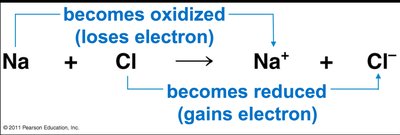
Redox (reduction-oxidation) reactions involve the transfer of electrons between molecules. These reactions are fundamental to energy metabolism.
Oxidation: Loss of electrons.
Reduction: Gain of electrons.
Electron donors are always paired with electron acceptors.
Electron Carriers
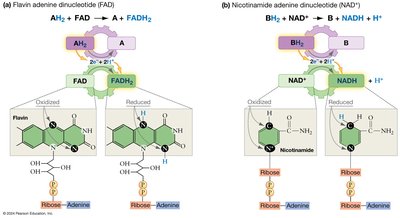
Electron carriers such as NAD+ and FAD play a central role in cellular respiration by shuttling high-energy electrons between metabolic pathways and the electron transport chain.
NAD+ (oxidized) → NADH (reduced)
FAD (oxidized) → FADH2 (reduced)
These carriers have intermediate reduction potentials, allowing them to both accept and donate electrons efficiently.
Regulation of Cellular Respiration
Pathway Regulation
Cellular respiration is tightly regulated to meet the energy needs of the cell and to conserve resources. Key enzymes are regulated by substrate availability, allosteric regulation, competitive inhibition, and covalent modifications (e.g., phosphorylation).
ATP and NADH act as allosteric inhibitors, signaling high energy status.
ADP/AMP and NAD+ act as activators, signaling low energy status.
Phosphofructokinase (PFK) is a major regulatory enzyme in glycolysis, inhibited by ATP (feedback inhibition) and activated by AMP.
Summary Table: ATP and Electron Carrier Production in Cellular Respiration
Step | ATP | NADH | FADH2 | CO2 |
|---|---|---|---|---|
Glycolysis | 2 | 2 | 0 | 0 |
Pyruvate Processing | 0 | 2 | 0 | 2 |
Citric Acid Cycle | 2 | 6 | 2 | 4 |
Oxidative Phosphorylation | ~26 | 0 | 0 | 0 |
Additional info: The total ATP yield per glucose is approximately 30-32, depending on the cell type and conditions.
