 Indietro
Chapter 1: A Preview of Cell Biology – Foundations, Methods, and Modern Approaches
Guida di studio - Note intelligenti
 Appunti personalizzati basati sui tuoi materiali, ampliati con definizioni chiave, esempi e contesto.
A Preview of Cell Biology
Introduction to Cell Biology
Cell biology is the study of cells, the fundamental units of life. Cells are dynamic, constantly changing entities, and the field integrates cytology, genetics, and biochemistry to understand their structure and function. Modern cell biology is a rapidly advancing discipline, driven by technological and conceptual breakthroughs.
The Cell Theory: A Brief History
Development of Cell Theory
Robert Hooke (1665): First observed and named "cells" while examining cork tissue under a microscope. He saw the cell walls of dead plant tissue.
Advances in Microscopy: Early progress was limited by poor microscope resolution and a focus on description rather than explanation.
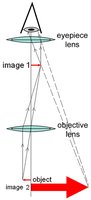
Compound Microscopes (1830s): Introduction of two-lens systems improved magnification and resolution, allowing observation of structures as small as 1 µm.
Robert Brown: Identified the nucleus in plant cells.
Matthias Schleiden & Thomas Schwann: Concluded that all plants and animals are composed of cells.
Rudolf Virchow (1855): Added that all cells arise from preexisting cells.
The cell theory states:
All organisms consist of one or more cells.
The cell is the basic unit of structure for all organisms.
All cells arise only from preexisting cells.
The Emergence of Modern Cell Biology
Three Strands of Inquiry
Cytology: Focuses on cellular structure, using optical techniques such as microscopy.
Biochemistry: Studies the chemical processes and molecules within cells.
Genetics: Examines information flow, heredity, and genome sequencing.
Cellular Dimensions and Measurement Units
Micrometer (µm): 1 µm = 10−6 m; used for cells and organelles.
Nanometer (nm): 1 nm = 10−9 m; used for molecules and subcellular structures.
Angstrom (Å): 1 Å = 0.1 nm; used for atomic-scale measurements.
Microscopy Techniques
Light Microscopy: Enabled identification of nuclei, mitochondria, and chloroplasts. Brightfield microscopy uses white light and typically requires fixed, stained samples.
Specialized Light Microscopes: Phase-contrast, differential interference contrast, fluorescence, and confocal microscopy allow observation of living cells and specific molecules.
Fluorescence Microscopy: Uses fluorescently labeled antibodies or proteins (e.g., GFP) to visualize specific cellular components.
Confocal Microscopy: Uses lasers to illuminate a single plane, producing high-resolution images.
Limits of Resolution
Resolution: The minimum distance at which two points can be distinguished as separate.
Light Microscope: Limit of resolution is about 200–350 nm.
Electron Microscope: Limit of resolution is about 2 nm, with magnification up to 100,000×.
Electron Microscopy
Transmission Electron Microscopy (TEM): Electrons pass through the specimen, revealing internal structures.
Scanning Electron Microscopy (SEM): Electrons scan the surface, providing detailed surface images.
The Biochemical Strand: Chemistry of Life
Key Discoveries in Biochemistry
Fredrich Wöhler (1828): Demonstrated that organic compounds can be synthesized in the lab.
Louis Pasteur & The Buchners: Showed that fermentation is catalyzed by enzymes, leading to the discovery of biological catalysts.
Pathways: Glycolysis (Embden–Meyerhof pathway), Krebs cycle, and Calvin cycle were elucidated in the early 20th century.
ATP: Identified as the main energy currency of the cell.
Biochemical Methods
Subcellular Fractionation: Uses centrifugation to separate cellular components.
Chromatography: Separates molecules based on size, charge, or affinity.
Electrophoresis: Separates nucleic acids or proteins by size/charge using an electric field.
Mass Spectrometry: Determines the size and composition of proteins.
The Genetic Strand: Information Flow
Foundations of Genetics
Gregor Mendel (1866): Established the principles of inheritance using pea plants; genes are the hereditary units.
Chromosomes: Identified as carriers of genetic material (Flemming, Roux, Weisman).
Chromosome Theory: Mendelian factors (genes) are located on chromosomes (Morgan, Bridges, Sturtevant).
Discovery of DNA as Genetic Material
Friedrich Miescher (1869): Isolated DNA ("nuclein").
1940s: Experiments with bacteria and viruses implicated DNA as the genetic material.
Beadle and Tatum: Proposed the one gene–one enzyme hypothesis.
Molecular Genetics
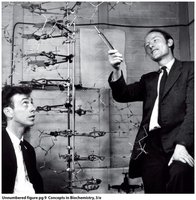
Watson and Crick (1953): Proposed the double helix structure of DNA, aided by Rosalind Franklin's data.
Central Dogma: Describes the flow of genetic information: DNA → RNA → Protein.
RNA Types and Exceptions
mRNA (messenger RNA): Encodes proteins.
rRNA (ribosomal RNA): Forms ribosomes.
tRNA (transfer RNA): Brings amino acids for protein synthesis.
Exceptions: Some viruses use RNA genomes and reverse transcriptase to synthesize DNA from RNA.
DNA Technology and Genomics
Recombinant DNA: Uses restriction enzymes to cut and recombine DNA from different sources.
DNA Cloning: Produces many copies of a DNA sequence.
DNA Transformation: Introduction of DNA into cells.
Sequencing: Determining the order of DNA bases; entire genomes can now be sequenced.
Bioinformatics and "-Omics"
Bioinformatics: Combines computer science and biology to analyze large datasets.
Genomics: Study of all genes in an organism.
Proteomics: Study of all proteins in a cell.
Transcriptomics: Study of all transcribed genes.
Metabolomics: Study of all metabolic reactions.
Lipidomics: Study of all lipids.
Ionomics: Study of all ions.
CRISPR Genome Editing
CRISPR: A prokaryotic defense system adapted for precise genome editing.
Mechanism: Guide RNA directs the Cas enzyme to a specific DNA sequence, where a double-stranded break is introduced. Repair can introduce mutations or specific changes using a repair template (homology-directed repair).
How Do We Know What We Know?
The Nature of Scientific Knowledge
Scientific "facts" are provisional and subject to change as new evidence emerges.
Hypotheses are tested through controlled experiments, often seeking to disprove the null hypothesis.
Certainty increases when repeated experiments fail to disprove the hypothesis.
Model Organisms and Experimental Design
Model Organisms: Species that are easy to study and manipulate, providing insights into cellular processes.
Cell and Tissue Cultures: Used to study cellular processes, though results may not always reflect intact organisms.
Experimental Design: Well-designed experiments alter only one variable (independent variable) at a time, keeping others constant. The outcome is the dependent variable.
In vivo: Experiments in living organisms.
In vitro: Experiments outside living organisms (e.g., in test tubes).
