 Indietro
Foundations of Cell Biology: The Chemical and Structural Basis of Life
Guida di studio - Note intelligenti
 Appunti personalizzati basati sui tuoi materiali, ampliati con definizioni chiave, esempi e contesto.
Overview of Cell Biology
Defining Life and the Cell
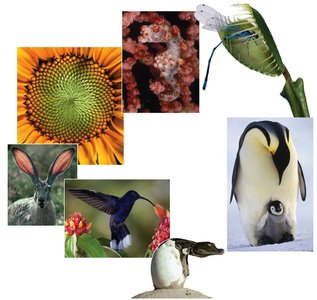
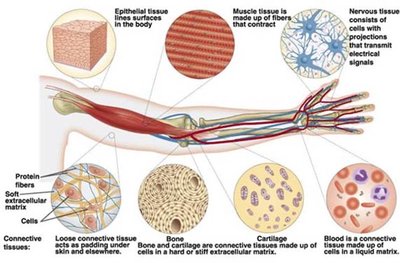
Life is a complex phenomenon that cannot be captured by a single definition, but is recognized by what living things do and what they are made of. All living organisms are composed of one or more cells, which are the fundamental units of structure, function, and reproduction. The cell is the smallest system that exhibits all the properties of life.
Unicellular organisms include bacteria, archaea, and some fungi and protists.
Multicellular organisms are composed of specialized cells that form tissues and organs.
Chemical Components of Cells
Biomolecules and Their Elements
Cells are primarily composed of water, but the majority of their dry mass consists of biomolecules—carbon-based organic compounds. The four major classes of biomolecules are nucleic acids, proteins, carbohydrates, and lipids. These molecules are built mainly from carbon, hydrogen, oxygen, and nitrogen, with sulfur and phosphorus also playing significant roles.
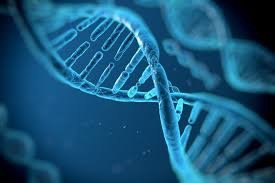
Nucleic acids: Store and transmit genetic information.
Proteins: Perform a wide range of functions, including catalysis, transport, and structural support.
Carbohydrates: Serve as energy sources and structural materials.
Lipids: Form membranes and store energy.
Cellular Organization and Diversity
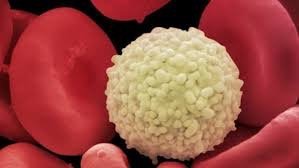
Cells can be visualized using high-powered electron microscopes, especially when studying large macromolecules and supramolecular complexes such as ribosomes and DNA.
Macromolecules are polymers made from repeating subunits (monomers) joined by covalent bonds.
Supramolecular complexes are assemblies of multiple macromolecules.
Elements Essential for Life
Over 95% of a cell's mass is made up of carbon, hydrogen, oxygen, and nitrogen. Other important elements include sulfur, phosphorus, calcium, chlorine, potassium, magnesium, and sodium. These elements are found in both organic and inorganic molecules essential for life, such as O2, CO2, H2O, and various ions.
Chemistry of Carbon and Organic Molecules
Properties of Carbon
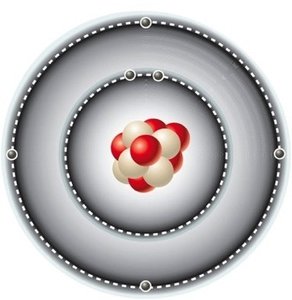
Carbon is the backbone of organic molecules due to its ability to form four covalent bonds, allowing for a vast diversity of molecular structures. Carbon skeletons can vary in chain length, presence and position of double bonds, branching, and ring formation.
Carbon-carbon bonds are strong and stable, enabling the formation of complex molecules.
Organic molecules have characteristic shapes and chemical properties determined by their carbon skeletons and functional groups.
Functional Groups
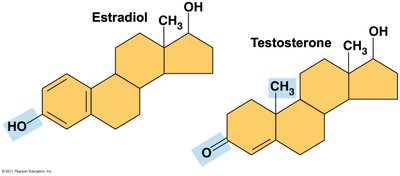
Functional groups are specific groups of atoms within molecules that confer characteristic chemical properties. They often contain oxygen, nitrogen, phosphorus, or sulfur and are critical in determining the reactivity and interactions of biomolecules.
Examples include hydroxyl, carbonyl, carboxyl, amino, sulfhydryl, and phosphate groups.
The number and arrangement of functional groups give each molecule its unique chemical and biological properties.
Isomerism in Biomolecules
Isomers are compounds with the same molecular formula but different structures and properties. There are two main types:
Structural isomers: Differ in the covalent arrangement of atoms.
Stereoisomers: Have the same covalent bonds but differ in spatial arrangement.
Enantiomers are a type of stereoisomer that are mirror images of each other and can have drastically different biological activities.
Energy and Metabolism in Cells
Sources of Energy and Carbon
Organisms are classified by their sources of energy and carbon:
Phototrophs: Use light as an energy source.
Chemotrophs: Obtain energy from chemical compounds.
Autotrophs: Use inorganic carbon (e.g., CO2).
Heterotrophs: Use organic carbon.
Forms of Energy
Energy exists in various forms, including radiant, chemical, thermal, mechanical, and electrical energy. In biological systems, energy is transformed and flows through ecosystems, entering as radiant energy and exiting as heat.
Thermodynamics in Biology
Biological processes are governed by the laws of thermodynamics:
First Law: Energy can be transferred or transformed but cannot be created or destroyed.
Second Law: Energy transformations increase the entropy (disorder) of the universe.
Organisms maintain order (low entropy) by coupling energy transformations to biological work, but overall entropy increases due to heat loss.
Gibbs Free Energy and Spontaneity
The spontaneity of a process is determined by changes in potential energy and entropy, summarized by the Gibbs free energy change ():
If , the process is exergonic (spontaneous).
If , the process is endergonic (non-spontaneous).
Cells couple exergonic and endergonic reactions, often using ATP hydrolysis, to drive biological work.
ATP: The Energy Currency of the Cell
Adenosine triphosphate (ATP) is the primary energy carrier in cells. Hydrolysis of ATP to ADP and inorganic phosphate is highly exergonic and is used to power synthesis, transport, and mechanical work.
ATP is constantly regenerated through cellular metabolism.
The high potential energy of ATP is due to repulsive charges between phosphate groups.
Carbohydrates: Structure and Function
Monosaccharides
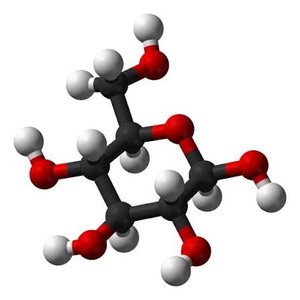
Carbohydrates are the most abundant biomolecules on Earth, primarily produced by photosynthesis. Monosaccharides are simple sugars with the general formula (CH2O)n and can vary in carbon number, carbonyl group position, spatial arrangement, and ring formation.
Disaccharides and Glycosidic Bonds
Disaccharides consist of two monosaccharide units joined by a glycosidic bond, which can be formed by condensation or broken by hydrolysis. The type of glycosidic bond affects the properties and digestibility of the disaccharide.
Sucrose: Transported in plants.
Lactose: Found in mammalian milk.
Maltose: Product of starch digestion.
Polysaccharides: Storage and Structure
Polysaccharides are long chains of monosaccharides and differ in monomer type, glycosidic linkage, and degree of branching. They serve as energy storage (e.g., starch, glycogen) or structural materials (e.g., cellulose, chitin).
Storage polysaccharides: Compact, easily digested, used for energy storage.
Structural polysaccharides: Form strong, flexible structures resistant to hydrolysis.
Structural polysaccharides are not digestible by most organisms but serve as dietary fiber and are broken down by decomposers and microbial symbionts.
Summary Table: Major Classes of Biomolecules
Class | Monomer | Polymer | Main Functions |
|---|---|---|---|
Carbohydrates | Monosaccharide | Polysaccharide | Energy storage, structure |
Lipids | Fatty acid, glycerol | Triglyceride, phospholipid | Membranes, energy storage |
Proteins | Amino acid | Polypeptide | Catalysis, structure, transport |
Nucleic Acids | Nucleotide | DNA, RNA | Genetic information |
