 Indietro
Lipids and Proteins: Structure, Function, and Biological Importance
Guida di studio - Note intelligenti
 Appunti personalizzati basati sui tuoi materiali, ampliati con definizioni chiave, esempi e contesto.
Lipids: Structure and Function
Overview of Lipids
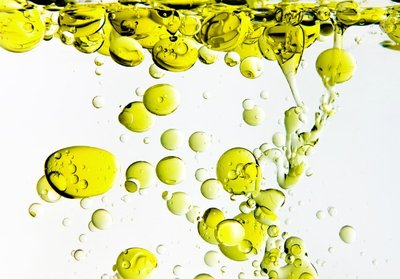
Lipids are a diverse group of hydrophobic molecules that play critical roles in cell structure and function. Their unifying feature is their hydrophobicity, which arises from large hydrocarbon components that have little or no affinity for water.
Major Categories of Lipids: Fats, Phospholipids, Steroids
Hydrophobicity: Lipids do not mix with water due to their nonpolar hydrocarbon chains.
Fats (Triglycerides)
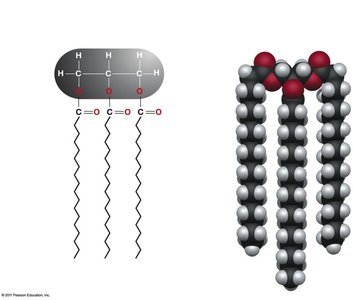
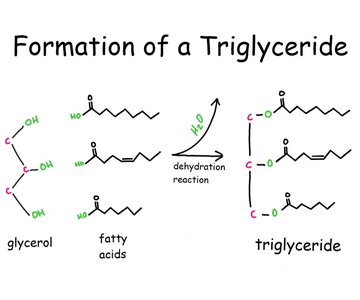
Fats, also known as triglycerides, are composed of glycerol linked to three fatty acids via covalent ester bonds. Fatty acids can be added to glycerol through condensation reactions or removed via hydrolysis.
Glycerol: A three-carbon alcohol with a hydroxyl group attached to each carbon.
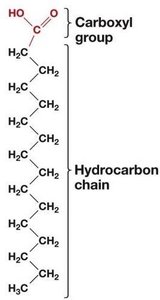
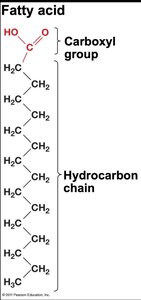
Fatty Acid: Consists of a long hydrocarbon chain with a terminal carboxyl group.
Types of Fatty Acids
Fatty acids can be classified based on the presence or absence of double bonds in their hydrocarbon chains:
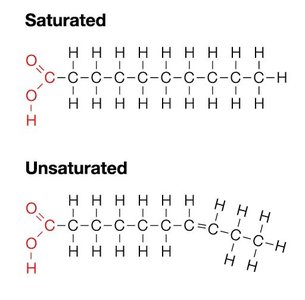
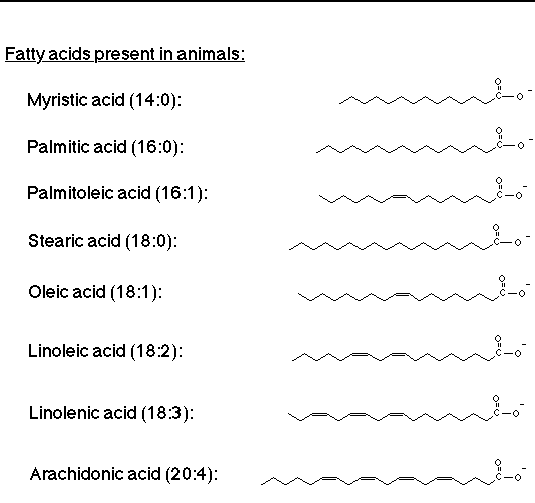
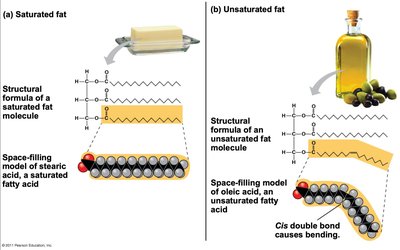
Saturated Fatty Acids: No double bonds; fully saturated with hydrogen atoms; linear shape.
Unsaturated Fatty Acids: One or more double bonds; can be cis (kinked) or trans (linear) isomers.
Physical Properties and Biological Roles of Fats
The physical state of fats at room temperature depends on the degree of saturation:
Saturated Fats: Solid at room temperature due to linear structure allowing close packing (e.g., animal fats).
Unsaturated Fats: Liquid at room temperature due to kinks preventing tight packing (e.g., plant and fish oils).
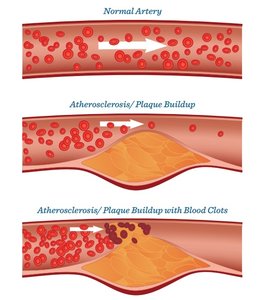
Trans Fats: Produced naturally in ruminants and artificially during food processing; associated with cardiovascular disease.
Functions of Fats in Animals:
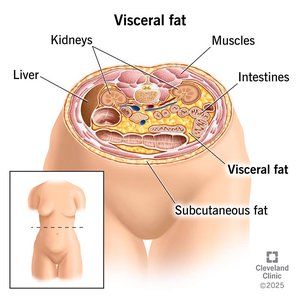
Long-term energy storage (more compact than glycogen)
Protection of internal organs
Insulation and temperature regulation (e.g., blubber in whales)

Functions of Fats in Plants:
Stored as oils, mainly in seeds, serving as energy sources for developing embryos

Phospholipids
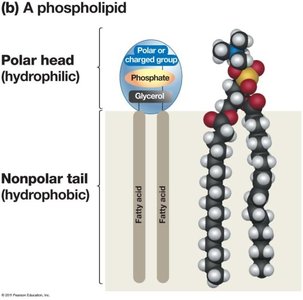
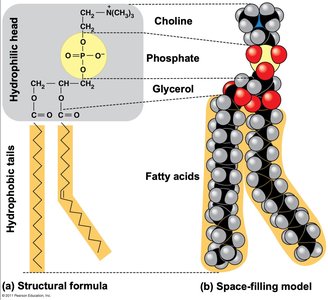
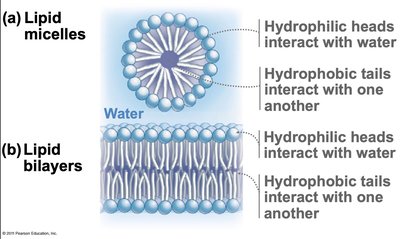
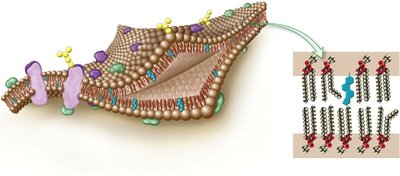
Phospholipids are amphipathic molecules, meaning they have both hydrophilic (polar) and hydrophobic (nonpolar) regions. They are essential components of biological membranes.
Structure: Glycerol backbone, two fatty acid tails (hydrophobic), and a phosphate group (hydrophilic head).
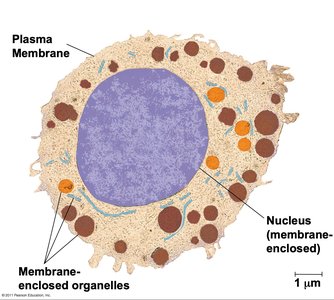
Function: Form the plasma membrane and organelle membranes by self-assembling into bilayers in aqueous environments.
Steroids
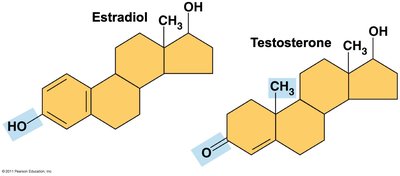
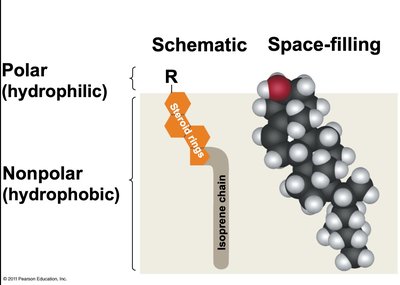
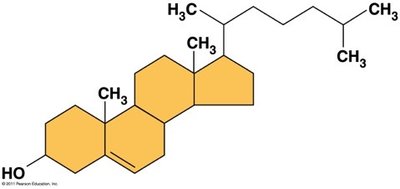
Steroids are lipids characterized by a carbon skeleton consisting of four fused rings. Different functional groups attached to this skeleton give rise to various steroids with distinct functions.
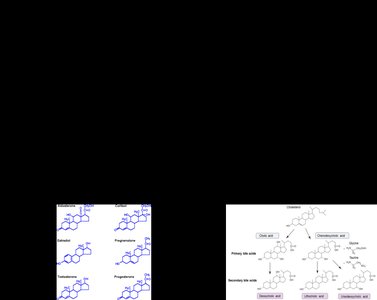
Cholesterol: Important component of animal cell membranes; precursor for steroid hormones and bile acids.
Steroid Hormones: Include estradiol, testosterone, and others, which regulate diverse physiological processes.
Proteins: Structure and Function
Overview of Proteins
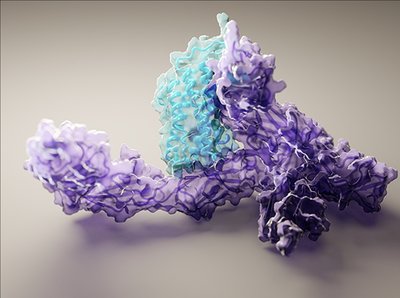
Proteins are complex macromolecules that serve as the workhorses of the cell. They are composed of one or more polypeptides, each folded into a specific three-dimensional shape essential for function.
Polypeptide: A polymer of amino acids linked by peptide bonds.
Protein Function: Determined by its structure; malfunction can lead to disease.
Protein Diversity and Structure
Proteins are the most structurally diverse class of biological molecules. The sequence of amino acids determines the protein’s three-dimensional structure and, consequently, its function.
Primary Structure: Linear sequence of amino acids.
Secondary Structure: Local folding into alpha-helices and beta-sheets stabilized by hydrogen bonds.
Tertiary Structure: Overall 3D shape formed by interactions among side chains.
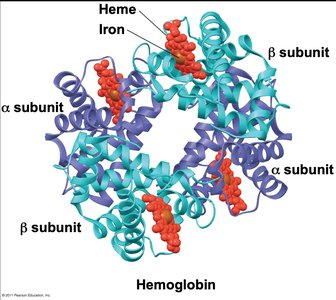
Quaternary Structure: Association of multiple polypeptide subunits (not present in all proteins).
Functions of Proteins
Proteins perform a wide variety of functions in cells and organisms:
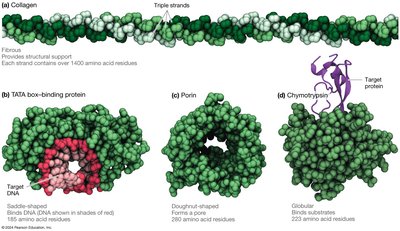
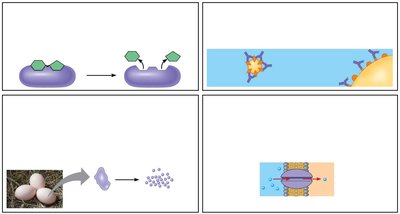
Enzymatic Proteins: Catalyze chemical reactions (e.g., digestive enzymes).
Defensive Proteins: Protect against disease (e.g., antibodies).
Storage Proteins: Store amino acids (e.g., ovalbumin in egg white).
Transport Proteins: Transport substances (e.g., hemoglobin, membrane transporters).
Regulatory Proteins: Regulate cellular activities (e.g., transcription factors).
Communication Proteins: Mediate cell signaling (e.g., membrane receptors).
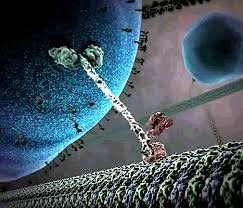
Motor Proteins: Enable movement (e.g., myosin in muscle contraction).
Structural Proteins: Provide support (e.g., collagen in connective tissue).

Amino Acids: Building Blocks of Proteins
Amino acids are the monomers of proteins. Each amino acid contains a central alpha-carbon bonded to an amino group, a carboxyl group, a hydrogen atom, and a variable side chain (R group).
Ionization: At physiological pH, amino and carboxyl groups are ionized, increasing solubility and reactivity.
Side Chains: Determine the chemical properties and classification of amino acids (nonpolar, polar uncharged, acidic, basic).
Polypeptide Formation and Protein Folding
Polypeptides are formed by condensation reactions that create peptide bonds between amino acids. The sequence of amino acids (primary structure) dictates the folding and final structure of the protein.
Protein Folding: Driven by interactions such as hydrogen bonds, ionic bonds, hydrophobic interactions, and disulfide bridges.
Molecular Chaperones: Assist in proper folding of some proteins.
Misfolding: Can lead to diseases such as Alzheimer's, cystic fibrosis, and prion diseases.
Protein Modification and Denaturation
Proteins can be modified after synthesis by the addition or removal of chemical groups, which can be permanent (structural) or reversible (regulatory). Changes in the physical or chemical environment can denature proteins, causing them to lose their structure and function.
Examples of Modifications: Phosphorylation, methylation, acetylation.
Denaturation: Caused by heat, pH changes, or chemicals; often irreversible.
Genetic Mutations and Protein Function
Even a single amino acid change in a protein’s primary structure can disrupt its higher-level structures and function. For example, sickle-cell disease results from a single amino acid substitution in hemoglobin, leading to abnormal red blood cell shape and function.
Levels Affected: Primary, secondary, tertiary, and quaternary structures can all be impacted.
Nucleic Acids: Structure and Function
Overview of Nucleic Acids
Nucleic acids are polymers that serve as genetic material and play key roles in gene expression and regulation. The two main types are DNA (deoxyribonucleic acid) and RNA (ribonucleic acid).
Functions: Store, transmit, and express genetic information.
Monomers: Nucleotides, each consisting of a sugar, phosphate group, and nitrogenous base.
DNA and RNA Structure
DNA is typically double-stranded, forming a double helix, while RNA is usually single-stranded. The sugar-phosphate backbone is directional (5′ to 3′), and the sequence of bases encodes genetic information.
Base Pairing: A pairs with T (or U in RNA), G pairs with C via hydrogen bonds.
Complementary Base Pairing: Essential for replication and gene expression.
DNA Packaging and Chromatin
In eukaryotic cells, DNA is packaged with histone proteins into chromatin, allowing efficient storage and regulation of the genome. Chromatin structure is dynamic and influences gene expression and cell division.
Chromosomes: Highly condensed chromatin visible during cell division.
