 Indietro
Plasma Membrane Structure and Function: Cell Biology Study Notes
Guida di studio - Note intelligenti
 Appunti personalizzati basati sui tuoi materiali, ampliati con definizioni chiave, esempi e contesto.
The Plasma Membrane
Membrane Structure and Components
The plasma membrane is a dynamic structure that separates the cell from its external environment and regulates the movement of substances in and out of the cell. It is composed primarily of a lipid bilayer, proteins, and carbohydrates, each contributing to its function and properties.
Lipid Bilayer: Consists mainly of phospholipids, which form a semi-permeable barrier.
Membrane Proteins: Include integral, peripheral, and lipid-anchored proteins, each with distinct roles in transport, signaling, and structural support.
Carbohydrates: Often attached to proteins (glycoproteins) or lipids (glycolipids), forming the glycocalyx, which is important for cell recognition and protection.
Fluid Mosaic Model: Describes the membrane as a mosaic of proteins floating in or attached to a fluid lipid bilayer.
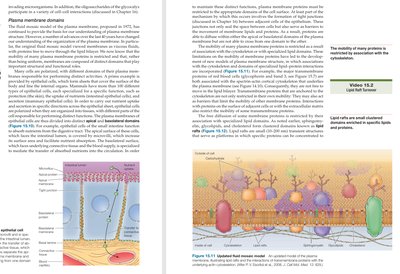
Protein Orientation and Glycocalyx
Membrane proteins are oriented asymmetrically, with specific domains exposed to either the cytoplasm or the extracellular space. The glycocalyx is a carbohydrate-rich layer on the cell surface, providing protection and mediating cell interactions.
Glycocalyx: Functions in cell recognition, adhesion, and protection against mechanical and chemical damage.
Protein Sorting: Proteins are synthesized and sorted to their correct membrane location, often involving signal sequences and vesicular transport.
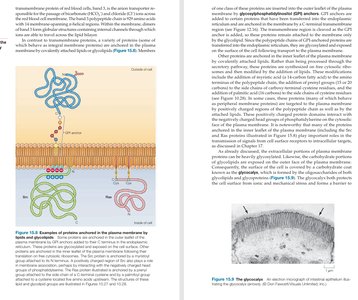
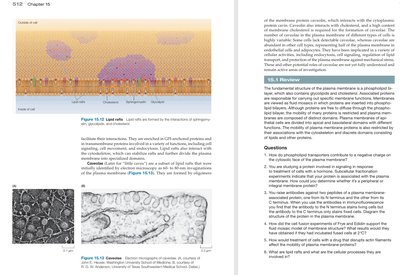
Membrane Domains and Lipid Rafts
Plasma Membrane Domains
Membrane domains are specialized regions with distinct lipid and protein compositions, contributing to functional compartmentalization within the membrane. Lipid rafts are microdomains rich in cholesterol and sphingolipids, often involved in signaling and trafficking.
Lipid Rafts: Serve as platforms for signaling molecules and facilitate protein sorting.
Membrane Asymmetry: The inner and outer leaflets of the bilayer have different lipid and protein compositions.
Membrane Transport
Passive and Active Transport
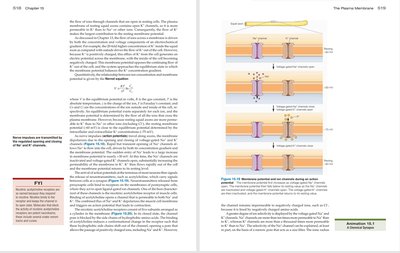
Transport across the plasma membrane occurs via passive (diffusion, facilitated diffusion) and active (energy-dependent) mechanisms. Channel proteins and carrier proteins mediate the movement of ions and molecules.
Passive Transport: Includes simple diffusion and facilitated diffusion through channels or carriers.
Active Transport: Requires energy (usually ATP) to move substances against their concentration gradient.
Channel Proteins: Form pores for specific ions; can be gated or non-gated.
Carrier Proteins: Bind and transport molecules via conformational changes.
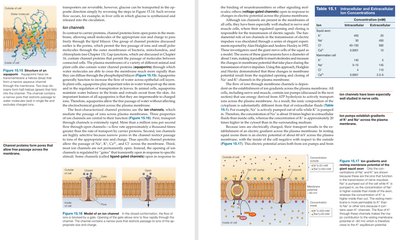
Transport of Glucose and Ions
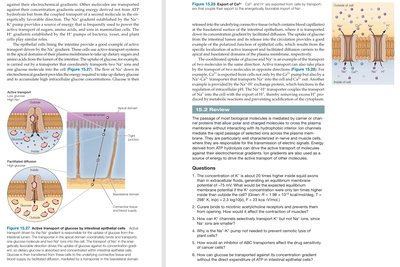
Glucose and ions are transported across epithelial membranes via specific transporters and channels. The sodium-potassium pump (Na+/K+ ATPase) is a key active transporter maintaining cellular ion gradients.
Glucose Transport: Involves symporters and antiporters, often coupled to sodium gradients.
Ion Transport: Maintains membrane potential and cellular homeostasis.
Endocytosis and Membrane Trafficking
Endocytosis
Endocytosis is the process by which cells internalize particles, fluids, and macromolecules from the extracellular environment. It includes phagocytosis, pinocytosis, and receptor-mediated endocytosis.
Phagocytosis: Uptake of large particles or microorganisms by specialized cells.
Receptor-Mediated Endocytosis: Highly specific uptake of molecules via receptor binding and vesicle formation.
Clathrin-Mediated Endocytosis: Involves the formation of clathrin-coated pits and vesicles.
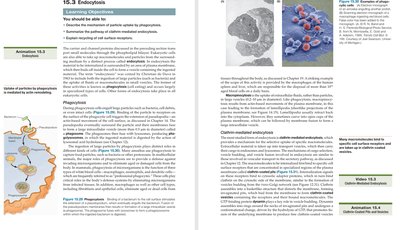
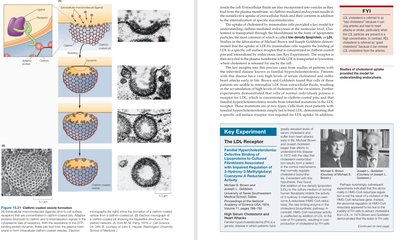
Table: Intracellular and Extracellular Ion Concentrations
This table compares the concentrations of key ions inside and outside the cell, highlighting the importance of membrane transport in maintaining cellular homeostasis.
Ion | Intracellular (mM) | Extracellular (mM) |
|---|---|---|
Na+ | 10 | 145 |
K+ | 140 | 5 |
Ca2+ | 0.0001 | 1 |
Cl- | 5 | 110 |
Glucose | 0.1 | 5 |
Additional info: Values inferred from standard cell biology references. |
Key Equations
Nernst Equation
The Nernst equation calculates the equilibrium potential for an ion based on its concentration gradient across the membrane:
E: Equilibrium potential (volts)
R: Gas constant
T: Temperature (Kelvin)
z: Charge of the ion
F: Faraday's constant
Summary
The plasma membrane is essential for cellular compartmentalization, communication, and transport. Its structure and function are determined by the interplay of lipids, proteins, and carbohydrates, with specialized domains and mechanisms for selective transport and endocytosis. Understanding these concepts is fundamental to cell biology.
