 Indietro
The Endomembrane System and Protein Sorting: Structure, Function, and Experimental Analysis
Guida di studio - Note intelligenti
 Appunti personalizzati basati sui tuoi materiali, ampliati con definizioni chiave, esempi e contesto.
The Endomembrane System
Overview of the Endomembrane System
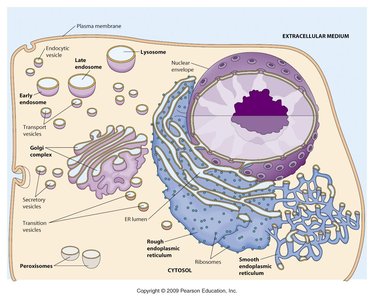
The endomembrane system is a collection of membranous organelles within eukaryotic cells that work together to modify, package, and transport lipids and proteins. It includes the endoplasmic reticulum (ER), Golgi apparatus, endosomes, lysosomes, and transport vesicles. Mitochondria, chloroplasts, and peroxisomes are not considered part of this system because they do not fuse with the ER.
Key Components: ER (rough and smooth), Golgi complex, endosomes, lysosomes, transport vesicles
Function: Synthesis, processing, and transport of proteins and lipids
Exclusion: Mitochondria, chloroplasts, and peroxisomes are not part of the endomembrane system
Endoplasmic Reticulum (ER)
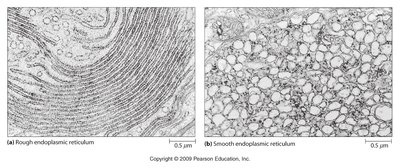
The ER is a network of membranes involved in protein and lipid synthesis. It is divided into rough ER (RER), which is studded with ribosomes, and smooth ER (SER), which lacks ribosomes.
Rough ER: Site of protein synthesis, co-translational insertion, protein maturation, glycosylation, S-S bond formation, assembly of multimers, and removal of misfolded proteins for degradation
Smooth ER: Involved in lipid metabolism, membrane biosynthesis, steroid biosynthesis, carbohydrate metabolism, calcium storage, and drug detoxification
Golgi Apparatus
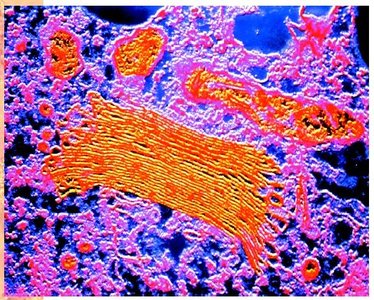
The Golgi apparatus is responsible for modifying, sorting, and packaging proteins and lipids for secretion or delivery to other organelles. It consists of a series of flattened membrane sacs called cisternae.
Protein Glycosylation: Addition and modification of carbohydrate groups on proteins
Protein Targeting: Proteins receive signals for their final destination
Trafficking: Anterograde (forward) and retrograde (backward) transport between ER and Golgi

Lysosomes
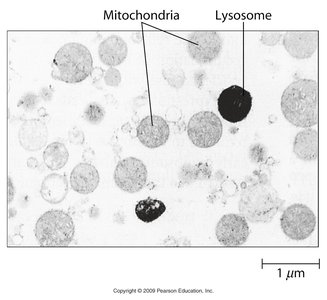
Lysosomes are membrane-bound organelles containing digestive enzymes (acid hydrolases) that break down macromolecules. Their internal membrane is heavily glycosylated, and they maintain an acidic pH (4-5).
Functions: Defense, nutrition, autophagy, and extracellular digestion
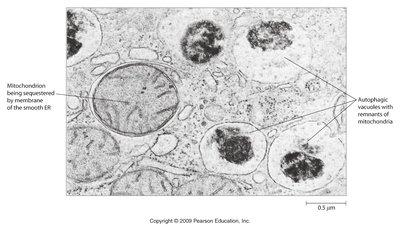
Autophagy: The process by which cells degrade their own components, such as damaged organelles
Peroxisomes
Peroxisomes are small, membrane-bound organelles involved in hydrogen peroxide metabolism, detoxification, oxidation of fatty acids, and metabolism of nitrogen-containing compounds.
Hydrogen Peroxide Metabolism: Peroxisomes contain enzymes that break down H2O2 to prevent cellular damage
Detoxification: Removal of toxic substances from the cell
Experimental Techniques for Studying Organelles
Subcellular Fractionation and Centrifugation
Subcellular fractionation is a method used to isolate and study different organelles by breaking cells open and separating their components using centrifugation.
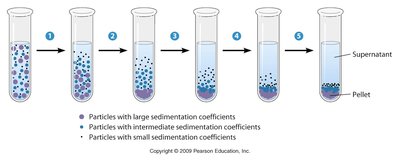
Differential Centrifugation: Separates particles based on size and sedimentation coefficient (Svedberg unit, S)
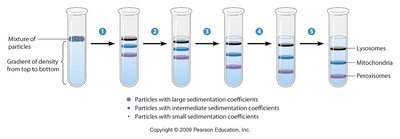
Density Gradient Centrifugation: Separates particles based on their density using a gradient (e.g., sucrose or other solutions)
Svedberg Unit (S):


Vesicular Transport and Trafficking
Vesicular Trafficking: Anterograde and Retrograde Transport
Vesicular transport is the movement of proteins and lipids between organelles via membrane-bound vesicles.
Anterograde Transport: Movement from ER to Golgi to plasma membrane
Retrograde Transport: Movement from Golgi back to ER
Regulated Secretion: Release of substances in response to a stimulus
Constitutive Secretion: Continuous release of substances

Protein Trafficking in Secretory Cells
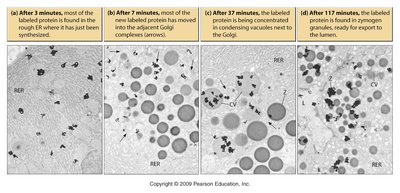
Radioactive labeling experiments track the movement of proteins through the endomembrane system, revealing the sequence of organelle involvement.
Key Steps: Synthesis in rough ER, modification in Golgi, packaging in vesicles, secretion
Summary Table: Major Organelles of the Endomembrane System
Organelle | Main Function | Key Features |
|---|---|---|
Rough ER | Protein synthesis, maturation | Ribosomes, glycosylation, S-S bonds |
Smooth ER | Lipid metabolism, detoxification | No ribosomes, steroid biosynthesis, calcium storage |
Golgi Apparatus | Protein modification, sorting | Cisternae, glycosylation, trafficking |
Lysosome | Digestion, autophagy | Acid hydrolases, pH 4-5, glycosylated membrane |
Peroxisome | Detoxification, fatty acid oxidation | H2O2 metabolism, nitrogen compounds |
Conclusion
The endomembrane system is essential for the synthesis, modification, and transport of proteins and lipids in eukaryotic cells. Experimental techniques such as subcellular fractionation and centrifugation allow scientists to study the structure and function of these organelles in detail. Understanding these processes is fundamental to cell biology and provides insight into cellular organization and function.
