 Indietro
The Endomembrane System: Lysosomes, Vacuoles, and Peroxisomes
Guida di studio - Note intelligenti
 Appunti personalizzati basati sui tuoi materiali, ampliati con definizioni chiave, esempi e contesto.
The Endomembrane System and Protein Sorting
Lysosomes and Cellular Digestion
Lysosomes are specialized organelles within the endomembrane system responsible for the degradation of biological macromolecules. They play a crucial role in cellular digestion, recycling, and defense mechanisms.
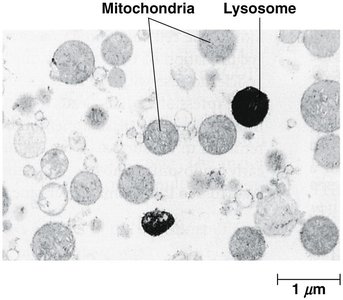
Lysosome Definition: Membrane-bound organelles containing digestive enzymes capable of breaking down lipids, carbohydrates, nucleic acids, and proteins.
Enzyme Isolation: Lysosomes isolate hydrolytic enzymes (such as acid phosphatase) from the rest of the cell, preventing unwanted cellular damage.
Structure: Typically 0.5 µm in diameter, bounded by a single membrane coated with glycoproteins for protection.
Acidic Environment: Lysosomes maintain a pH of 4.0–5.0 via ATP-dependent proton pumps, optimizing enzyme activity.
Enzyme Synthesis: Lysosomal enzymes are synthesized on rough ER ribosomes and delivered to endosomes via transport vesicles from the trans-Golgi network (TGN).
Endosome Maturation: Early endosomes mature into late endosomes, accumulating digestive enzymes and material to be degraded.
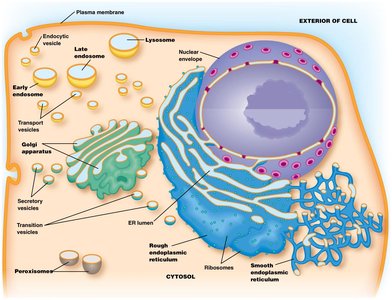
Lysosome Activation: Acid hydrolases are activated as the internal environment becomes more acidic, either by proton pumping or fusion with an existing lysosome.
Lysosomal Enzymes and Digestive Properties
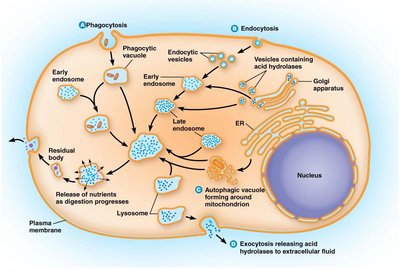
Lysosomes are involved in both heterophagic (external material) and autophagic (internal material) digestion. They play a role in cellular defense, nutrition, and recycling.
Heterophagic Lysosomes: Digest substances originating outside the cell.
Autophagic Lysosomes: Digest materials originating inside the cell.
Phagocytosis: External materials are engulfed and degraded by lysosomes.
Receptor-Mediated Endocytosis: Specific uptake of substances, followed by fusion with lysosomes for digestion.
Autophagy: Cellular Recycling
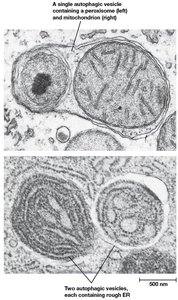
Autophagy is the process by which cells degrade and recycle damaged or unneeded cellular components. It is essential for cellular homeostasis and defense against disease.
Macrophagy: An organelle is wrapped in a double membrane (autophagosome) derived from the ER.
Microphagy: Smaller vacuoles are formed, surrounded by a single-membrane bilayer.
Autophagy and Cancer: Defects in autophagy are linked to increased tumor formation.
Lysosomal Storage Diseases
Lysosomal storage diseases are genetic disorders characterized by the accumulation of indigestible material due to absent or defective lysosomal proteins.
Examples: Type II glycogenosis (excessive glycogen), Hurler and Hunter syndromes (glycosaminoglycans), Tay-Sachs disease (ganglioside accumulation).
Treatment: Enzyme replacement therapy and gene therapy are potential approaches.
The Plant Vacuole: Multifunctional Digestive Organelle
Plant cells contain vacuoles that perform lysosome-like functions, as well as additional roles in storage, pH regulation, and maintaining turgor pressure.
Development: Vacuole development parallels lysosome formation, with coated vesicles delivering materials to provacuoles.
Functions: Vacuoles can occupy up to 90% of cell volume, regulate cytosolic pH, store proteins, malate, anthocyanins, and waste.
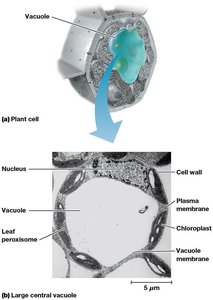
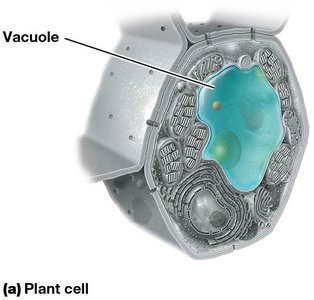
Peroxisomes
Structure and Function
Peroxisomes are single-membrane-bound organelles involved in hydrogen peroxide metabolism, detoxification, fatty acid oxidation, and nitrogen compound metabolism.
Defining Feature: Presence of catalase for degrading H2O2.
Structure: Animal peroxisomes contain crystalline urate oxidase; plant peroxisomes contain crystalline catalase.
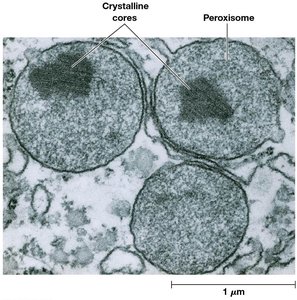
Hydrogen Peroxide Metabolism
Peroxisomes generate and degrade hydrogen peroxide through oxidases and catalase, protecting the cell from oxidative damage.
Oxidases: Generate H2O2 as a byproduct of oxidation reactions.
Catalase: Detoxifies H2O2 either by converting it to water or by using it to oxidize other substrates.

Detoxification and Metabolic Functions
Peroxisomes detoxify harmful compounds, oxidize fatty acids, and metabolize nitrogen-containing compounds.
Detoxification: Peroxidase uses toxic compounds as electron donors, protecting the cell from oxidative stress.
Fatty Acid Oxidation: β oxidation occurs in peroxisomes, producing acetyl-CoA for biosynthesis or energy.
Nitrogen Metabolism: Urate oxidase oxidizes urate; aminotransferases transfer amino groups between amino acids and α-keto acids.
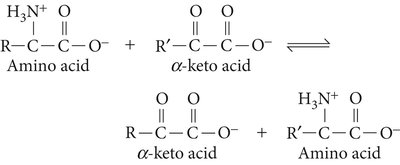
Catabolism of Unusual Substances and Peroxisomal Disorders
Peroxisomes degrade rare substances (e.g., D-amino acids, xenobiotics) and are implicated in several genetic disorders.
X-linked Adrenoleukodystrophy: Defective protein impairs transport of long-chain fatty acids into peroxisomes.
Plant Peroxisomes: Leaf Peroxisomes and Glyoxysomes
Plant cells contain specialized peroxisomes involved in energy metabolism and lipid conversion.
Leaf Peroxisomes: Participate in the photorespiratory pathway, closely associated with mitochondria and chloroplasts.
Glyoxysomes: Convert stored lipids to sucrose in seedlings via the glyoxylate cycle.
Peroxisome Biogenesis
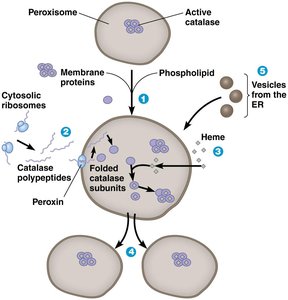
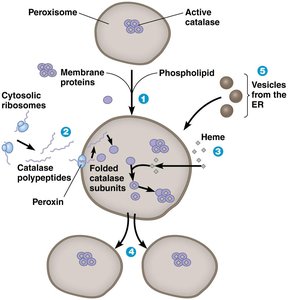
Peroxisomes are formed by division of preexisting peroxisomes or by fusion of vesicles from the ER and Golgi apparatus. Proteins required for biogenesis are called peroxins.
Lipid and Protein Addition: Membrane proteins and lipids are added from cytosolic sources; matrix enzymes are synthesized on cytosolic ribosomes and imported via peroxins.
Heme Incorporation: Heme enters the peroxisomal lumen separately, and catalase polypeptides are folded and assembled.
Division and De Novo Formation: New peroxisomes form by division or from ER-derived vesicles.
Summary Table: Lysosomes vs. Peroxisomes vs. Vacuoles
Organelle | Main Function | Key Enzymes | pH | Additional Roles |
|---|---|---|---|---|
Lysosome | Digestion of macromolecules | Acid hydrolases | 4.0–5.0 | Cellular defense, recycling |
Peroxisome | Hydrogen peroxide metabolism, detoxification | Catalase, oxidases | Neutral | Fatty acid oxidation, nitrogen metabolism |
Vacuole (Plant) | Digestion, storage, turgor maintenance | Hydrolases, proton pumps | Acidic | Storage of proteins, pigments, waste |
Concept Check: Why is it important for the biochemical reactions occurring in peroxisomes to be isolated from the cytoplasm in a separate organelle?
Additional info: Isolation prevents toxic byproducts (e.g., H2O2) from damaging cellular components and allows specialized metabolic reactions to occur efficiently.
