 Indietro
The Origin and Chemistry of Life: Foundations of Cell Biology
Guida di studio - Note intelligenti
 Appunti personalizzati basati sui tuoi materiali, ampliati con definizioni chiave, esempi e contesto.
The Origin of Life and Early Evolution
Key Events in the Evolution of Life on Earth
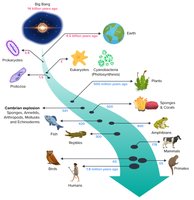
The history of life on Earth is marked by several pivotal events that shaped the diversity and complexity of organisms. Understanding these events provides context for the emergence of cellular life and the evolution of complex multicellular organisms.
Big Bang and Formation of Earth: The universe originated approximately 14 billion years ago (BYA), with Earth forming around 4.5 BYA.
First Prokaryotic Life: Simple, single-celled prokaryotes appeared about 3.5 BYA.
Great Oxygenation Event (GOE): Around 2.5 BYA, photosynthetic organisms began producing oxygen, dramatically altering Earth's atmosphere.
First Eukaryotic Life: Eukaryotic cells, characterized by internal compartmentalization, arose approximately 2 BYA.
Cambrian Explosion: About 500–600 million years ago (MYA), a rapid diversification of multicellular life occurred.
Emergence of Homo sapiens: Modern humans appeared roughly 2 million years ago.
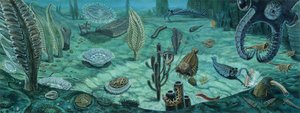
The Cambrian Explosion
The Cambrian Explosion marks a period of rapid evolutionary diversification, resulting in the emergence of most major animal phyla. Several factors contributed to this event:
Higher oxygen concentrations enabled more complex metabolisms.
Increased genome size allowed for greater genetic complexity.
Ecological diversity and new niches promoted adaptive radiation.
Multicellularity enabled cell specialization and complex body structures.
Abiotic Synthesis of Biomolecules
Elemental Abundance and the Origin of Life
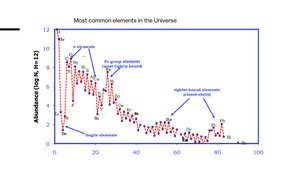
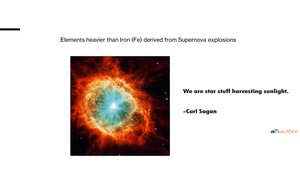
Many elements essential for life, such as carbon, hydrogen, oxygen, and nitrogen, are abundant in the universe. Heavier elements are formed in stars and distributed by supernovae, providing the raw materials for planetary and biological chemistry.
The Miller-Urey Experiment
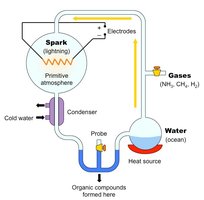
The Miller-Urey experiment (1950s) demonstrated that organic molecules, including amino acids and nucleotide bases, could form abiotically under conditions simulating early Earth's atmosphere. This provided experimental support for the chemical origins of life.
Simulated early atmosphere with gases like methane (CH4), ammonia (NH3), and hydrogen (H2).
Applied electrical sparks to mimic lightning, resulting in the formation of organic compounds.
Alternative Sites for Abiotic Synthesis
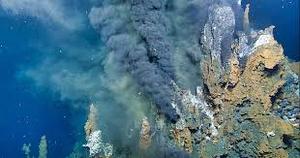
Besides atmospheric synthesis, deep-sea hydrothermal vents are proposed as sites for the origin of life. These environments provide heat, minerals, and catalytic surfaces for the synthesis of organic molecules.
Extraterrestrial Sources of Organic Molecules
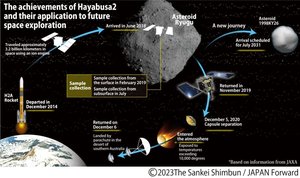
Meteorites and asteroids contain amino acids and nucleotide bases, suggesting that some building blocks of life may have an extraterrestrial origin. Space missions, such as Hayabusa2, have collected samples from asteroids to study these compounds without terrestrial contamination.
The RNA World Hypothesis
RNA as the First Genetic Molecule
The RNA World hypothesis proposes that RNA was the first macromolecule to store genetic information and catalyze chemical reactions. RNA's dual role as both genetic material and catalyst supports this idea.
Genetic Information Storage: RNA can encode genetic instructions.
Catalytic Activity: Ribozymes are RNA molecules with enzymatic functions, such as self-splicing and self-replication.
Modern Biochemistry: RNA is central to protein synthesis (mRNA, tRNA, rRNA) and energy metabolism (ATP).
The Three Domains of Life
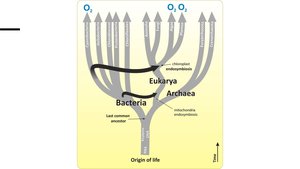
Bacteria, Archaea, and Eukaryotes
Life is classified into three domains based on genetic and structural differences:
Bacteria: Prokaryotic cells without a nucleus.
Archaea: Prokaryotic cells with unique membrane lipids and often adapted to extreme environments.
Eukaryotes: Cells with a membrane-bound nucleus and complex organelles.
Genetic Recombination in Bacteria
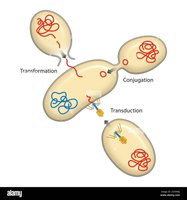
Bacteria increase genetic diversity through mechanisms such as transformation, conjugation, and transduction, collectively known as lateral gene transfer.
The Endosymbiosis Hypothesis
Origin of Eukaryotic Cells
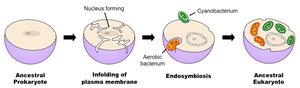
The endosymbiosis hypothesis explains the origin of mitochondria and chloroplasts as formerly free-living bacteria engulfed by ancestral eukaryotic cells. This mutually beneficial relationship led to the evolution of complex eukaryotic cells.
Mitochondria evolved from aerobic bacteria.
Chloroplasts evolved from photosynthetic cyanobacteria.
Both organelles retain their own DNA and ribosomes, supporting their prokaryotic ancestry.
Modern Examples of Endosymbiosis
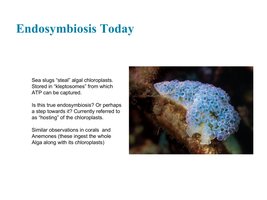
Some modern organisms, such as sea slugs and corals, maintain symbiotic relationships with photosynthetic algae, illustrating ongoing evolutionary processes similar to ancient endosymbiosis.
Cell Structure and Organization
Plasma Membrane Structure
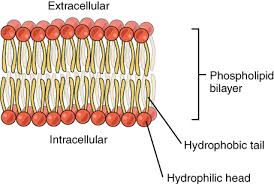
The plasma membrane (PM) is a selectively permeable barrier composed of a phospholipid bilayer with embedded proteins. It defines cell boundaries, maintains internal environments, and mediates communication and transport.
Phospholipids: Amphipathic molecules with hydrophilic heads and hydrophobic tails.
Proteins: Serve as enzymes, transporters, receptors, and structural components.
Endomembrane System
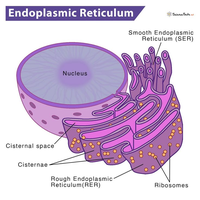
The endomembrane system includes the endoplasmic reticulum (ER), Golgi apparatus, vesicles, and lysosomes. It is responsible for the synthesis, processing, and transport of proteins and lipids.
Rough ER: Studded with ribosomes; site of protein synthesis and initial processing.
Smooth ER: Involved in lipid synthesis and detoxification.
Golgi Apparatus: Modifies, sorts, and packages proteins and lipids for secretion or delivery to other organelles.
Mitochondria and Chloroplasts
Mitochondria are the sites of aerobic respiration and energy (ATP) production, while chloroplasts are the sites of photosynthesis in plants and algae. Both organelles have double membranes and their own genomes, reflecting their endosymbiotic origins.
Chemistry of the Cell
Importance of Carbon
Carbon is the central element in organic molecules due to its ability to form four covalent bonds, allowing for diverse and stable molecular structures such as chains, rings, and branched compounds.
Chemical Bonds in Biology
Covalent Bonds: Strong bonds formed by sharing electron pairs; form the backbone of biomolecules.
Ionic Bonds: Electrostatic attractions between charged ions; important in protein structure and interactions.
Hydrogen Bonds: Weak bonds between polar molecules; stabilize DNA and protein secondary structures.
Van der Waals Interactions: Weak, transient attractions; contribute to protein folding and membrane fluidity.
Water: The Universal Solvent
Water is essential for life due to its polarity, high heat capacity, cohesion, and excellent solvent properties. It facilitates biochemical reactions and maintains cellular environments.
Macromolecules and Polymerization
Cells are composed of macromolecules—proteins, nucleic acids, and polysaccharides—formed by the polymerization of monomers through condensation reactions. These macromolecules assemble into complex cellular structures via self-assembly, guided by noncovalent interactions.
Summary Table: Comparison of Cell Types
Feature | Bacteria | Archaea | Eukaryotes |
|---|---|---|---|
Nucleus | No | No | Yes |
Membrane-bound organelles | No | No | Yes |
Cell wall composition | Peptidoglycan | Varied (no peptidoglycan) | Cellulose (plants), chitin (fungi), none (animals) |
Typical environment | Varied | Often extreme | Varied |
Practice Questions
Which type of cell lacks a nucleus? Answer: Prokaryotic cell
What is the primary function of the plasma membrane? Answer: To regulate the movement of substances in and out of the cell
Which bond is the strongest under physiological conditions? Answer: Covalent bond
What property of water allows it to dissolve many substances? Answer: Polarity
