 Indietro
Transcriptional Regulation and Epigenetics: Study Notes for Cell Biology
Guida di studio - Note intelligenti
 Appunti personalizzati basati sui tuoi materiali, ampliati con definizioni chiave, esempi e contesto.
Transcriptional Regulation and Epigenetics
Gene Regulation in E. coli
Gene regulation in E. coli is a classic model for understanding transcriptional control in prokaryotes. The lac operon is a well-studied system that demonstrates how cells respond to environmental changes by regulating gene expression.
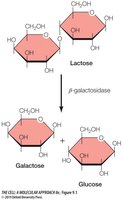
Lactose Metabolism: The lac operon encodes proteins necessary for the metabolism of lactose, a disaccharide sugar.
β-galactosidase: This enzyme hydrolyzes lactose into galactose and glucose, enabling E. coli to utilize lactose as an energy source.
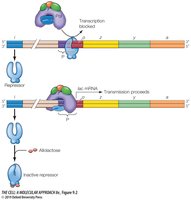
Regulation: The operon is regulated by both negative and positive control mechanisms, depending on the presence or absence of lactose and glucose.
Key Point: The lac operon is only transcribed when lactose is present and glucose is absent.
Example: When lactose is available, it binds to the repressor, inactivating it and allowing transcription of the operon.
Learning Objectives
Explain how lactose regulates transcription of the lac operon.
Distinguish between positive and negative control.
Explain why repressors inhibit but activators stimulate transcription.
Transcription Factors in Eukaryotes
Transcription factors (TFs) are proteins that bind to specific DNA sequences to regulate gene expression in eukaryotes. They play a crucial role in activating or repressing transcription and are essential for cell differentiation and development.
Promoters and Enhancers: Promoters are DNA sequences located near the transcription start site, while enhancers can be located far from the gene and increase transcription efficiency.
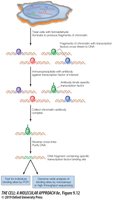
Experimental Approaches: Techniques such as chromatin immunoprecipitation (ChIP) and electrophoretic-mobility shift assays are used to study TF-DNA interactions.
Activators vs. Repressors: Activators increase transcription by facilitating RNA polymerase binding, while repressors decrease transcription by blocking access to the DNA.
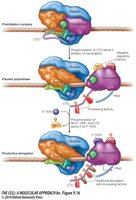
Transcriptional Elongation: Controlled by factors such as P-TEF-b kinase, which phosphorylates target proteins to promote productive elongation.
Learning Objectives
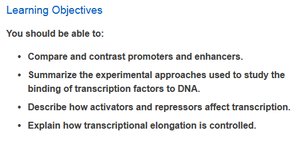
Compare and contrast promoters and enhancers.
Summarize experimental approaches used to study TF binding to DNA.
Describe how activators and repressors affect transcription.
Explain how transcriptional elongation is controlled.
Chromatin and Epigenetics
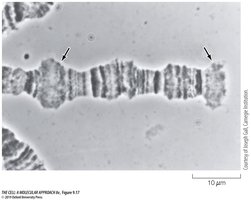
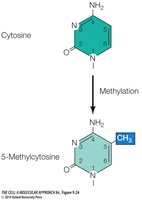
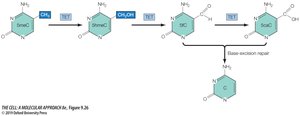
Chromatin structure and epigenetic modifications are fundamental to the regulation of gene expression in eukaryotes. Chromatin is composed of DNA wrapped around histone proteins, forming nucleosomes. Epigenetic changes, such as histone modification and DNA methylation, can alter chromatin accessibility and gene activity without changing the DNA sequence.
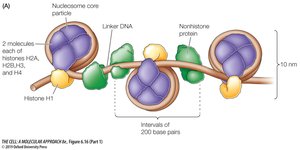
Nucleosome Organization: DNA is packaged into nucleosomes, which consist of histone proteins and linker DNA.
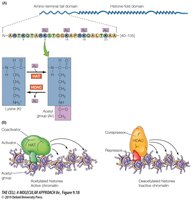
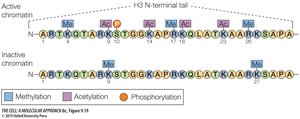
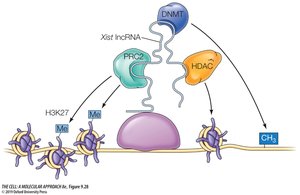
Histone Modifications: Acetylation (by HATs) loosens chromatin and activates transcription, while deacetylation (by HDACs) condenses chromatin and represses transcription.
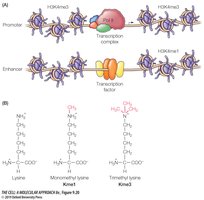
Methylation: Methylation of histone tails (e.g., K9, K27) is associated with inactive chromatin, while K4 methylation is linked to active chromatin.
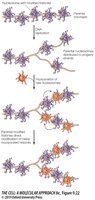
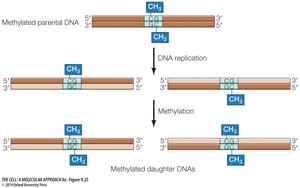
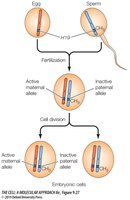
Epigenetic Inheritance: Histone modifications and DNA methylation patterns can be inherited through cell division, affecting gene expression in daughter cells.
Genomic Imprinting: Certain genes are expressed in a parent-of-origin-specific manner due to epigenetic marks.
lncRNAs: Long non-coding RNAs, such as Xist, play roles in gene repression and activation by recruiting chromatin-modifying complexes.
Learning Objectives
Describe the effects of different histone modifications on transcription.
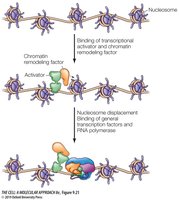
Summarize the action of chromatin remodeling factors.
Explain epigenetic inheritance based on histone modifications and DNA methylation.
Describe the action of lncRNAs in gene repression and activation.
Table: Characteristics of SRF Binding Sites
SRF (Serum Response Factor) is a transcription factor that can activate multiple genes by binding to consensus sequences in promoters.
Characteristic | Description |
|---|---|
Consensus Sequence | Specific DNA motif recognized by SRF |
Gene Activation | SRF can turn on multiple genes |
Promoter Utilization | SRF binds to promoter regions to regulate transcription |
Additional info: Consensus sequences are short, conserved DNA motifs that are recognized by transcription factors, enabling coordinated regulation of gene expression.
Summary
Transcriptional regulation involves complex interactions between DNA, transcription factors, chromatin structure, and epigenetic modifications.
Both prokaryotic and eukaryotic systems utilize repressors and activators to control gene expression in response to environmental and developmental cues.
Epigenetic mechanisms, including histone modification and DNA methylation, provide heritable changes in gene expression without altering the DNA sequence.
