 Indietro
Chapter 1: Introduction to Numbers, Data, and Problem Solving in College Algebra
Guida di studio - Note intelligenti
 Appunti personalizzati basati sui tuoi materiali, ampliati con definizioni chiave, esempi e contesto.
1.1 Numbers, Data, and Problem Solving
Recognizing Common Sets of Numbers
This section introduces the foundational sets of numbers used in algebra and mathematics. Understanding these sets is essential for classifying numbers and solving algebraic problems.
Natural Numbers (N): The set of counting numbers: {1, 2, 3, 4, ...}
Whole Numbers (W): The natural numbers plus zero: {0, 1, 2, 3, ...}
Integers (I): The set of whole numbers and their negatives: {..., -3, -2, -1, 0, 1, 2, 3, ...}
Rational Numbers (Q): Numbers that can be expressed as the ratio of two integers , where .
Irrational Numbers: Numbers that cannot be written as a ratio of two integers. Their decimal expansions are non-terminating and non-repeating.
Real Numbers (R): All rational and irrational numbers; any number that can be represented on the number line.


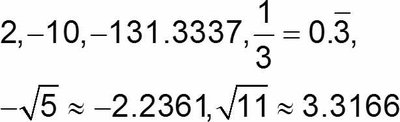
Classifying Numbers
Numbers can belong to more than one set. For example, every natural number is also a whole number, integer, rational number, and real number. The classification depends on the properties of the number.
Example: 5 is a natural, whole, integer, and rational number.
Example: -1.2 is a rational number (it can be written as ).
Example: is an irrational number (its decimal expansion does not terminate or repeat).
Example: 0 is a whole number, integer, and rational number.

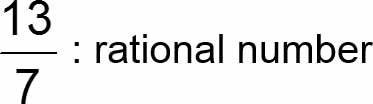


Order of Operations
To evaluate mathematical expressions correctly, follow the order of operations:
Perform calculations inside parentheses, square roots, and absolute value bars first.
Evaluate exponents and roots.
Apply negation after exponents.
Do all multiplication and division from left to right.
Do all addition and subtraction from left to right.
Example: Evaluate and .
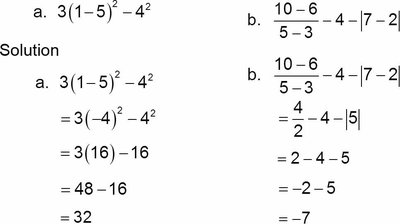
Evaluating Expressions and Problem Solving
Applying the order of operations and algebraic formulas is essential for solving real-world problems, such as finding the volume of a cylinder or converting units.
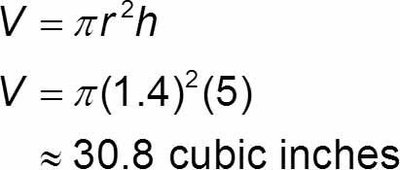
Volume of a Cylinder:
Example: If inches and inches, then cubic inches.
To convert cubic inches to fluid ounces, multiply by 0.55 (since 1 cubic inch = 0.55 fluid ounce).
Calculating Percent Change
Percent change is used to measure the relative increase or decrease in a quantity over time. The formula for percent change is:
Example: If the Consumer Price Index (CPI) increased from 80 in 1980 to 237 in 2015, the percent change is:
Example: If college tuition increased from $804 to $9410 from 1980 to 2015, the percent change is:

This shows that tuition increased much more rapidly than the general price level (CPI) during this period.
Tabular Data: Consumer Price Index (CPI)
The following table summarizes the CPI for selected years, illustrating the steady increase in consumer prices over time.
Year | 1970 | 1975 | 1980 | 1985 | 1990 | 1995 | 2000 | 2005 | 2010 | 2015 |
|---|---|---|---|---|---|---|---|---|---|---|
CPI | 39 | 54 | 80 | 108 | 131 | 152 | 172 | 195 | 218 | 237 |
Main Purpose: This table is used to analyze trends in inflation and calculate percent changes over time.
