Indietro
College Algebra Chapter 1: Graphs, Equations, and Inequalities
Guida di studio - Note intelligenti
 Appunti personalizzati basati sui tuoi materiali, ampliati con definizioni chiave, esempi e contesto.
Section 1.1 – Graphs
Cartesian Coordinate System
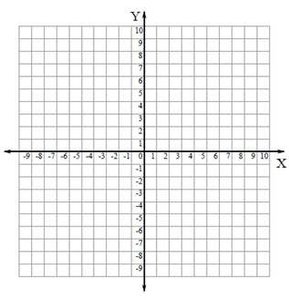
The Cartesian coordinate system is a two-dimensional plane defined by a horizontal axis (x-axis) and a vertical axis (y-axis). Every point in this system corresponds to an ordered pair of real numbers (x, y).
Plotting Points: Each point is represented as (x, y), where x is the horizontal position and y is the vertical position.
Quadrants: The axes divide the plane into four quadrants.
Example: Plot the points A(2, 7), B(−3, −5), C(5, 0), D(0, −8), and E(15/2, −6).
Graphs of Equations
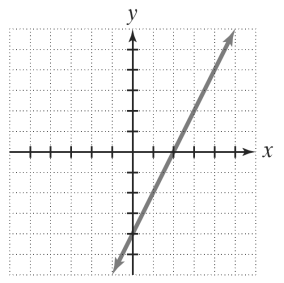
Graphs visually represent the set of all solutions to an equation in the coordinate plane. Common methods include plotting points and connecting them to reveal the shape of the graph.
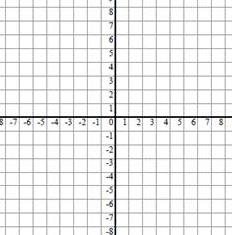
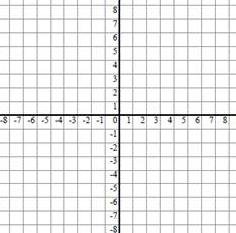
Point-Plotting Method: Substitute values for x, solve for y, and plot the resulting points.
Example: Graph y = 4 − x2 and y = |x + 1| by plotting points.
Intercepts
Intercepts are points where a graph crosses the axes.
x-intercept: The x-coordinate where the graph crosses the x-axis (y = 0).
y-intercept: The y-coordinate where the graph crosses the y-axis (x = 0).
Multiple or No Intercepts: A graph can have multiple, one, or no x- or y-intercepts.
Interpreting Information from Graphs
Graphs can be used to interpret real-world data, such as trends and relationships between variables.
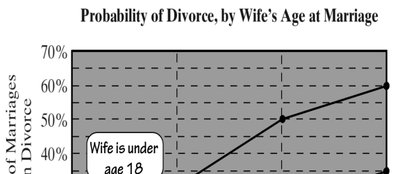
Example: The probability of divorce based on the wife's age at marriage is shown using line graphs and mathematical models.
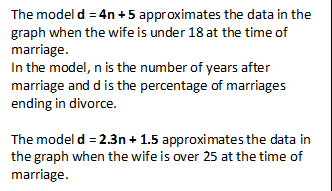
Mathematical Models: For wives under 18: ; for wives over 25: , where n is years after marriage and d is the percentage of marriages ending in divorce.
Section 1.2 – Linear and Rational Equations
Linear Equations
A linear equation can be written in the form , where a and b are real numbers and .
Solving Linear Equations: Isolate the variable using algebraic operations.
Example: Solve .
Rational Equations
A rational equation contains at least one term that is a fraction with a variable in the denominator.
1) Identify restrictions (values that make the denominator zero).
2) Find the least common denominator (LCD) and multiply every term by it.
3) Simplify and solve the resulting equation.
4) Check that solutions do not violate restrictions.
Example: Solve and .
Section 1.3 – Models and Applications
Problem Solving with Linear Equations
Application problems can be solved using linear equations by following a structured approach.
1) Read and understand the problem. Assign a variable to the unknown.
2) Express other unknowns in terms of this variable.
3) Write and solve a linear equation.
4) Check that the solution makes sense in context.
Example: A pool is 6 meters less than twice its width. If the perimeter is 126 meters, find its dimensions.
Section 1.4 – Complex Numbers
Definition and Operations
Complex numbers are numbers of the form , where is the imaginary unit defined as .
Adding/Subtracting: Combine real and imaginary parts separately.
Multiplying: Use distributive property and .
Complex Conjugate: For , the conjugate is .
Dividing: Multiply numerator and denominator by the conjugate of the denominator.
Example:
Section 1.5 – Quadratic Equations
General Form and Solution Methods
A quadratic equation has the form , where . There are several methods to solve quadratic equations:
Factoring: Set equation to zero, factor, and use the Zero-Product Principle.
Square Root Property: Isolate the squared term and take the square root of both sides (include ±).
Completing the Square: Transform the equation into a perfect square trinomial.
Quadratic Formula:
The Discriminant
The discriminant determines the number and type of solutions:
D > 0 and a perfect square: Two real rational solutions
D > 0 and not a perfect square: Two real irrational solutions
D = 0: One real solution
D < 0: Two complex solutions
Section 1.6 – Solving Other Types of Equations
Polynomial, Radical, and Quadratic-Like Equations
Polynomial Equations: Set all terms to one side, factor, and solve.
Radical Equations: Isolate the radical, square both sides, and check for extraneous solutions.
Equations Quadratic in Form: Use substitution to simplify and solve.
Section 1.7 – Linear Inequalities and Absolute Value Inequalities
Solving Linear Inequalities
Linear inequalities are solved similarly to equations, with special attention to multiplying or dividing by negative numbers (reverse the inequality sign).
Compound Inequalities: "And" means both conditions must be true; "Or" means at least one is true.
Graphing Solutions: Solutions are often represented on a number line.
Absolute Value Inequalities
For , the solution is . For , the solution is or (where ).
Isolate the absolute value before applying these rules.
Example: Solve .
Interval and Set-Builder Notation
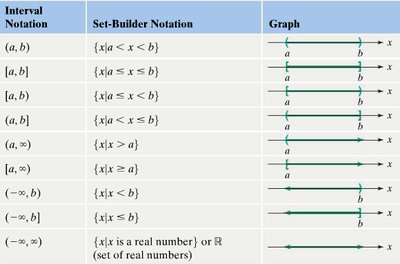
Intervals can be expressed in two main ways: interval notation and set-builder notation. Brackets [ ] indicate inclusion of endpoints; parentheses ( ) indicate exclusion.
Interval Notation | Set-Builder Notation | Graph |
|---|---|---|
(a, b) | {x | a < x < b} | Open interval between a and b |
[a, b] | {x | a ≤ x ≤ b} | Closed interval between a and b |
(a, b] | {x | a < x ≤ b} | Left open, right closed |
[a, b) | {x | a ≤ x < b} | Left closed, right open |
(a, ∞) | {x | x > a} | Greater than a |
[a, ∞) | {x | x ≥ a} | Greater than or equal to a |
(−∞, b) | {x | x < b} | Less than b |
(−∞, b] | {x | x ≤ b} | Less than or equal to b |
(−∞, ∞) | {x | x is a real number} or ℝ | All real numbers |