 Indietro
College Algebra: More on Functions (Chapter 2) – Study Notes
Guida di studio - Note intelligenti
 Appunti personalizzati basati sui tuoi materiali, ampliati con definizioni chiave, esempi e contesto.
Chapter 2: More on Functions
2.1 Increasing, Decreasing, and Piecewise Functions; Applications
This section explores the behavior of functions in terms of their increase, decrease, or constancy over intervals, and introduces piecewise functions and their applications.
Increasing Function: A function f is increasing on an open interval I if for all a and b in I, a < b implies f(a) < f(b).
Decreasing Function: A function f is decreasing on an open interval I if for all a and b in I, a < b implies f(a) > f(b).
Constant Function: A function f is constant on an open interval I if for all a and b in I, f(a) = f(b).
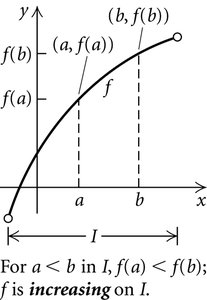
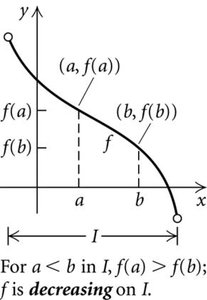
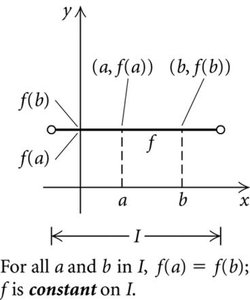
Relative Maximum: f(c) is a relative maximum if there exists an open interval containing c such that for any other value x in that interval, f(c) > f(x).
Relative Minimum: f(c) is a relative minimum if there exists an open interval containing c such that for any other value x in that interval, f(c) < f(x).
Piecewise Functions: A function defined by different expressions over different parts of its domain. For example:
For x ≤ 0, f(x) = -3
For 0 < x ≤ 2, f(x) = -3 + x^2
For x > 2, f(x) = x/2 - 1
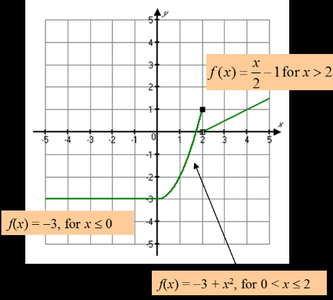
Example: Evaluate f(-3), f(1), and f(5) for the above piecewise function.
f(-3) = 9 (using f(x) = x^2 for x ≤ 0)
f(1) = 4 (using f(x) = 4 for 0 < x ≤ 2)
f(5) = 4 (using f(x) = x - 1 for x > 2)
2.2 The Algebra of Functions
This section covers operations with functions, including addition, subtraction, multiplication, and division, as well as the difference quotient.
Sum:
Difference:
Product:
Quotient:
Example: Given f(x) = x + 2 and g(x) = 2x + 5:
Domain: The domain of , , and is the intersection of the domains of and . For , exclude values where .
Difference Quotient: Measures the average rate of change of a function over an interval:
Formula:
Example: For :
Difference quotient:
2.3 The Composition of Functions
Composition involves applying one function to the result of another. If and are functions, the composition is defined as .
Domain: The domain of is the set of all in the domain of such that is in the domain of .
Example: If and :
Decomposing Functions: Expressing a complex function as a composition of simpler functions. For example, can be written as where and .
2.4 Symmetry and Transformations
This section discusses the symmetry of graphs and how functions can be transformed through translations, reflections, and stretching/shrinking.
Symmetry with respect to the x-axis: If is on the graph, so is .
Symmetry with respect to the y-axis: If is on the graph, so is .
Symmetry with respect to the origin: If is on the graph, so is .
Even Function: for all in the domain (symmetric about the y-axis).
Odd Function: for all in the domain (symmetric about the origin).
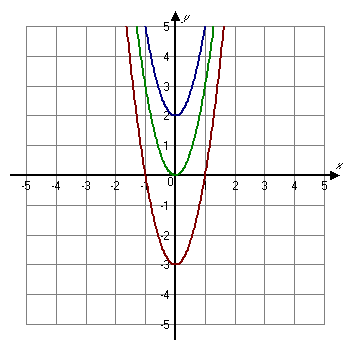
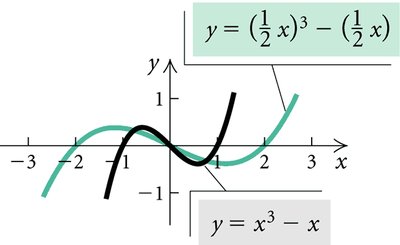
Vertical Translation: shifts the graph up by units; shifts it down by units.
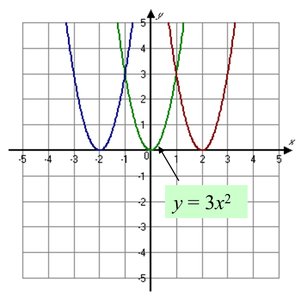
Horizontal Translation: shifts the graph right by units; shifts it left by units.
Reflections:
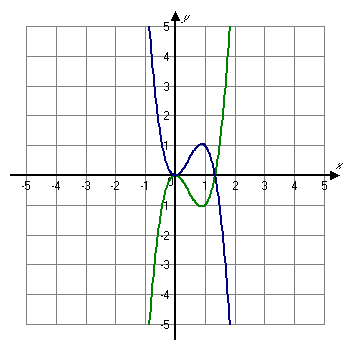
reflects across the x-axis.
reflects across the y-axis.
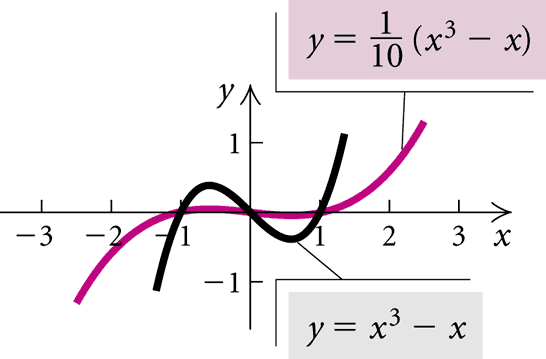
Vertical Stretching/Shrinking: stretches vertically if , shrinks if . If , also reflects across the x-axis.
Horizontal Stretching/Shrinking: shrinks horizontally if , stretches if . If , also reflects across the y-axis.
2.5 Variation and Applications
This section introduces direct and inverse variation, which describe proportional relationships between variables.
Direct Variation: , where is the variation constant. varies directly as .
Inverse Variation: , where is the variation constant. varies inversely as .
Example (Direct): If when , then and .
Example (Inverse): If when , then and .
