 Indietro
Jones College Algebra Syllabus & Course Structure Study Guide
Guida di studio - Note intelligenti
 Appunti personalizzati basati sui tuoi materiali, ampliati con definizioni chiave, esempi e contesto.
Course Overview
Introduction to College Algebra
This course, MAT 1313 College Algebra, is designed to provide students with foundational and advanced algebraic concepts necessary for further study in mathematics and related fields. The syllabus outlines the structure, requirements, and expectations for successful completion of the course.
Course Structure and Content
Major Topics Covered
Equations and Inequalities: Linear and quadratic equations, applications, rational and radical equations, absolute value equations and inequalities.
Graphs and Functions: Rectangular coordinate system, graphing equations, functions, piecewise functions, operations and composition of functions, graphs of functions.
Polynomial and Rational Functions: Quadratic functions, synthetic division, zeros of polynomial functions, graphs of polynomial functions.
Inverse, Exponential, and Logarithmic Functions: Inverse functions, exponential functions, logarithmic functions, solving exponential and logarithmic equations.
Systems and Matrices: Systems of linear equations.
Analytic Geometry: Equations of circles.
Learning Outcomes
Solving linear and quadratic equations and application problems.
Solving equations and inequalities.
Understanding and graphing equations in the rectangular coordinate system.
Writing equations of circles.
Defining and understanding functions and their properties.
Sketching graphs of linear, quadratic, and other functions.
Performing operations and composition of functions.
Extending properties of first- and second-degree functions to higher-degree polynomials.
Determining inverse functions.
Studying and solving exponential and logarithmic equations.
Solving systems of equations in two variables.
Course Requirements
Prerequisites
Completion of MAT 1234 Intermediate Algebra with a grade of C or better, or an ACT math score of 17 or above.
Required Materials
Textbook: College Algebra by Lial, Hornsby, Schneider, Daniels, 13th edition (Ebook).
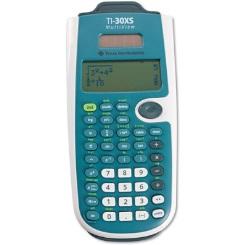
Calculator: Non-graphing calculator (TI-30XS recommended).
Evaluation and Grading
Grading Formula
Your overall average is calculated as follows:
Test 1: 21%
Test 2: 21%
Final Exam: 23%
Homework Average: 35% (MyLabs 30%, Canvas assignments 5%)
LaTeX formula for overall average:
Grading Scale
Grade | Percentage |
|---|---|
A | 90 - 100 |
B | 80 - 89 |
C | 70 - 79 |
D | 60 - 69 |
F | 0 - 59 |
Course Schedule
Weekly Topics and Assignments
Weeks 1-2: Linear equations, applications, quadratic equations, factoring.
Weeks 3-4: Rational & radical equations, circles, functions, practice tests.
Weeks 5-7: Linear functions, equations of lines, piecewise functions, graphs of functions, operations and composition.
Weeks 8-10: Quadratic functions, synthetic division, zeros and graphs of polynomial functions, inverse functions.
Weeks 11-12: Exponential and logarithmic functions, solving related equations, systems of linear equations.
Weeks 13-15: Absolute value equations and inequalities, final exam review and completion.
Testing and Homework Policies
Testing Information
Three proctored exams and a final exam (may replace lowest test score if higher).
Exams must be scheduled at MSVCC-approved testing centers or via approved online proctoring.
Photo ID, non-graphing calculator, and pencil required for exams.
Strict deadlines; no extensions except for documented emergencies.
Homework Policies
Homework assigned weekly in MyMathLab and Canvas.
Three attempts per problem; "similar question" option available after incorrect attempts.
Homework closes the Sunday before test week and will not be reopened.
Practice tests and study guides available for exam preparation.
Attendance and Academic Progress
Attendance Policy
Probation after 1 absence; withdrawal or FA after 3 absences.
Absences tracked by last day of attendance or participation.
Appeal procedures available for excessive absences.
Academic Progress
Weekly completion of assignments and participation required.
Canvas login alone does not count as academic progress.
Additional Course Information
Classroom Behavior and Academic Integrity
Disruptive behavior not tolerated; adherence to Student Code of Conduct required.
Cheating and impersonation during exams result in severe penalties.
Accommodations and Non-Discrimination
Reasonable accommodations available for registered students with disabilities.
Contact ADA Coordinator for assistance.
Accreditation
Jones County Junior College is accredited by the Southern Association of Colleges and Schools Commission on Colleges (SACSCOC).
Study and Exam Preparation Tips
Take practice tests multiple times (recommended: 5–15 times).
Plan to study 5–15 hours for each exam.
Review study guides and homework problems for exam content.
Professional Communication
Email Etiquette
Address instructors formally (e.g., Mrs., Mr., Dr., Professor).
Use proper punctuation and include your full name and student ID.
Sample email format provided in syllabus.
Course Timeline and Key Dates
Important Weekly Sections
Week 1: Linear equations, applications, factoring videos.
Week 2: Quadratic equations, applications.
Week 3: Rational & radical equations, circles.
Week 4: Functions, practice test, homework due.
Week 5: Linear functions, Test 1.
Week 6-7: Equations of lines, piecewise functions, graphs, operations, composition.
Week 8-10: Quadratic functions, synthetic division, zeros, graphs, inverse functions, Test 2.
Week 11-12: Exponential, logarithmic functions, systems of equations.
Week 13-15: Absolute value equations/inequalities, final exam review, final exam.
Visual Aids

Jones College logo: Represents the institution offering the College Algebra course.
TI-30XS scientific calculator: Required for exams and homework, supports algebraic calculations without graphing capabilities.
