 Indietro
Linear Equations: Concepts, Types, and Solution Methods
Guida di studio - Note intelligenti
 Appunti personalizzati basati sui tuoi materiali, ampliati con definizioni chiave, esempi e contesto.
Linear Equations and Their Solutions
Definition and Recognition of Linear Equations
Linear equations are fundamental in algebra and can be recognized by their form and properties. A linear equation in one variable can be written as , where a and b are constants and . Linear equations are distinguished from nonlinear equations, which involve variables raised to powers other than one or products of variables.
Equation: A statement that two mathematical expressions are equal.
Linear Equation: An equation of the form .
Nonlinear Equation: An equation that cannot be written in the linear form.
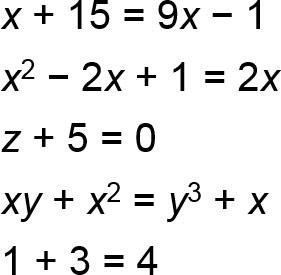
Solutions to Equations
Solving an equation means finding all values of the variable that make the equation true. These values are called solutions, and the set of all solutions is the solution set. Two equations are equivalent if they have the same solution set.
Contradiction: An equation with no solution.
Identity: An equation true for all values of the variable.
Conditional Equation: An equation true for some, but not all, values of the variable.
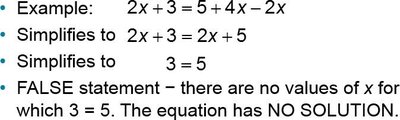
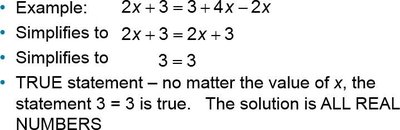
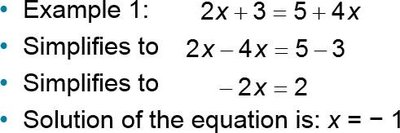
Solving Linear Equations Symbolically
Properties of Equality
To solve linear equations symbolically, we use the properties of equality:
Addition Property: If , then .
Multiplication Property: If and , then .
Example: Solving a Linear Equation Symbolically
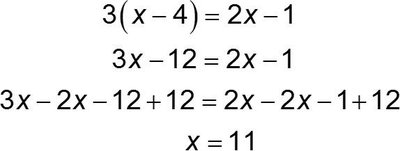
Consider the equation . Apply the distributive property and solve:
Expand:
Subtract from both sides:
Add $12x = 11$
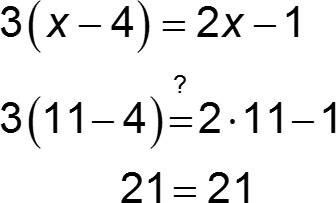
Check the solution by substituting :
Eliminating Fractions and Decimals
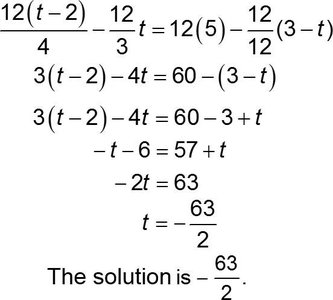
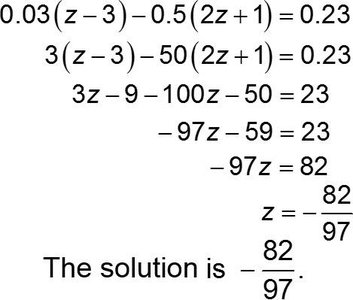
To simplify equations with fractions or decimals, multiply both sides by the least common denominator (LCD) or an appropriate power of 10.
Example (Fractions): Multiply both sides by 12 to clear denominators.
Example (Decimals): Multiply both sides by 100 to clear decimals.
Solving Linear Equations Graphically
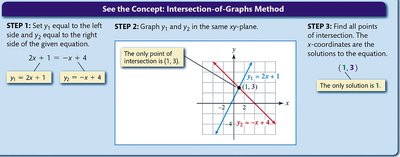
Intersection-of-Graphs Method
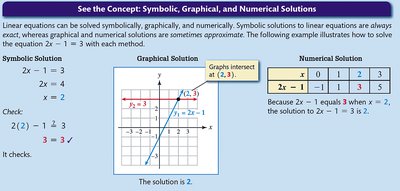
Graphical solutions involve plotting the left and right sides of the equation as separate functions and finding their intersection.
Set equal to the left side and equal to the right side.
Graph and in the same -plane.
The -coordinate of the intersection point is the solution.
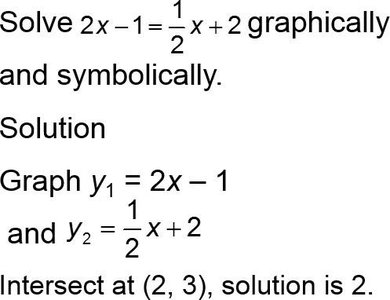
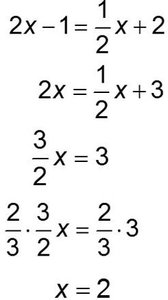
Example: Graphical and Symbolic Solution
For :
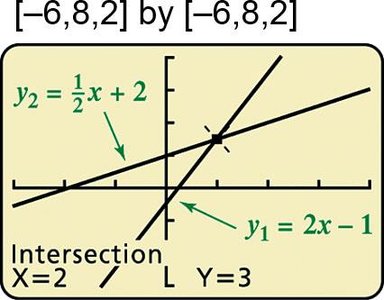
Graph and .
Intersection at , so .
Solving Linear Equations Numerically
Numerical Solution Using Tables
Numerical methods involve creating a table of values for the function and identifying where the function crosses zero.
Increment in steps and observe the sign change in .
Refine the interval to approximate the solution.
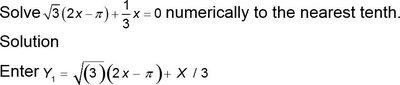
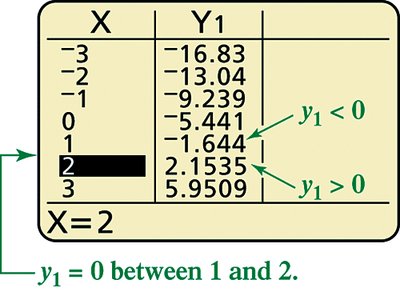
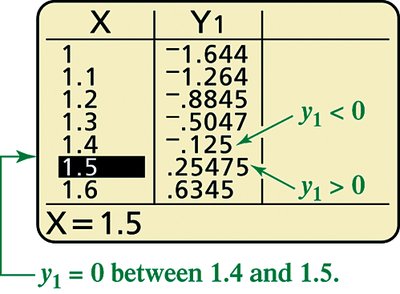
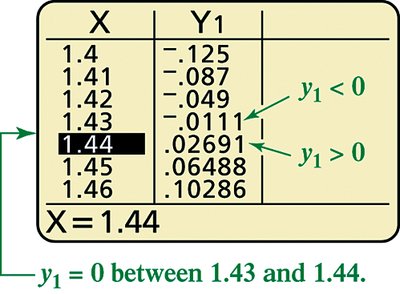
Solving Application Problems
Percentage Applications
Linear equations are used to solve real-world problems involving percentages. For example, if 76% of bicycle riders do not wear helmets, the function computes the number of riders without helmets.
To find the total number of riders, solve million.
Motion Applications
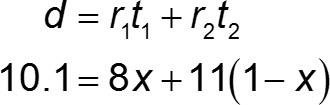
Problems involving motion often use the formula , where is distance, is rate, and is time. Assign variables, write equations, solve, and check the solution.
Let be the time at one speed, at another.
Write the equation:
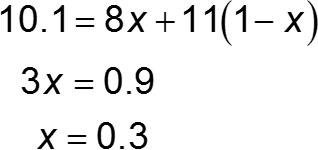
Solve for .
Summary Table: Types of Equations
Type | Description | Example |
|---|---|---|
Contradiction | No solution | |
Identity | All real numbers are solutions | |
Conditional | Some values are solutions |
Key Steps for Solving Application Problems
Read and understand the problem. Assign variables.
Write an equation relating the quantities.
Solve the equation.
Check the solution for reasonableness.
Additional info: Academic context and examples were expanded for completeness and clarity.
