 Indietro
Radicals and Roots: Structure, Simplification, and Operations
Guida di studio - Note intelligenti
 Appunti personalizzati basati sui tuoi materiali, ampliati con definizioni chiave, esempi e contesto.
Radicals and Roots
Parts of a Radical
Radical expressions are fundamental in algebra, representing roots of numbers or variables. Understanding their structure is essential for simplification and manipulation.
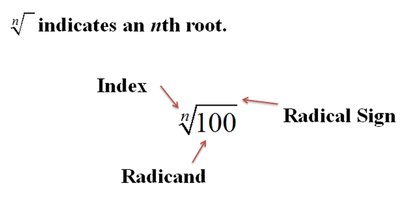
Radical Symbol: The symbol \( \sqrt{} \) denotes the root.
Index: Indicates which root is being taken (e.g., 2 for square root, 3 for cube root). If not shown, the index is implied to be 2.
Radicand: The value or expression under the radical symbol.
Coefficient: The number in front of the radical symbol, multiplying the radical.
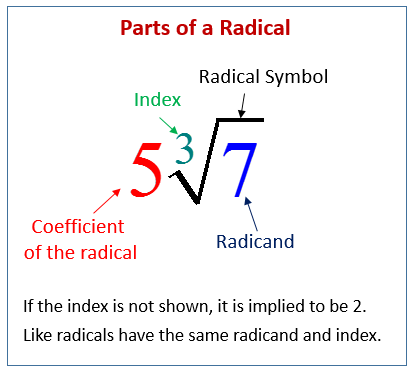
Like radicals have the same radicand and index, which is necessary for addition and subtraction.
Perfect Squares and Simplifying Square Roots
Square roots of perfect squares simplify to rational numbers. If the radicand is not a perfect square, the result is an irrational number.
Perfect Squares: Numbers like 1, 4, 9, 16, 25, etc., whose square roots are integers.
Example: \( \sqrt{16} = 4 \)
Non-perfect Squares: Numbers like 7, 8, etc., whose square roots are irrational.
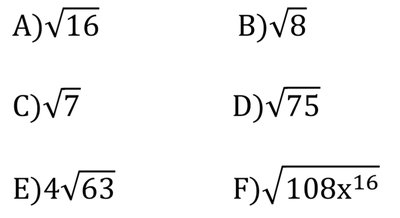
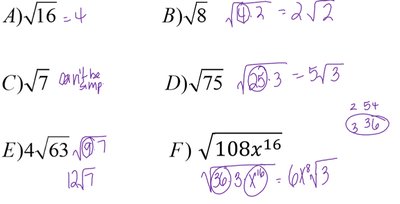
Example: \( \sqrt{128} = 2^7 \) → We look for how many times the exponent is divisible by the index.

Exponent Laws and Product Rule
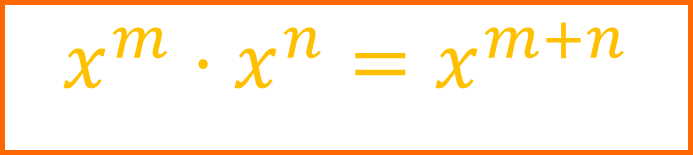
Exponent laws are essential for manipulating expressions under radicals. The product rule allows multiplication of like bases by adding exponents.
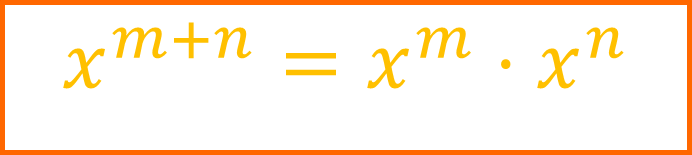
Product Rule: \( x^m \cdot x^n = x^{m+n} \)
Reverse Product Rule: \( x^{m+n} = x^m \cdot x^n \)
Cube Roots and Higher Roots
Cube roots and nth roots generalize the concept of square roots. The index determines the root being taken, and the rules for simplification depend on whether the index is odd or even.
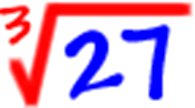
Cube Root: \( \sqrt[3]{27} = 3 \) because \( 3^3 = 27 \).
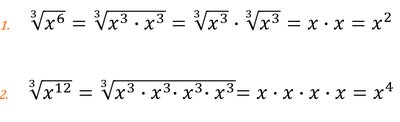
Variable Radicands: A variable is a perfect cube if its exponent is divisible by 3.
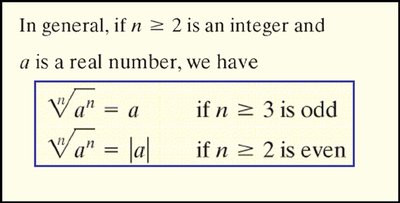
Even Roots: Use absolute value if the resulting power is odd.
Odd Roots: No absolute value needed; negative radicands are allowed.
Simplifying Radicals
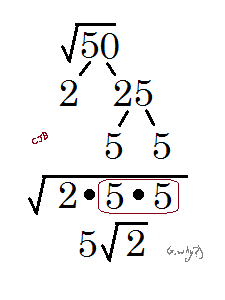
To simplify radicals, factor the radicand and extract perfect powers according to the index.
Write the prime factorization of the radicand.
Group factors according to the index.
Move each group outside the radical as a single factor.
Anything left remains under the radical.

Radicals with Variables
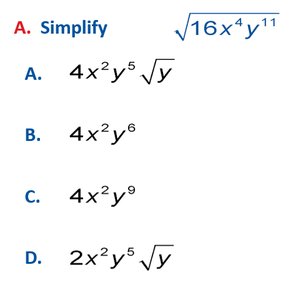
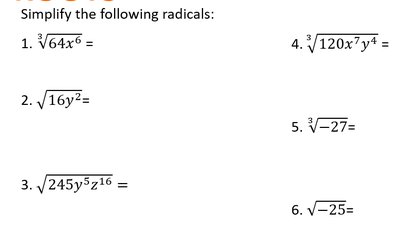
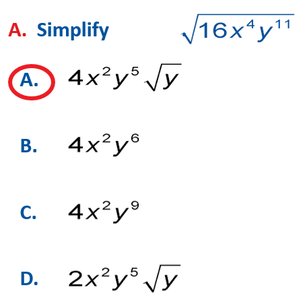
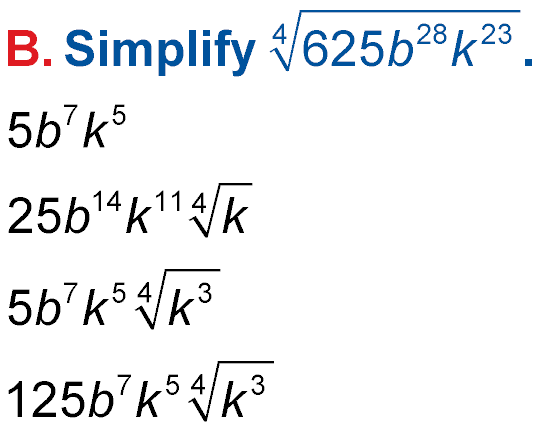
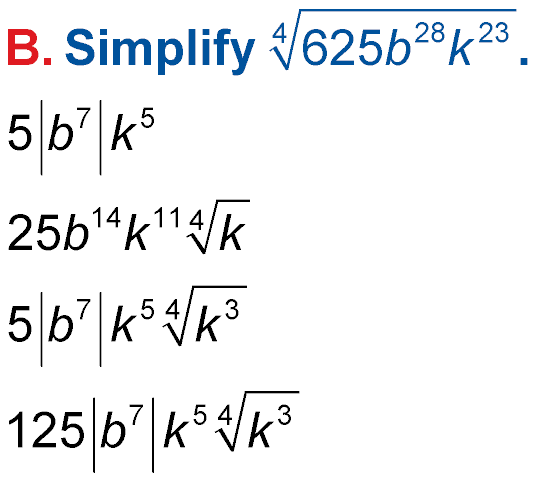
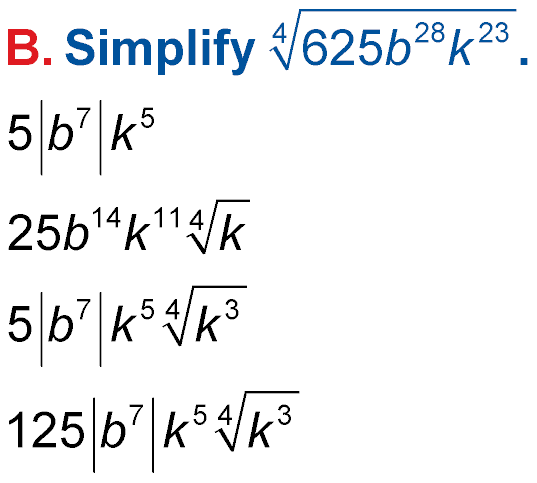
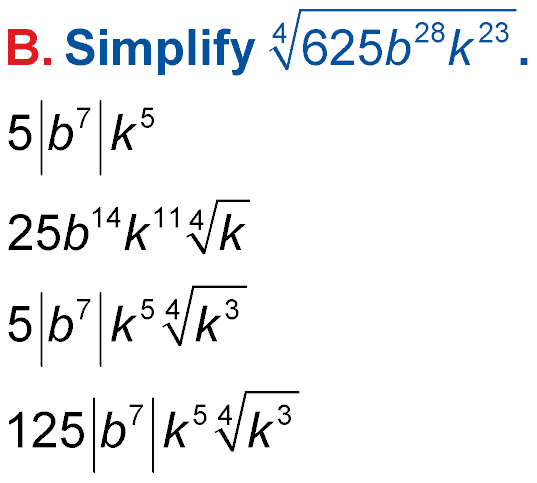
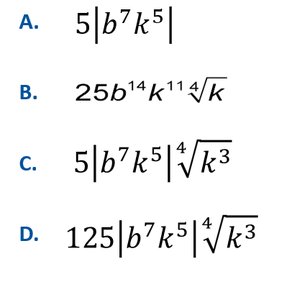
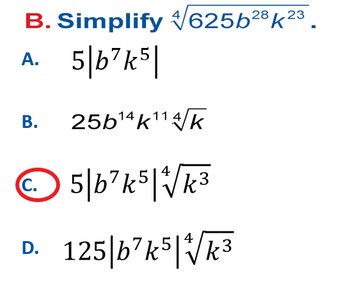
When simplifying radicals with variables, consider the exponent of the variable and the index of the root.
If the exponent is divisible by the index, the variable can be moved outside the radical.
For even indices, use absolute value if the resulting exponent is odd.


Adding and Subtracting Radicals
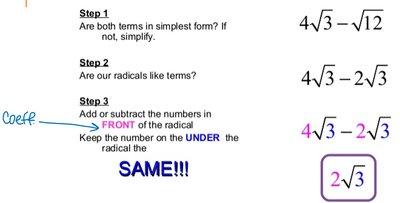
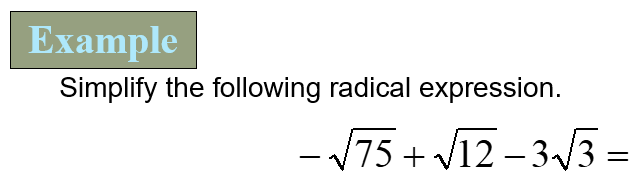
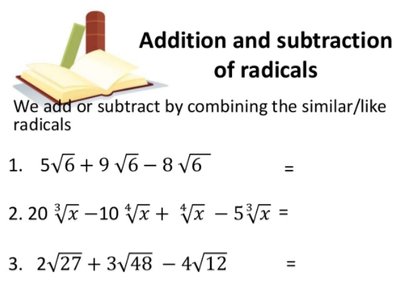
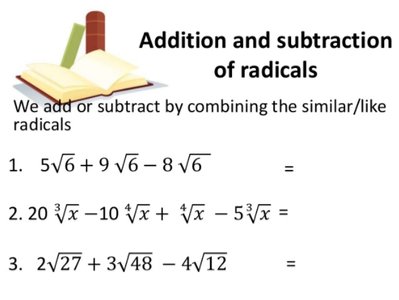
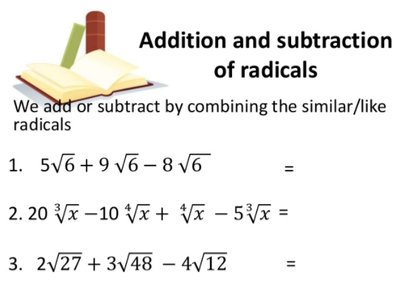
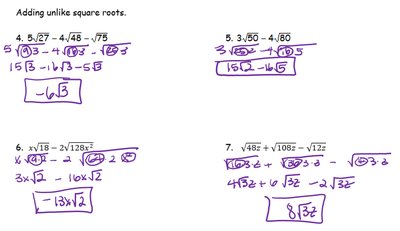
Radicals can only be added or subtracted if they are like radicals (same index and radicand). Simplify each radical first, then combine coefficients.
Step 1: Simplify each radical.
Step 2: Check if radicals are like terms.
Step 3: Add or subtract coefficients, keeping the radical part unchanged.
Multiplying Radicals
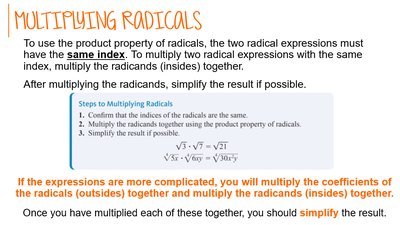
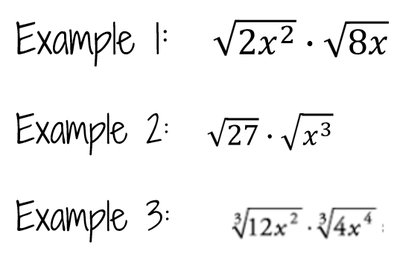
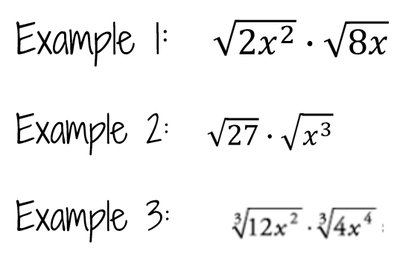
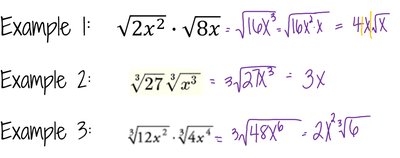
To multiply radicals, the indices must match. Multiply the radicands and simplify if possible. If coefficients are present, multiply them as well.
Multiply radicands under the same radical sign.
Multiply coefficients outside the radical.
Simplify the resulting radical.
Distributive Property and FOIL with Radicals
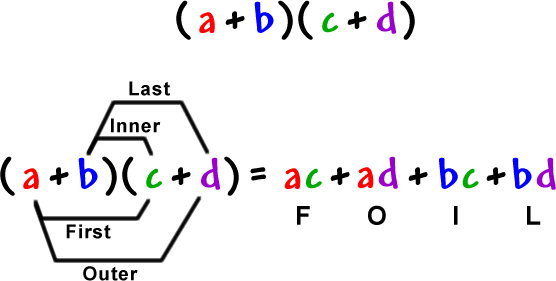
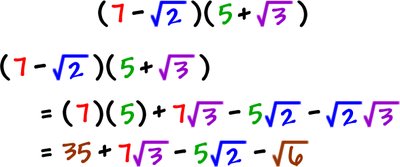
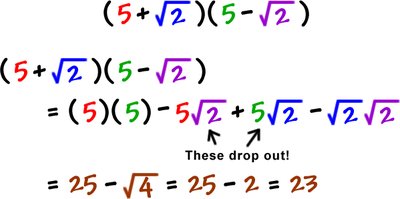
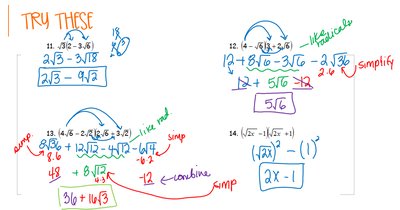
When multiplying binomials containing radicals, use the distributive property or FOIL (First, Outer, Inner, Last) method. Combine like terms and simplify.
Expand the expression using FOIL.
Simplify each term, combining like radicals.
Recognize special products, such as the difference of squares.
Dividing Radicals: Quotient Rule
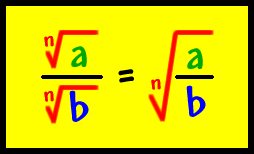
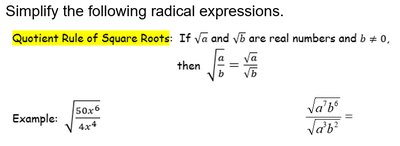
To divide radicals, the indices must match. The quotient rule allows division of radicands under a single radical sign.
\( \frac{\sqrt[n]{a}}{\sqrt[n]{b}} = \sqrt[n]{\frac{a}{b}} \)
Simplify the resulting radical if possible.
Rationalizing the Denominator
Radical expressions should not have radicals in the denominator. Rationalizing involves multiplying by an appropriate expression to eliminate the radical.
For square roots, multiply numerator and denominator by the radical in the denominator.
For higher roots, multiply by a value that creates a perfect power under the radical.
For binomial denominators, use the conjugate to apply the difference of squares.
Radical Expressions with Rational Exponents
Rational exponents provide an alternative notation for roots. The exponent \( \frac{1}{n} \) corresponds to the nth root.
\( x^{\frac{1}{n}} = \sqrt[n]{x} \)
\( x^{\frac{m}{n}} = \sqrt[n]{x^m} \)
Negative exponents indicate reciprocals.
Example: \( x^{-\frac{1}{2}} = \frac{1}{\sqrt{x}} \)
Summary Table: Properties of Radicals
Property | Formula (LaTeX) | Conditions |
|---|---|---|
Product Rule | Same index | |
Quotient Rule | Same index, | |
Power Rule | for even | |
Absolute Value Rule | if is even |
Additional info: These notes cover the structure, simplification, and operations of radicals, including rational exponents, and are directly relevant to College Algebra topics such as roots, radical expressions, and exponent laws.
