Indietro
Building Blocks of Managerial Accounting: Study Notes
Guida di studio - Note intelligenti
 Appunti personalizzati basati sui tuoi materiali, ampliati con definizioni chiave, esempi e contesto.
Building Blocks of Managerial Accounting
Business Sectors
Managerial accounting applies to various business sectors, each with distinct characteristics and cost structures. Understanding these sectors is essential for accurate cost allocation and decision-making.
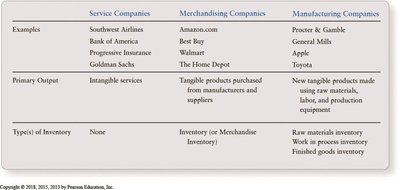
Service Companies: Sell intangible services (e.g., health care, insurance, banking, consulting). Largest sector in the U.S. economy. Generally, do not hold inventory.
Merchandising Companies: Resell tangible products purchased from manufacturers and suppliers (e.g., Walmart, Best Buy). Carry substantial inventory. Includes retailers and wholesalers.
Manufacturing Companies: Use labor, plant, and equipment to convert raw materials into finished products (e.g., Toyota). Maintain three types of inventory: raw materials, work in process, and finished goods.
Examples: Service: Southwest Airlines, Bank of America; Merchandising: Amazon.com, Walmart; Manufacturing: Procter & Gamble, Toyota.
Cost Objects
A cost object is anything for which managers want to know the cost. Cost objects can include products, departments, projects, or activities.
Examples: Individual units, product models, marketing strategies, geographic segments, departments, sustainability initiatives.
Direct and Indirect Costs
Costs are classified based on their traceability to cost objects:
Direct Costs: Costs that can be traced directly to a cost object (e.g., direct materials, direct labor).
Indirect Costs: Costs that cannot be traced specifically to a cost object; they are shared among multiple cost objects (e.g., manufacturing overhead).
Assigning Costs to Cost Objects
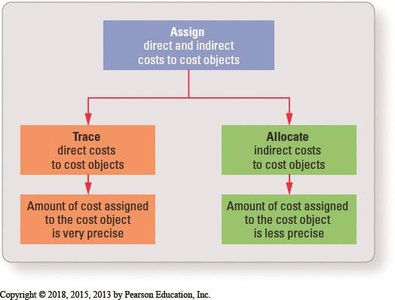
Direct costs are traced to cost objects, providing precise cost assignment. Indirect costs are allocated, resulting in less precise assignment.
Tracing: Direct association with cost object.
Allocating: Indirect association, often using allocation bases.
Costs for Internal Decision Making
Managers consider all costs incurred across the value chain for internal decision making. The total cost includes all resources used throughout the value chain, ensuring pricing covers all costs and yields profit.
Value Chain: Includes R&D, design, production, marketing, distribution, and customer service.
Total Cost Formula:
Costs for External Reporting
External reporting must follow GAAP, distinguishing between product costs and period costs:
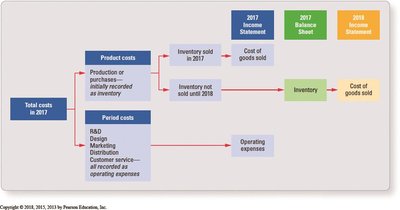
Product Costs: Costs incurred to produce or purchase products; treated as inventory until sold.
Period Costs: Costs not related to inventory; expensed immediately (e.g., operating expenses, selling, general, and administrative expenses).
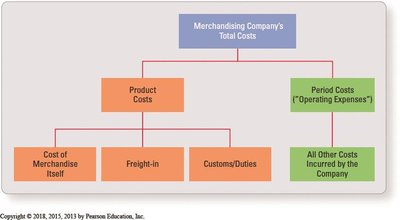
Merchandising Companies’ Total Costs
Merchandising companies classify costs as product or period costs:
Product Costs: Cost of merchandise, freight-in, customs/duties.
Period Costs: All other costs incurred by the company (operating expenses).
Manufacturing Companies’ Product Costs
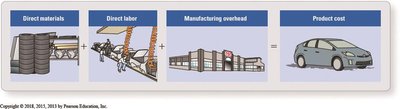
Manufacturing companies’ product costs are divided into three main categories:
Direct Materials (DM): Primary materials that become part of the finished product.
Direct Labor (DL): Compensation for employees who physically convert raw materials into products.
Manufacturing Overhead (MOH): All manufacturing costs other than DM and DL, including indirect materials, indirect labor, and other indirect manufacturing costs.
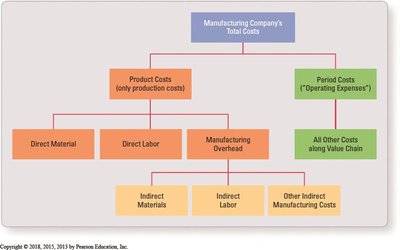
Summary of a Manufacturing Company’s Total Costs
Manufacturing companies organize costs into product and period costs:
Product Costs: Direct material, direct labor, manufacturing overhead (including indirect materials, indirect labor, and other indirect manufacturing costs).
Period Costs: All other costs along the value chain (operating expenses).
Prime and Conversion Costs
Prime and conversion costs are important classifications in manufacturing:
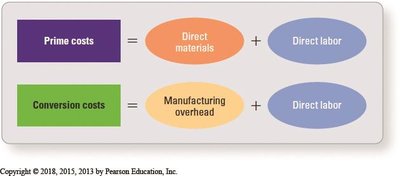
Prime Costs: Sum of direct materials and direct labor.
Conversion Costs: Sum of manufacturing overhead and direct labor.
Formulas: