 Indietro
Chapter 2: Transaction Analysis – Financial Accounting Study Notes
Guida di studio - Note intelligenti
 Appunti personalizzati basati sui tuoi materiali, ampliati con definizioni chiave, esempi e contesto.
Transaction Analysis in Financial Accounting
Introduction to Transaction Analysis
Transaction analysis is a foundational process in financial accounting, focusing on identifying, recording, and analyzing business transactions. This chapter explains how transactions affect the accounting equation and individual accounts, and introduces the mechanics of journalizing and posting entries.
Recognizing Business Transactions and Types of Accounts
Definition of a Transaction
Transaction: Any event with a financial impact on the business that can be measured reliably.
Accounting records both sides of a transaction: something is given, and something is received in return.
Examples: Selling to customers, purchasing goods/services.
The Accounting Equation
The basic relationship in accounting is expressed as:
Assets: Resources owned by the business.
Liabilities: Obligations to outsiders.
Stockholders' Equity: Owners' claims on the assets.
Types of Accounts
Assets: Cash, Accounts Receivable, Notes Receivable, Inventory, Prepaid Expenses, Investments, Property Plant & Equipment.
Liabilities: Accounts Payable, Notes Payable, Accrued Liabilities.
Stockholders' Equity: Common Stock, Retained Earnings, Dividends, Revenues, Expenses.
Example: Cash is an asset; Accounts Payable is a liability; Common Stock is equity.
Analyzing the Impact of Transactions on the Accounting Equation
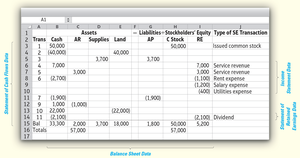
Transaction Analysis Example: Alladin Travel, Inc.
Each transaction affects at least two accounts and must keep the accounting equation in balance. For example, when owners invest cash, both cash (asset) and common stock (equity) increase.
Sample Transactions and Their Effects
Investment by owners increases Cash (Asset) and Common Stock (Equity).
Purchase of land for cash increases Land (Asset) and decreases Cash (Asset).
Purchasing supplies on account increases Supplies (Asset) and Accounts Payable (Liability).
Earning revenue increases Cash or Accounts Receivable (Asset) and Service Revenue (Equity).
Paying expenses decreases Cash (Asset) and increases Expenses (Equity, reduces Retained Earnings).
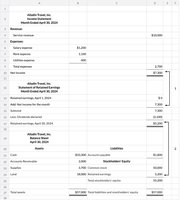
Financial Statements Flow
Understanding how transactions flow into financial statements is critical for mastering accounting.
Double-Entry System and the Rules of Debit and Credit
Double-Entry System
Each transaction affects at least two accounts.
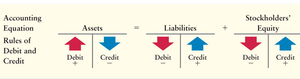
Debits and credits are used to record increases and decreases in accounts.
Rules of Debit and Credit
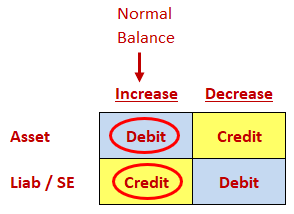
Assets: Increase with Debits, Decrease with Credits.
Liabilities and Equity: Increase with Credits, Decrease with Debits.
T-Accounts
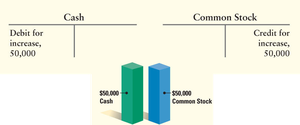
T-accounts are used to visualize the effects of transactions on individual accounts.
Normal Balances
Each account type has a normal balance side (debit or credit) where increases are recorded.
Journalizing and Posting Transactions
Journalizing Transactions
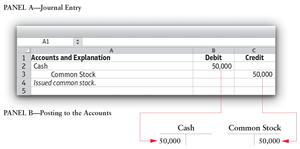
Transactions are first recorded in the journal as journal entries.
Each entry specifies accounts, amounts, and whether each is debited or credited.
Posting to the Ledger
Posting transfers journal entry amounts to individual ledger accounts.
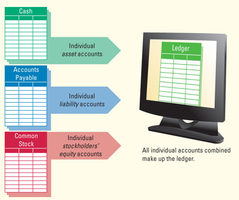
The ledger is the collection of all accounts and their balances.
Flow of Accounting Data
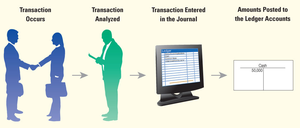
The process: Transaction occurs → Transaction analyzed → Journal entry made → Amounts posted to ledger accounts.
Constructing a Trial Balance
Purpose and Structure of a Trial Balance
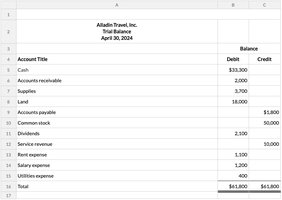
Lists all accounts and their balances at a specific date.
Ensures total debits equal total credits.
Facilitates preparation of financial statements.
Analyzing Accounts and Correcting Errors
Account Analysis
Reviewing account activity helps determine cash flows, collections, and payments.
Correcting Errors
Check for missing accounts, divide out-of-balance amounts by 2 or 9 to detect errors (slide or transposition errors).
Chart of Accounts
Purpose and Structure
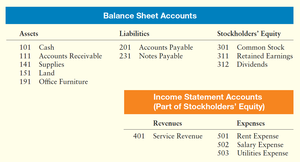
A chart of accounts lists all account titles and numbers (not balances)used by a business.
Accounts are grouped by type: assets, liabilities, equity, revenues, and expenses.
DEALER: dividends, expenses, assets (debit normal balance), liabilities, equity, revenues (credit normal balance)
Machine Learning in Accounting
Overview of Machine Learning
Artificial Intelligence (AI): Machines that solve problems in a human-like way.
Machine Learning: Machines learn from data without explicit programming.
Types of Machine Learning
Supervised Learning: Task-driven, predicts outcomes (e.g., spam filters).
Unsupervised Learning: Data-driven, finds patterns (e.g., recommendation systems).
Applications in Accounting
Example: Identifying general ledger account names for transactions using machine learning.
Programming Languages for Machine Learning
Python (most popular), R, Julia, Java.
Additional info: This summary covers all major learning objectives from recognizing transactions and types of accounts, through the mechanics of double-entry accounting, to the application of machine learning in accounting. Tables and images included are directly relevant to the explanation of key concepts and processes.
