 Indietro
Acid/Base Equilibria I: Study Guide and Reference Tables
Guida di studio - Note intelligenti
 Appunti personalizzati basati sui tuoi materiali, ampliati con definizioni chiave, esempi e contesto.
Acid/Base Equilibria
Fundamental Concepts of Acid/Base Chemistry
Acid/base equilibria are central to understanding chemical reactions in aqueous solutions. This topic covers the definitions, properties, and calculations related to acids, bases, and their equilibria.
Acids are substances that donate protons (H+) or accept electron pairs.
Bases are substances that accept protons or donate electron pairs.
Equilibrium refers to the state where the concentrations of reactants and products remain constant over time.
Conjugate acid-base pairs are related by the gain or loss of a proton.
Amphoteric substances can act as either acids or bases (e.g., water).
Acid/Base Definitions
Arrhenius Definition: Acids produce H+ in water; bases produce OH-.
Brønsted-Lowry Definition: Acids donate protons; bases accept protons.
Lewis Definition: Acids accept electron pairs; bases donate electron pairs.
Water Dissociation and pH
Water self-ionizes to produce hydronium (H3O+) and hydroxide (OH-) ions. The equilibrium constant for this process is known as Kw.
At 25°C:
Relationship:
pH:
pOH:
pH + pOH = 14$ (at 25°C)
Strong vs. Weak Acids and Bases
Acids and bases are classified by their degree of ionization in water.
Strong acids/bases: Completely ionize in solution (e.g., HCl, NaOH).
Weak acids/bases: Partially ionize (e.g., acetic acid, ammonia).
Ka (acid dissociation constant): Measures strength of an acid.
Kb (base dissociation constant): Measures strength of a base.
Calculating pH and Related Quantities
Given any one of [H+], [OH-], pH, or pOH, the others can be calculated using the relationships above.
Example: If M, then .
For strong acids:
For weak acids: Use and equilibrium calculations.
Reference Tables
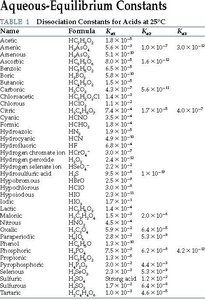
Dissociation Constants for Acids at 25°C
This table provides the acid dissociation constants (Ka) for common acids, which are essential for equilibrium calculations and predicting acid strength.
Name | Formula | Ka | Kb |
|---|---|---|---|
Acetic | HC2H3O2 | 1.8 × 10⁻⁵ | 5.6 × 10⁻¹⁰ |
Ascorbic | HC6H7O6 | 8.0 × 10⁻⁵ | 2.0 × 10⁻¹⁰ |
Benzoic | HC7H5O2 | 6.3 × 10⁻⁵ | 1.6 × 10⁻¹⁰ |
Boric | H3BO3 | 5.8 × 10⁻¹⁰ | 1.7 × 10⁻⁵ |
Butanoic | HC4H7O2 | 1.5 × 10⁻⁵ | 4.0 × 10⁻¹⁰ |
Chloric | HClO3 | 1.0 × 101 | 1.0 × 10⁻¹⁴ |
Formic | HCOOH | 1.8 × 10⁻⁴ | 5.6 × 10⁻¹¹ |
Hydrochloric | HCl | 1.0 × 10⁶ | 1.0 × 10⁻²⁰ |
Nitric | HNO3 | 1.0 × 101 | 1.0 × 10⁻¹⁴ |
Phosphoric | H3PO4 | 7.5 × 10⁻³ | 4.2 × 10⁻¹² |
Dissociation Constants for Bases at 25°C
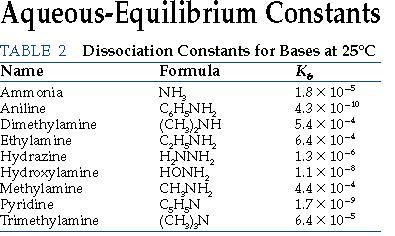
This table lists the base dissociation constants (Kb) for common bases, useful for equilibrium calculations and predicting base strength.
Name | Formula | Kb |
|---|---|---|
Ammonia | NH3 | 1.8 × 10⁻⁵ |
Aniline | C6H5NH2 | 4.3 × 10⁻¹⁰ |
Dimethylamine | (CH3)2NH | 5.4 × 10⁻⁴ |
Ethylamine | C2H5NH2 | 6.4 × 10⁻⁴ |
Hydrazine | H2NNH2 | 1.1 × 10⁻⁶ |
Hydroxylamine | HONH2 | 1.1 × 10⁻⁸ |
Methylamine | CH3NH2 | 4.4 × 10⁻⁴ |
Pyridine | C5H5N | 1.7 × 10⁻⁹ |
Trimethylamine | (CH3)3N | 6.4 × 10⁻⁵ |
Acid/Base Reactions and Lewis Structures
Lewis Acid/Base Reactions
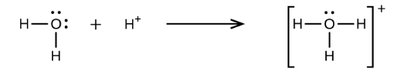
Lewis acids accept electron pairs, while Lewis bases donate electron pairs. The following reactions illustrate these concepts:
Example 1: Formation of hydronium ion:
Example 2: Reaction of oxide ion with sulfate:
Example 3: Coordination of ammonia with silver ion:
Structure and Acid/Base Properties
The molecular structure of acids and bases influences their strength and behavior in solution.
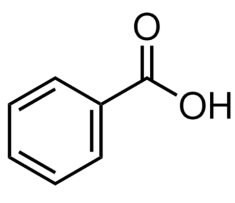
Carboxylic acids (e.g., benzoic acid) are weak acids due to resonance stabilization of the conjugate base.
Polyprotic acids (e.g., tartaric acid) can donate more than one proton, with each step having a different Ka.
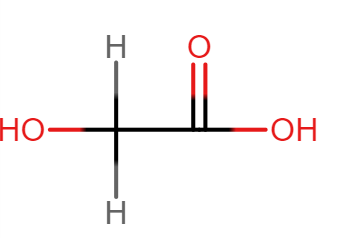
Summary Table: Acid/Base Classifications
Acids and bases can be classified as strong or weak based on their dissociation constants. The tables above provide reference values for common substances.
Strong acids: HCl, HNO3, HClO4
Weak acids: Acetic acid, benzoic acid
Strong bases: NaOH, KOH
Weak bases: Ammonia, aniline
Key Equations
Additional info:
Tables are partially inferred and summarized for clarity; refer to original for full data.
Images included only where directly relevant to acid/base structure or equilibrium reactions.
