 Indietro
Acid/Base Equilibria I: Study Guide and Reference Notes
Guida di studio - Note intelligenti
 Appunti personalizzati basati sui tuoi materiali, ampliati con definizioni chiave, esempi e contesto.
Acid/Base Equilibria
Fundamental Concepts of Acid/Base Chemistry
Acid/base chemistry is central to understanding aqueous equilibria, solution properties, and chemical reactivity. This section covers definitions, calculations, and classifications of acids and bases, as well as their equilibria in water.
Acid: A substance that donates a proton (H+) or increases the concentration of H+ in solution.
Base: A substance that accepts a proton or increases the concentration of OH- in solution.
Arrhenius Definition: Acids produce H+ in water; bases produce OH-.
Brønsted-Lowry Definition: Acids are proton donors; bases are proton acceptors.
Lewis Definition: Acids accept electron pairs; bases donate electron pairs.
Conjugate Acid/Base Pair: When an acid donates a proton, it forms its conjugate base; when a base accepts a proton, it forms its conjugate acid.
Amphoteric: Substances that can act as either an acid or a base (e.g., H2O).
Water Dissociation and Equilibrium
Water self-ionizes to form hydronium and hydroxide ions, establishing the basis for acid/base equilibria in aqueous solutions.
Water Dissociation:
Equilibrium Constant (Kw): at 25°C
Hydronium Ion: is the solvated form of H+ in water.
Relationship: In pure water,
pH and pOH Calculations
pH and pOH are logarithmic measures of H+ and OH- concentrations, respectively, and are used to classify solutions as acidic, basic, or neutral.
pH Formula:
pOH Formula:
Relationship: at 25°C
Acidic Solution: (pH < 7 at 25°C)
Basic Solution: (pH > 7 at 25°C)
Neutral Solution: (pH = 7 at 25°C)
Temperature Dependence: The value of Kw and the neutral pH change with temperature.
Strong vs. Weak Acids and Bases
Acids and bases are classified as strong or weak based on their degree of ionization in water.
Strong Acids: Completely dissociate in water (e.g., HCl, HNO3, HClO4).
Weak Acids: Partially dissociate; equilibrium established (e.g., HF, HNO2).
Strong Bases: Completely dissociate (e.g., NaOH, KOH, CaO).
Weak Bases: Partially dissociate (e.g., NH3, C6H5NH2).
Ka and Kb: Acid and base dissociation constants quantify strength.
Acid/Base Equilibrium Calculations
Equilibrium calculations involve determining concentrations, pH, and percent ionization for weak acids and bases.
ICE Table: Used to track initial, change, and equilibrium concentrations.
Ka Expression:
Kb Expression:
Percent Ionization:
Successive Approximations: Iterative method for solving equilibrium problems when the approximation fails.
Polyprotic Acids
Polyprotic acids can donate more than one proton, with each dissociation step having its own equilibrium constant.
Example: H2SO4 (sulfuric acid) has two dissociation steps.
First Dissociation: Strong, nearly complete.
Second Dissociation: Weak, partial.
Acid-Base Spectator Ions
Spectator ions do not participate in acid-base reactions and remain unchanged in solution.
Examples: Na+, K+, Cl-, NO3-
Lewis Acids and Bases
The Lewis definition expands acid/base chemistry to include electron pair transfer, not limited to proton transfer.
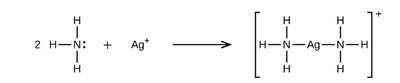
Lewis Acid: Electron pair acceptor (e.g., Ag+, SO3).
Lewis Base: Electron pair donor (e.g., NH3, O2-).
Broader Scope: Includes reactions in non-aqueous solvents and gas phase.
Reference Tables: Dissociation Constants
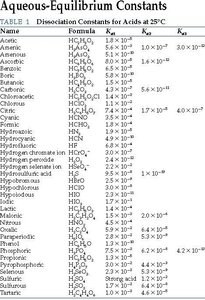
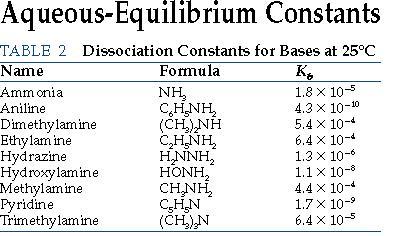
Acid and base dissociation constants (Ka and Kb) are essential for equilibrium calculations and comparing strengths.
Ka: Higher Ka indicates a stronger acid.
Kb: Higher Kb indicates a stronger base.
Name | Formula | Ka | Kb |
|---|---|---|---|
Acetic | HC2H3O2 | 1.8 × 10⁻⁵ | 1.0 × 10⁻⁹ |
Benzoic | HC7H5O2 | 6.3 × 10⁻⁵ | 4.0 × 10⁻¹⁰ |
Ammonia | NH3 | - | 1.8 × 10⁻⁵ |
Aniline | C6H5NH2 | - | 4.3 × 10⁻¹⁰ |
Hydroxylamine | HONH2 | - | 1.1 × 10⁻⁶ |
Trimethylamine | (CH3)3N | - | 6.4 × 10⁻⁵ |
Hydrazoic acid | HN3 | 1.9 × 10⁻⁵ | - |
Chlorous acid | HClO2 | 1.1 × 10⁻² | - |
Formic acid | HCOOH | 1.8 × 10⁻⁴ | - |
Hydrochloric acid | HCl | 1.3 × 10⁶ | - |
Hydrofluoric acid | HF | 6.8 × 10⁻⁴ | - |
Phosphoric acid | H3PO4 | 7.5 × 10⁻³ | - |
Trimethylamine | (CH3)3N | - | 6.4 × 10⁻⁵ |
Pyridine | C5H5N | - | 1.7 × 10⁻⁹ |
Ethylamine | C2H5NH2 | - | 6.4 × 10⁻⁴ |
Examples of Acid/Base Reactions and Lewis Theory
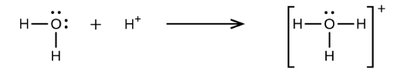
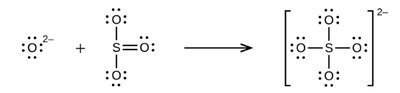
Lewis acid/base theory explains reactions beyond proton transfer, such as electron pair donation and acceptance.
Example 1: Formation of hydronium ion:
Example 2: Formation of sulfate ion:
Example 3: Formation of silver-ammonia complex:
Structure and Acid Strength
The molecular structure of acids and bases influences their strength, including bond polarity, electronegativity, and resonance stabilization.
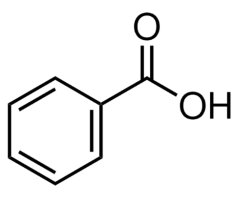
Carboxylic Acids: The presence of a carboxyl group (–COOH) increases acidity due to resonance stabilization of the conjugate base.
Example: Benzoic acid (C6H5COOH) is a weak acid.
Polyhydroxy Acids
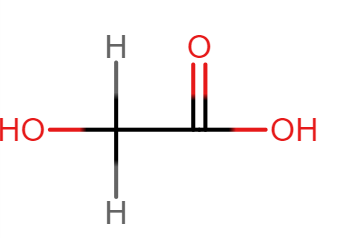
Acids with multiple hydroxyl groups, such as tartaric acid, can donate more than one proton, affecting their acid-base behavior and equilibrium constants.
Example: Tartaric acid (HOOC–CHOH–CHOH–COOH) is a diprotic acid.
Summary Table: Acid/Base Classifications
Type | Definition | Example |
|---|---|---|
Strong Acid | Complete dissociation | HCl, HNO3, HClO4 |
Weak Acid | Partial dissociation | HF, CH3COOH |
Strong Base | Complete dissociation | NaOH, KOH, CaO |
Weak Base | Partial dissociation | NH3, C6H5NH2 |
Additional info: The notes include iterative methods for equilibrium calculations, temperature effects on Kw, and detailed acid/base classification tables. These concepts are essential for mastering acid/base equilibria in General Chemistry.
