Indietro

Acids, Bases, and Buffer Systems: Equilibrium and pH in Aqueous Solutions

Guida di studio - Impara con i video

Lezioni curate abbinate al materiale che hai caricato – impara ogni argomento passo dopo passo.

Acids Introduction

  • Acid Structure and Types
    02:29
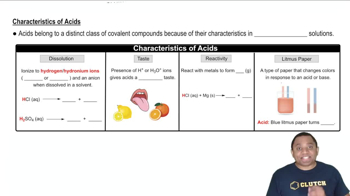
  • Acid Characteristics
    02:59
  • Acid Characteristics Example
    01:23

Bases Introduction

  • Strong Bases Example
    01:12
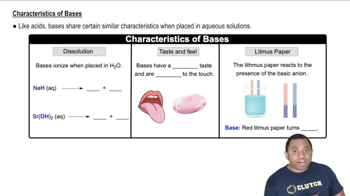
  • Base Properties
    01:57
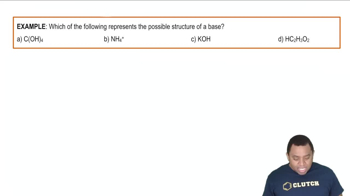
  • Base Structure Example
    01:16

Bronsted-Lowry Acids and Bases

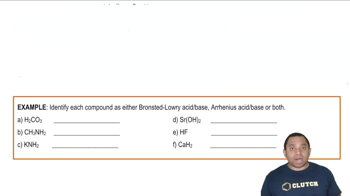
  • Acid-Base Classification Example
    02:56
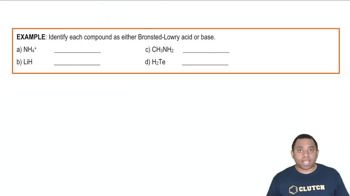
  • Bronsted-Lowry Acids and Bases Example
    01:10
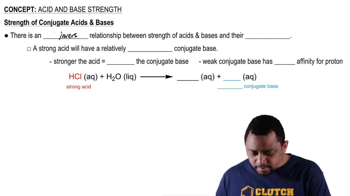
  • Strength of Conjugate Acids and Bases
    00:50

Lewis Acids and Bases

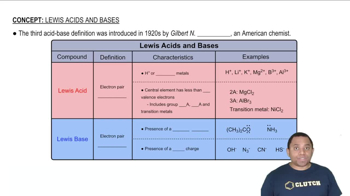
  • Lewis Acids and Bases
    05:04
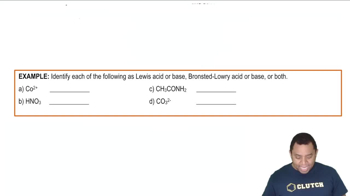
  • Lewis Acid-Base Identification Example
    02:30
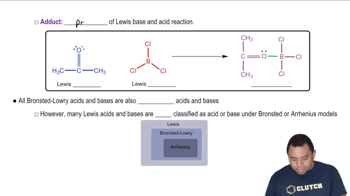
  • The Adduct
    03:50

The pH Scale

  • pH Calculation Example
    02:15
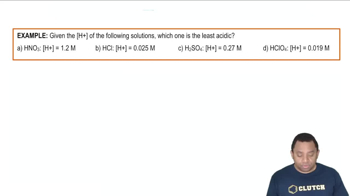
  • Least Acidic Solution Example
    00:48
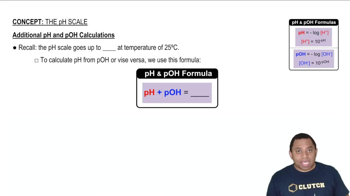
  • Additional pH and pOH Calculations
    00:58

Ka and Kb

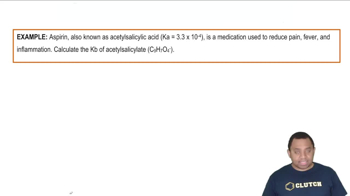
  • Ka and Kb Example
    01:31
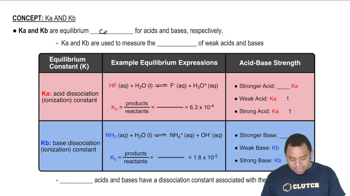
  • Characteristics of Ka and Kb
    03:50
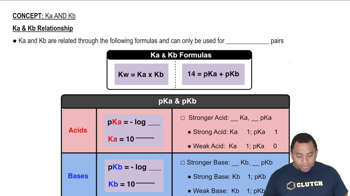
  • Ka and Kb Relationship
    03:01

pH of Strong Acids and Bases

  • pOH Calculation Example
    01:18
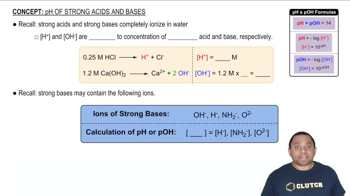
  • pH of Strong Acids and Bases
    02:39

pH of Weak Acids

  • Calculating Percent Ionization of Weak Acids
    01:15
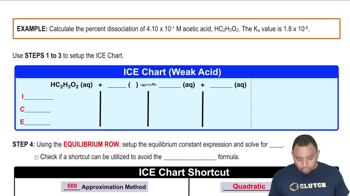
  • Percent Dissociation Example
    04:52
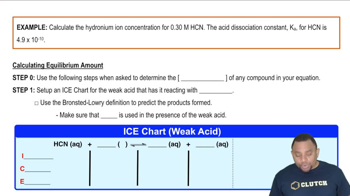
  • Hydronium Ion Concentration Example
    06:25

pH of Weak Bases

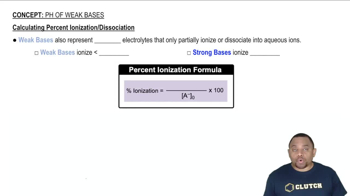
  • Calculating Percent Ionization of Weak Bases
    01:00
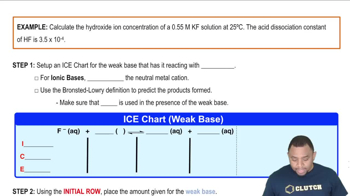
  • Hydroxide Ion Concentration Example
    06:12
  • ICE Charts of Weak Bases
    00:51

Diprotic Acids and Bases

  • Ka values of Diprotic Acids
    00:59
  • Diprotic Acids and Bases Example
    01:38
  • 3 forms of Diprotic Acids
    04:40

Diprotic Acids and Bases Calculations

  • Calculate Concentration of the Basic Form
    07:35
  • pH of Diprotic Acid Dissociation
    01:36
  • pH of Weak Diprotic Acids
    04:46

Intro to Buffers

  • Buffer Solution Example
    02:41
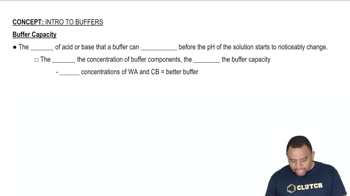
  • Buffer Capacity
    00:45
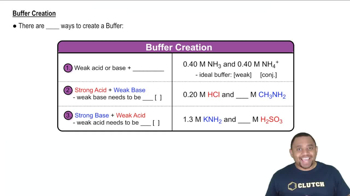
  • Buffer Creation Methods
    03:04

Henderson-Hasselbalch Equation

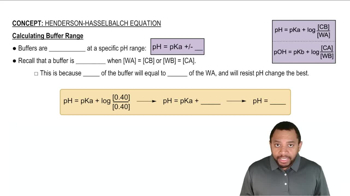
  • Buffer Range Calculation
    02:47
  • Buffering Range Example
    01:22
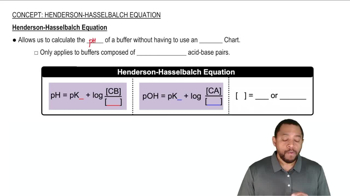
  • Henderson-Hasselbalch Equation
    02:40

Intro to Acid-Base Titration Curves

  • Equivalence Point Example
    01:35
  • Acid-Base Titration Curve Example
    01:35
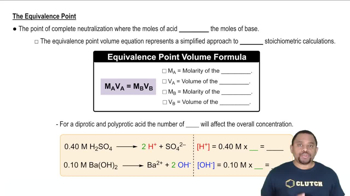
  • Equivalence Point in Titration
    03:06

Strong Titrate-Strong Titrant Curves

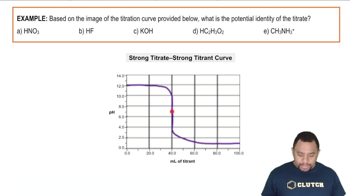
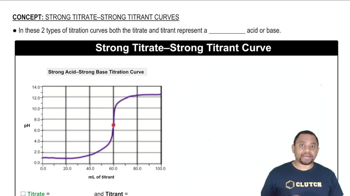
  • Strong Titrate-Strong Titrant Curve Example
    02:56
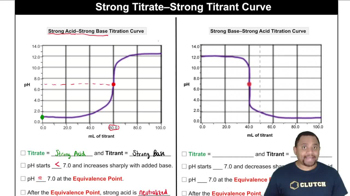
  • Strong Acid-Strong Base Titration Curve
    02:32
  • Strong Titrate-Strong Titrant Curve
    02:09

Weak Titrate-Strong Titrant Curves

  • Weak Titrate-Strong Titrant Curve Example
    02:08
  • Acid-Base Titration Formulas Example
    03:01
  • Weak Acid-Strong Base Titration Curve
    02:19

Acid-Base Indicators

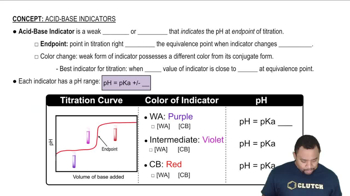
  • Acid-Base Indicators
    04:30
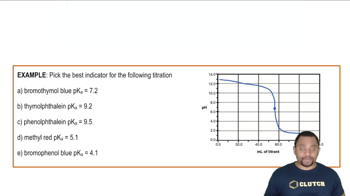
  • Best Indicator Example
    00:52

Titrations: Weak Acid-Strong Base

  • At the Equivalence Point
    01:07
  • Before the Equivalence Point
    01:30
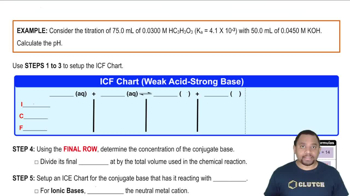
  • pH at the Equivalence Point Example
    08:27

Titrations: Weak Base-Strong Acid

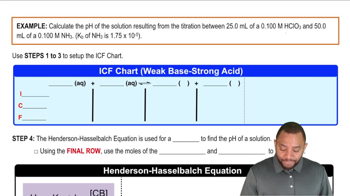
  • pH Before the Equivalence Point Example
    05:10
  • After the Equivalence Point
    00:53
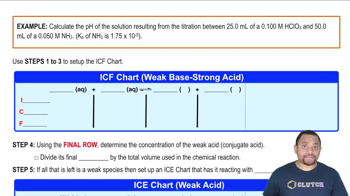
  • pH at the Equivalence Point Example
    07:28

Titrations: Strong Acid-Strong Base

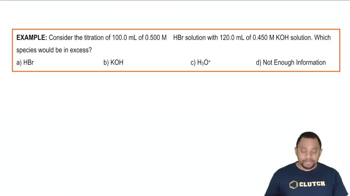
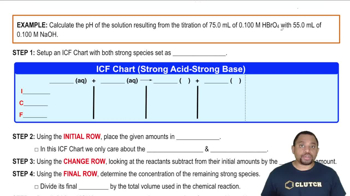
  • Strong Acid-Strong Base Titration Example
    04:43
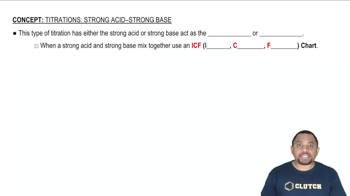
  • Strong Acid-Strong Base Titration
    01:09

Titrations: Diprotic & Polyprotic Buffers

  • Triprotic Buffer Titration Example
    06:36
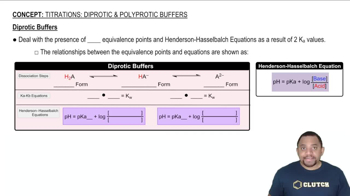
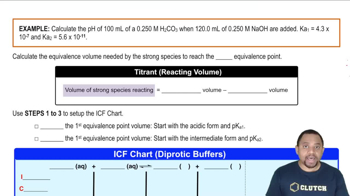
  • Diprotic Buffers
    03:13
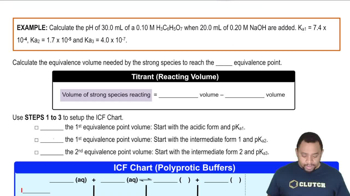
  • Diprotic Buffer Titration Example
    06:07