 Indietro
Acids, Bases, and Their Properties: General Chemistry Study Notes
Guida di studio - Note intelligenti
 Appunti personalizzati basati sui tuoi materiali, ampliati con definizioni chiave, esempi e contesto.
Acids and Bases: Structures and Types
Common Acids and Their Uses
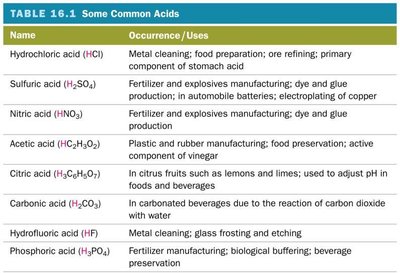
Acids are substances that can donate protons (H+) or accept electron pairs. They are widely used in industry, food, and biological systems. The table below summarizes some common acids and their applications:
Name | Occurrence/Uses |
|---|---|
Hydrochloric acid (HCl) | Metal cleaning; food preparation; ore refining; primary component of stomach acid |
Sulfuric acid (H2SO4) | Fertilizer and explosives manufacturing; dye and glue production; automobile batteries; copper electroplating |
Nitric acid (HNO3) | Fertilizer and explosives manufacturing; dye and glue production |
Acetic acid (HC2H3O2) | Plastic and rubber manufacturing; food preservation; vinegar component |
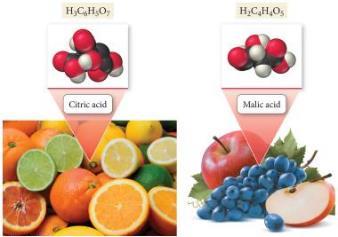
Citric acid (H3C6H5O7) | In citrus fruits; adjusts pH in foods and beverages |
Carbonic acid (H2CO3) | In carbonated beverages due to CO2 reaction with water |
Hydrofluoric acid (HF) | Metal cleaning; glass frosting and etching |
Phosphoric acid (H3PO4) | Fertilizer manufacturing; biological buffering; beverage preservation |
Acid Structures
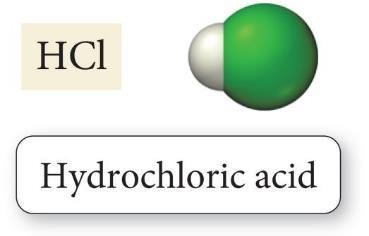
Binary acids: Contain hydrogen attached to a nonmetal atom (e.g., HCl, HF).
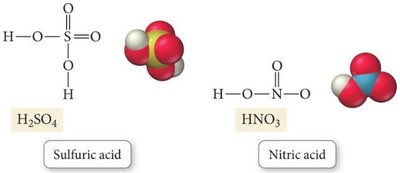
Oxyacids: Have hydrogen attached to an oxygen atom (e.g., H2SO4, HNO3).
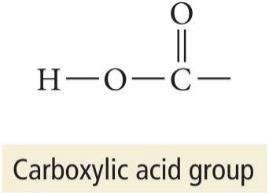
Carboxylic acids: Contain a –COOH group; only the first H is acidic (e.g., acetic acid, citric acid).
Common Bases and Their Uses
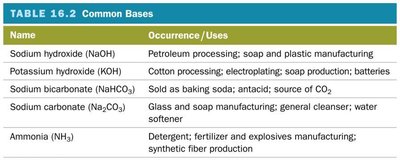
Bases are substances that can accept protons or donate hydroxide ions (OH−). They are important in cleaning, manufacturing, and biological systems.
Name | Occurrence/Uses |
|---|---|
Sodium hydroxide (NaOH) | Petroleum processing; soap and plastic manufacturing |
Potassium hydroxide (KOH) | Cotton processing; electroplating; soap production; batteries |
Sodium bicarbonate (NaHCO3) | Baking soda; antacid; source of CO2 |
Sodium carbonate (Na2CO3) | Glass and soap manufacturing; water softener |
Ammonia (NH3) | Detergent; fertilizer; explosives manufacturing; synthetic fiber production |
Acid-Base Definitions and Theories
Arrhenius Definition
Acid: Produces H+ ions in solution (which associate with water to form H3O+).
Base: Produces OH− ions in solution.
Brønsted–Lowry Definition
Acid: Proton (H+) donor.
Base: Proton (H+) acceptor.
All Arrhenius acids and bases are also Brønsted–Lowry acids and bases, but the Brønsted–Lowry theory is more general.
Conjugate Acid–Base Pairs
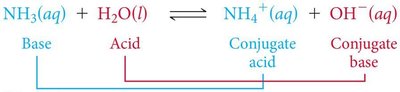
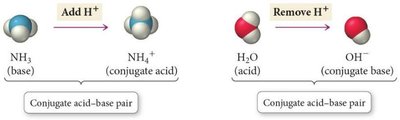
In Brønsted–Lowry reactions, acids and bases form conjugate pairs:
When an acid donates a proton, it becomes its conjugate base.
When a base accepts a proton, it becomes its conjugate acid.
Amphoteric Substances
Amphoteric substances can act as either acids or bases. Water is a classic example:
As a base: HCl(aq) + H2O(l) → Cl−(aq) + H3O+(aq)
As an acid: NH3(aq) + H2O(l) → NH4+(aq) + OH−(aq)
Acid and Base Strength
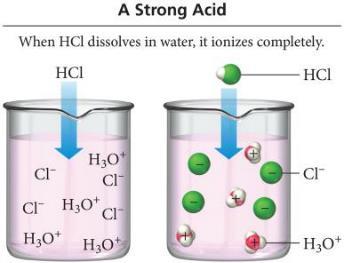
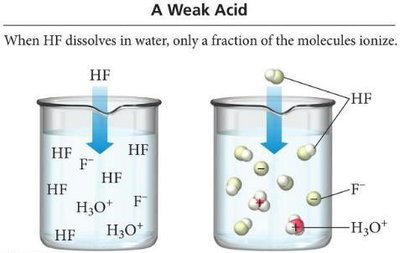
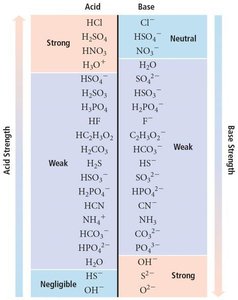
Strong vs. Weak Acids
Strong acids: Ionize completely in water; strong electrolytes.
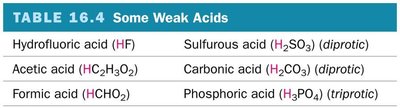
Weak acids: Ionize only partially; weak electrolytes.

Acid Strength and Ionization Constant (Ka)
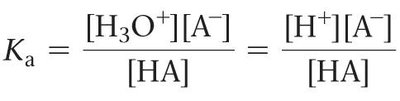
The strength of an acid is measured by its acid ionization constant, Ka:
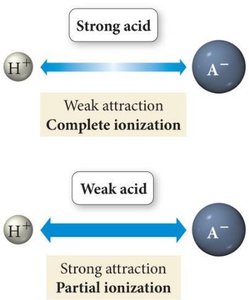
Larger Ka = stronger acid
Smaller Ka = weaker acid
The equilibrium expression for acid ionization is:
Strong vs. Weak Bases
Strong bases: Ionize completely in water; strong electrolytes (e.g., NaOH, KOH).
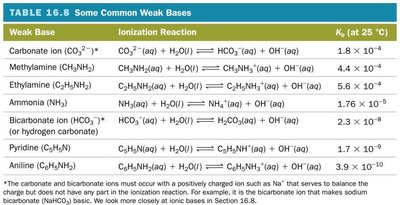
Weak bases: Ionize only partially; weak electrolytes (e.g., NH3).
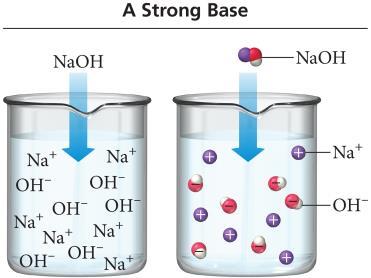
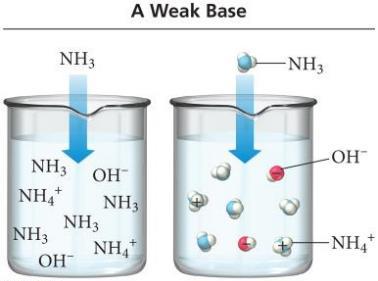
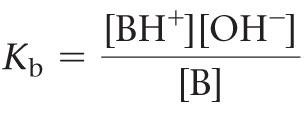
Base Strength and Ionization Constant (Kb)
The strength of a base is measured by its base ionization constant, Kb:
Autoionization of Water and pH
Autoionization of Water
Water can act as both an acid and a base, leading to autoionization:
The ion product constant for water is at 25°C.
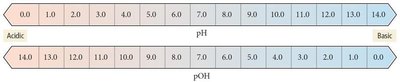
pH and pOH
pH measures acidity:
pOH measures basicity:
Relationship:
Lower pH = more acidic; higher pH = more basic.

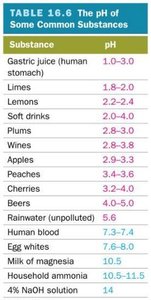
pH of Common Substances
Substance | pH |
|---|---|
Gastric juice (stomach) | 1.0–3.0 |
Limes | 1.8–2.0 |
Lemons | 2.2–2.4 |
Soft drinks | 2.0–4.0 |
Human blood | 7.3–7.4 |
Household ammonia | 10.5–11.5 |
4% NaOH solution | 14 |
Polyprotic Acids
Definition and Ionization Steps
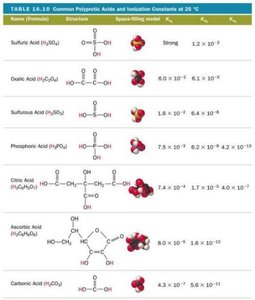
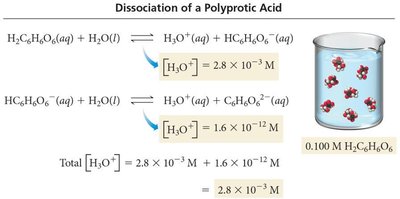
Polyprotic acids can donate more than one proton, ionizing in steps.
Each step has its own Ka value: Ka1 > Ka2 > Ka3.
For most calculations, only the first ionization is significant except for sulfuric acid (H2SO4).
Conjugate Acid-Base Pairs: Examples and Practice
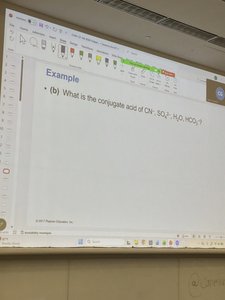
Identifying Conjugate Pairs
Conjugate base: Remove one H+ from the acid.
Conjugate acid: Add one H+ to the base.

Acid-Base Properties of Salts
Classification of Salt Solutions
Neutral: Salts from strong acid and strong base (e.g., NaCl).
Basic: Salts from strong base and weak acid (e.g., NaCH3COO).
Acidic: Salts from strong acid and weak base (e.g., NH4Cl).
Summary Table: Acid and Base Strength
Practice Problems and Examples
Sample Calculations
Calculate [OH−] in a solution given [H3O+].
Find pH or pOH for a given concentration.
Determine Ka or Kb from pH and concentration data.
Additional info:
Acid and base strength is determined by the extent of ionization and the equilibrium constant (Ka or Kb).
Polyprotic acids require consideration of multiple ionization steps for accurate pH calculations.
Conjugate pairs are fundamental to understanding acid-base reactions and equilibrium.
