 Indietro
Chapter 2 Student Notes
Guida di studio - Note intelligenti
 Appunti personalizzati basati sui tuoi materiali, ampliati con definizioni chiave, esempi e contesto.
Atoms and Elements
2.1 Brownian Motion: Atoms Confirmed
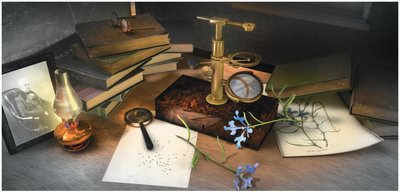
Brownian motion provided experimental evidence for the existence of atoms. In 1827, Robert Brown observed pollen grains moving randomly in water, a phenomenon later explained by Albert Einstein in 1905 as resulting from collisions with water molecules. Jean Perrin's experiments in 1908 confirmed Einstein's theory, solidifying the atomic nature of matter.
2.2 Early Ideas about the Building Blocks of Matter
Ancient Greek philosophers Leucippus and Democritus first proposed that matter is composed of small, indivisible particles called atoms. Their ideas contrasted with those of Plato and Aristotle, who believed matter was continuous and composed of four elements: earth, air, fire, and water. John Dalton later provided scientific evidence for the atomic theory, connecting the microscopic and macroscopic worlds.
2.3 Modern Atomic Theory and the Laws That Led to It
Three fundamental laws underpin modern atomic theory:
Law of Conservation of Mass (Lavoisier): Matter is neither created nor destroyed in chemical reactions.
Law of Definite Proportions (Proust): All samples of a compound have the same proportions of their constituent elements.
Law of Multiple Proportions (Dalton): When two elements form more than one compound, the masses of one element that combine with a fixed mass of the other are in ratios of small whole numbers.
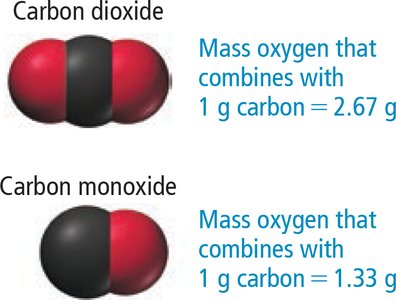
For example, carbon dioxide (CO2) and carbon monoxide (CO) both contain carbon and oxygen, but the mass of oxygen that combines with 1 g of carbon is 2.67 g in CO2 and 1.33 g in CO, a simple 2:1 ratio.
Dalton’s Atomic Theory
Dalton's atomic theory explained these laws with four postulates:
Elements are composed of tiny, indestructible particles called atoms.
All atoms of a given element have the same mass and properties.
Atoms combine in simple, whole-number ratios to form compounds.
Atoms of one element cannot change into atoms of another; they only rearrange in chemical reactions.
The Structure of the Atom
2.4 The Discovery of the Electron
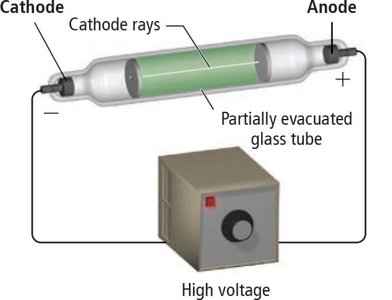
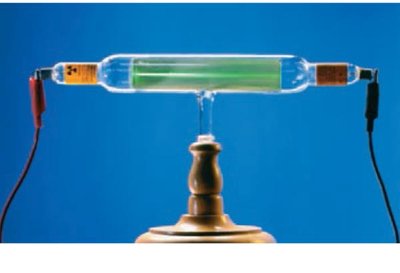
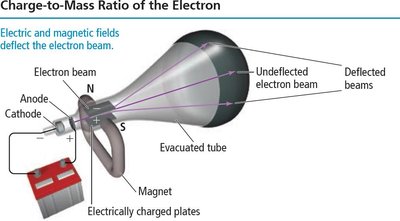
J. J. Thomson discovered the electron using cathode ray tube experiments. He observed that cathode rays were streams of negatively charged particles (electrons) and measured their charge-to-mass ratio as C/g.
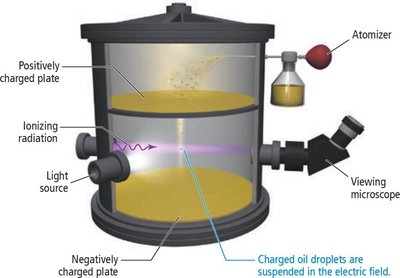
Millikan’s Oil Drop Experiment
Robert Millikan measured the charge of a single electron ( C) using the oil drop experiment. Combining this with Thomson’s charge-to-mass ratio, the mass of the electron was calculated as g.
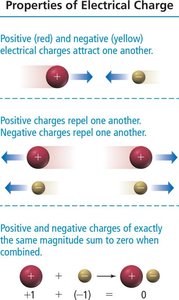
Properties of Electrical Charge
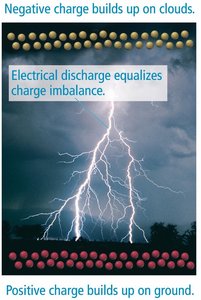
Opposite charges attract; like charges repel.
The magnitude of charge is standardized: proton (+1), electron (–1).
Equal numbers of positive and negative charges result in electrical neutrality.
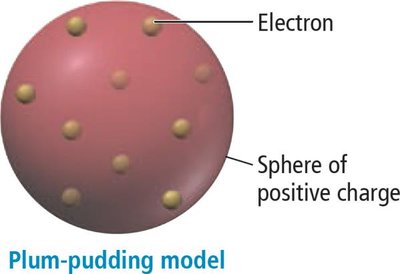
2.5 The Structure of the Atom: Plum-Pudding and Nuclear Models
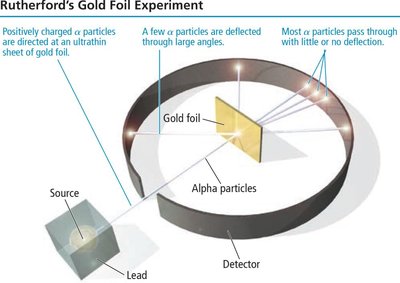
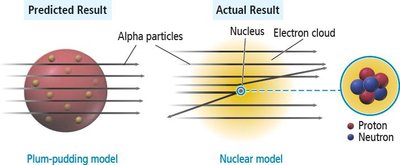
Thomson’s plum-pudding model proposed that electrons were embedded in a sphere of positive charge. However, Rutherford’s gold foil experiment showed that atoms have a small, dense, positively charged nucleus, with electrons distributed in the surrounding space.
2.6 Subatomic Particles: Protons, Neutrons, and Electrons in Atoms
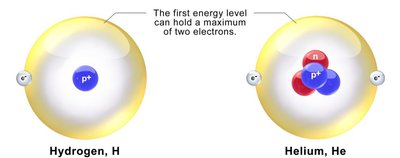
Atoms are composed of three subatomic particles:
Protons: Positively charged, mass ≈ 1 amu
Neutrons: Neutral, mass ≈ 1 amu
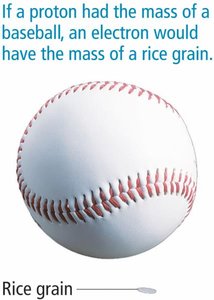
Electrons: Negatively charged, mass ≈ 0.00055 amu (about 1/2000 the mass of a proton)
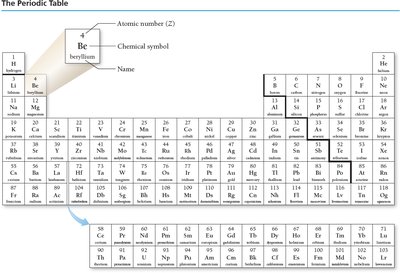
The number of protons (atomic number, Z) defines the element. The sum of protons and neutrons gives the mass number (A).
Particle | Mass (kg) | Mass (amu) | Charge (relative) | Charge (C) |
|---|---|---|---|---|
Proton | 1.67262 × 10⁻²⁷ | 1.00727 | +1 | +1.60218 × 10⁻¹⁹ |
Neutron | 1.67493 × 10⁻²⁷ | 1.00866 | 0 | 0 |
Electron | 0.00091 × 10⁻²⁷ | 0.00055 | −1 | −1.60218 × 10⁻¹⁹ |
Isotopes and Atomic Mass
Isotopes are atoms of the same element with different numbers of neutrons. The atomic mass of an element is the weighted average of the masses of its isotopes, based on their natural abundance.
Isotope | Protons | Neutrons | Mass Number (A) | Natural Abundance |
|---|---|---|---|---|
Ne-20 | 10 | 10 | 20 | 90.48% |
Ne-21 | 10 | 11 | 21 | 0.27% |
Ne-22 | 10 | 12 | 22 | 9.25% |
Ions: Cations and Anions
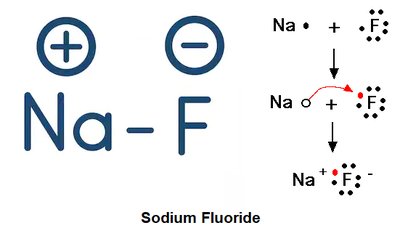
Atoms can gain or lose electrons to form ions:
Cation: Positively charged ion (loss of electrons)
Anion: Negatively charged ion (gain of electrons)
The Periodic Table and Periodic Law
2.7 Finding Patterns: The Periodic Law and the Periodic Table
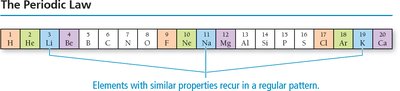
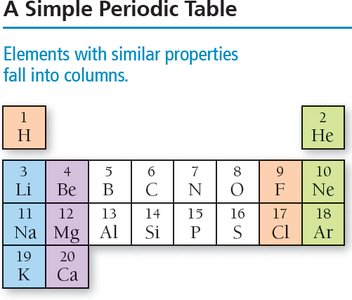
Mendeleev arranged elements by increasing atomic mass, observing that properties recur periodically. The modern periodic table arranges elements by increasing atomic number, grouping elements with similar properties in columns (groups or families).
Classification of Elements
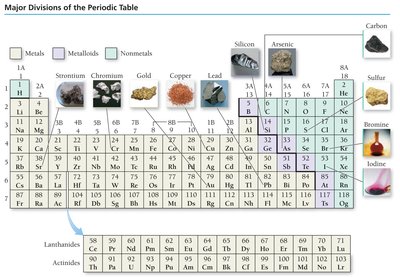
Metals: Good conductors, malleable, ductile, shiny, tend to lose electrons.
Nonmetals: Poor conductors, not malleable or ductile, tend to gain electrons.
Metalloids: Exhibit mixed properties, some are semiconductors (e.g., silicon, arsenic).
Groups and Periods
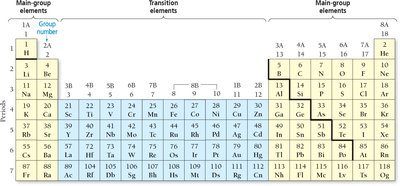
Vertical columns are called groups (or families), and horizontal rows are called periods. Main-group elements are in groups 1, 2, and 13–18; transition elements are in groups 3–12.
Special Groups
Noble Gases (Group 8A): Unreactive gases (e.g., He, Ne, Ar).
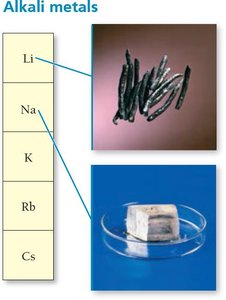
Alkali Metals (Group 1A): Very reactive metals (e.g., Li, Na, K).
Alkaline Earth Metals (Group 2A): Reactive metals (e.g., Mg, Ca).
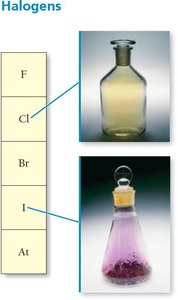
Halogens (Group 7A): Very reactive nonmetals (e.g., F, Cl, Br, I).

Formation of Ions and Predictable Charges
Main-group metals tend to lose electrons to form cations; main-group nonmetals tend to gain electrons to form anions. The charge of ions can often be predicted from their group number:
Group 1A: 1+ cations
Group 2A: 2+ cations
Group 7A: 1− anions
Group 6A: 2− anions
Atomic Mass, Mole, and Molar Mass
2.8 Atomic Mass: The Average Mass of an Element’s Atoms
The atomic mass of an element is the weighted average of the masses of its isotopes, based on their natural abundance. For example, chlorine's atomic mass is calculated as:
Cl-35: 0.7577 × 34.97 amu = 26.50 amu
Cl-37: 0.2423 × 36.97 amu = 8.96 amu
Total atomic mass = 35.45 amu
General formula:
Mass Spectrometry
Mass spectrometry is used to measure the masses and relative abundances of isotopes. The mass spectrum displays peaks corresponding to different isotopes, allowing calculation of atomic mass and isotopic composition.
2.9 Molar Mass: Counting Atoms by Weighing Them
The mole (mol) is the SI unit for amount of substance, defined as exactly particles (Avogadro’s number). The molar mass of an element (g/mol) is numerically equal to its atomic mass (amu).
1 mol C = 12.01 g = atoms
1 mol H = 1.008 g = atoms
Conversions Using the Mole
Conversions between mass, moles, and number of particles use the following relationships:
Mass (g) ↔ Moles (mol):
Moles (mol) ↔ Number of particles:
Summary Table: Key Terms and Concepts
Term | Definition |
|---|---|
Atom | Smallest unit of an element retaining its properties |
Element | Substance made of one type of atom |
Isotope | Atoms of the same element with different numbers of neutrons |
Ion | Charged atom (cation: positive, anion: negative) |
Mole (mol) | SI unit for amount of substance ( particles) |
Molar Mass | Mass of 1 mole of a substance (g/mol) |
Atomic Number (Z) | Number of protons in an atom |
Mass Number (A) | Sum of protons and neutrons in an atom |
