 Indietro
Atoms and Elements: Foundations of Modern Atomic Theory
Guida di studio - Note intelligenti
 Appunti personalizzati basati sui tuoi materiali, ampliati con definizioni chiave, esempi e contesto.
Atoms and Elements
Chapter Objectives
This chapter introduces the foundational concepts of atomic theory, the structure of the atom, and the periodic table. It covers the laws that led to the development of atomic theory, the discovery of subatomic particles, and the classification of elements.
Modern Atomic Theory
Law of Conservation of Mass
The Law of Conservation of Mass states that in a chemical reaction, matter is neither created nor destroyed. This principle was established by Antoine Lavoisier and is fundamental to all chemical processes.
Key Point: The total mass of reactants equals the total mass of products in a chemical reaction.
Example:
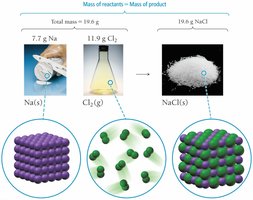
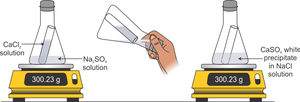
Law of Conservation of Mass Experiment
Experimental evidence for the law of conservation of mass involves measuring the mass before and after a chemical reaction. The mass remains unchanged, confirming that matter is conserved.
Law of Definite Proportions
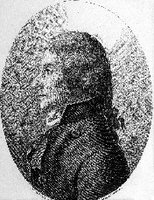
The Law of Definite Proportions, proposed by Joseph Proust, states that all samples of a given compound have the same proportions of their constituent elements, regardless of the sample's source or preparation method.
Key Point: The composition of a compound is always fixed.
Example: Water (H2O) always contains hydrogen and oxygen in a 2:1 ratio by atom count.
Law of Multiple Proportions
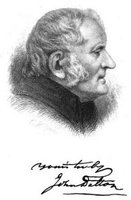
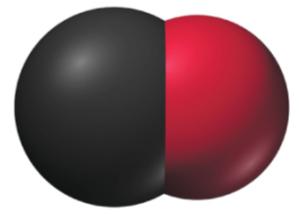
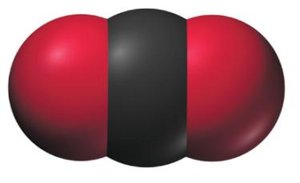
The Law of Multiple Proportions states that when two elements form more than one compound, the masses of one element that combine with a fixed mass of the other are in ratios of small whole numbers. This law was articulated by John Dalton.
Key Point: Elements can combine in different ratios to form different compounds.
Example: Carbon and oxygen form both carbon monoxide (CO) and carbon dioxide (CO2).
Dalton’s Atomic Theory
Postulates of Dalton’s Atomic Theory (1808)
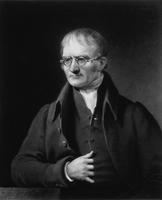
John Dalton proposed a theory to explain the laws of chemical combination:
Each element is composed of indivisible atoms.
All atoms of a given element are identical in mass and properties.
Compounds are formed by the combination of atoms of different elements in fixed ratios.
Chemical reactions involve the rearrangement of atoms; atoms are not created or destroyed.
Modern Revisions: Atoms are divisible into subatomic particles (protons, neutrons, electrons), and elements can have isotopes (atoms with different numbers of neutrons).
Structure of the Atom
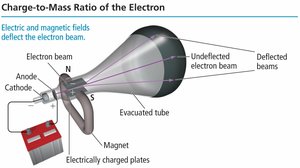
Discovery of the Electron
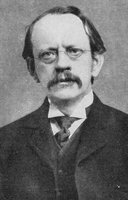
The electron was discovered by J.J. Thomson using the cathode ray tube experiment. He determined the charge-to-mass ratio of the electron:
Charge-to-mass ratio:
Millikan’s Oil Drop Experiment
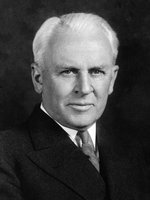
Robert Millikan measured the charge of the electron using the oil drop experiment. He found:
Charge of electron:
Mass of electron:
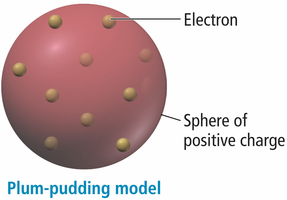
Thomson’s Plum Pudding Model
Thomson proposed that the atom is a sphere of positive charge with electrons embedded within it, like raisins in bread. This model was later disproven by Rutherford’s experiments.
Rutherford’s Nuclear Model
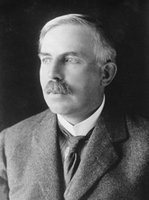
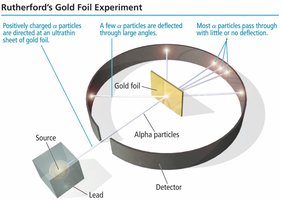
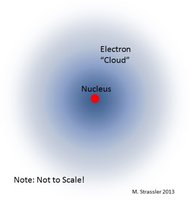
Ernest Rutherford’s gold foil experiment demonstrated that atoms have a small, dense, positively charged nucleus. Most of the atom’s volume is empty space where electrons reside.
Key Point: The nucleus contains nearly all the atom’s mass and is positively charged.
Discovery of Protons and Neutrons
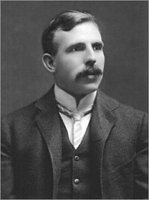
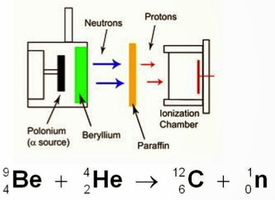
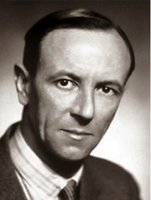
Protons were discovered by Rutherford, and neutrons by James Chadwick. Protons are positively charged, while neutrons are neutral. Both reside in the nucleus.
Proton charge:
Neutron charge: $0$
Subatomic Particles: Properties Table
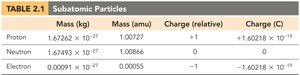
The three main subatomic particles are protons, neutrons, and electrons. Their properties are summarized below:
Particle | Mass (kg) | Mass (amu) | Charge (relative) | Charge (C) |
|---|---|---|---|---|
Proton | 1.67262 × 10⁻²⁷ | 1.00727 | +1 | +1.60218 × 10⁻¹⁹ |
Neutron | 1.67493 × 10⁻²⁷ | 1.00866 | 0 | 0 |
Electron | 0.00091 × 10⁻²⁷ | 0.00055 | −1 | −1.60218 × 10⁻¹⁹ |
Structure of the Atom: Summary
An atom consists of a dense nucleus (containing protons and neutrons) surrounded by electrons. The atom is electrically neutral when the number of protons equals the number of electrons.
The Periodic Table
Atomic Number and Mass Number
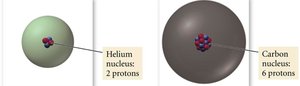
Each element is defined by its atomic number (Z), which is the number of protons in its nucleus. The mass number (A) is the sum of protons and neutrons.
Atomic number (Z): Number of protons
Mass number (A): Number of protons + number of neutrons
Isotopes
Isotopes are atoms of the same element with different numbers of neutrons. They are identified by their mass number (e.g., carbon-14, C-14).
Example: has 6 protons and 8 neutrons.
The Periodic Table of Elements
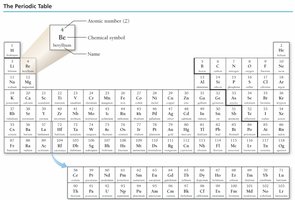
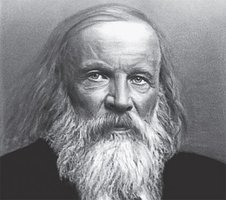
The periodic table arranges elements by increasing atomic number. Elements in the same column (group) have similar chemical properties. Dmitri Mendeleev is credited with its development.
Element Classification
Elements are classified as metals, nonmetals, or metalloids based on their properties:
Metals: Lustrous, good conductors, malleable, ductile.
Nonmetals: Gases or brittle solids, poor conductors.
Metalloids: Properties intermediate between metals and nonmetals; good semiconductors.
Ions
Formation of Ions
Ions are formed when atoms gain or lose electrons:
Cation: Positively charged ion (loss of electrons, usually metals).
Anion: Negatively charged ion (gain of electrons, usually nonmetals).
Naming Ions
Cations: Named as the metal (e.g., sodium ion).
Anions: Named by changing the ending to –ide (e.g., chloride ion).
Atomic Mass and the Mole
Atomic Mass
The atomic mass of an element is the weighted average of the masses of its naturally occurring isotopes, measured in atomic mass units (amu). 1 amu is defined as 1/12 the mass of a carbon-12 atom.
The Mole and Avogadro’s Number
The mole is the SI unit for amount of substance. One mole contains Avogadro’s number () of entities (atoms, molecules, etc.).
1 mole of C-12 atoms = 12 g = atoms
Molar Mass
The molar mass (Mm) is the mass of one mole of a substance, expressed in grams per mole (g/mol). It is numerically equal to the atomic or molecular mass in amu.
Example: Molar mass of carbon = 12.01 g/mol
Conversions Using the Mole
Mole calculations allow conversion between mass, number of moles, and number of atoms or molecules:
From moles to atoms:
From mass to moles:
Example Calculations
How many atoms are in 2.35 × 10⁻³ moles of gold?
How many moles are in 6.35 × 10²³ atoms of potassium?
How many grams of Ag are in 0.570 mol Ag?
How many moles of Na are in 176.0 g Na?
Determine the number of atoms in 16.5 g of nickel.
Additional info: These calculations require the use of Avogadro’s number and the molar mass of each element.
