 Indietro
Atoms and Elements: Foundations of Modern Atomic Theory
Guida di studio - Note intelligenti
 Appunti personalizzati basati sui tuoi materiali, ampliati con definizioni chiave, esempi e contesto.
Atoms and Elements
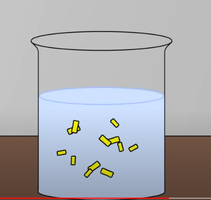
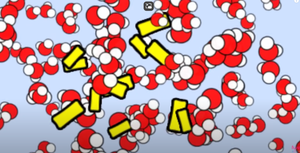
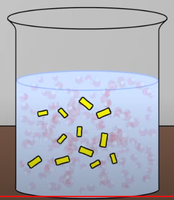
Brownian Motion: Atoms Confirmed
The concept of atoms as the fundamental building blocks of matter was experimentally supported by the observation of Brownian motion. In 1827, Scottish botanist Robert Brown observed that pollen grains suspended in water exhibited a random, jittery motion. Initially, he thought this motion was due to the grains being alive, but later, Albert Einstein and Jean Perrin demonstrated that this motion resulted from collisions with invisible molecules of water. This provided direct evidence for the existence of atoms and molecules, bridging the gap between the macroscopic and atomic worlds.
Early Ideas About the Building Blocks of Matter
The idea that matter is composed of small, indivisible particles dates back to ancient Greece. Leucippus and his student Democritus (5th–4th century B.C.) proposed that matter could be divided only until reaching tiny, indestructible particles called atoms. They believed that:
Atoms differ in shape and size.
Atoms move randomly through empty space.
All matter is formed by various combinations of these atoms.
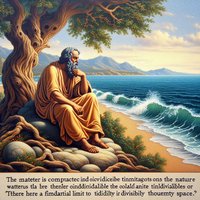
Democritus famously stated, "Nothing exists except atoms and empty space; everything else is opinion." However, these ideas were not universally accepted. Plato and Aristotle argued that matter was composed of four elements—water, fire, earth, and air—and was infinitely divisible, meaning it could be divided endlessly without reaching an indivisible particle. The atomic theory was later revived and supported by experimental evidence from John Dalton in the 19th century.
Modern Atomic Theory and the Laws That Led to It
The modern atomic theory is grounded in several fundamental laws derived from experimental observations:
Law of Conservation of Mass: In a chemical reaction, matter is neither created nor destroyed. The total mass of reactants equals the total mass of products. (Formulated by Antoine Lavoisier)
Law of Definite Proportions: All samples of a given compound have the same proportions of their constituent elements, regardless of source or preparation method. (Formulated by Joseph Proust)
Law of Multiple Proportions: When two elements form more than one compound, the masses of one element that combine with a fixed mass of the other are in ratios of small whole numbers. (Formulated by John Dalton)
Law of Conservation of Mass
This law states that the mass of substances involved in a chemical reaction remains constant. For example, if 10 g of hydrogen reacts with 80 g of oxygen to form water, the total mass of water produced will be 90 g.
Law of Definite Proportions
According to this law, a compound always contains the same elements in the same proportion by mass. For example, water (H2O) always contains hydrogen and oxygen in a mass ratio of 1:8, regardless of the sample size or source. This is illustrated in the following table:
Sample | Mass of Compound (g) | Mass of Hydrogen (g) | Mass of Oxygen (g) | H:O Ratio |
|---|---|---|---|---|
1 | 18 | 2 | 16 | 1:8 |
2 | 36 | 4 | 32 | 1:8 |
3 | 54 | 6 | 48 | 1:8 |
Similarly, ammonia (NH3) always has a nitrogen to hydrogen mass ratio of 14:3.
Sample | Mass of Ammonia (g) | Mass of Nitrogen (g) | Mass of Hydrogen (g) | N:H Ratio |
|---|---|---|---|---|
1 | 17 | 14 | 3 | 14:3 |
2 | 34 | 28 | 6 | 14:3 |
3 | 51 | 42 | 9 | 14:3 |
Example Problem: Law of Definite Proportions
According to the law of definite proportions, the mass ratio of carbon to oxygen in carbon monoxide (CO) is approximately 3:4. If a sample of carbon monoxide contains 9 g of carbon, how many grams of oxygen does it contain?
Solution: Set up the proportion: , so g of oxygen.
Law of Multiple Proportions
This law states that when two elements form more than one compound, the masses of one element that combine with a fixed mass of the other are in ratios of small whole numbers. For example, carbon and oxygen form both carbon monoxide (CO) and carbon dioxide (CO2):
In CO, 12 g of carbon combines with 16 g of oxygen (ratio 12:16 or 3:4).
In CO2, 12 g of carbon combines with 32 g of oxygen (ratio 12:32 or 3:8).
The ratio of oxygen masses that combine with a fixed mass of carbon (16:32) is 1:2, a small whole number ratio.
Dalton's Atomic Theory
John Dalton formulated the atomic theory to explain these laws:
Each element is composed of tiny, indestructible particles called atoms.
All atoms of a given element have the same mass and properties, distinguishing them from atoms of other elements.
Atoms combine in simple, whole-number ratios to form compounds.
Atoms of one element cannot change into atoms of another element; in chemical reactions, atoms only change the way they are bound together.
Comparison: Law of Definite Proportions vs. Law of Multiple Proportions
The law of definite proportions applies to different samples of a single compound, ensuring the ratio of elements is always the same. The law of multiple proportions compares different compounds made from the same elements, showing that the ratios of the masses of one element that combine with a fixed mass of the other are small whole numbers.
