 Indietro
Atoms and Elements: Structure, Isotopes, and the Periodic Table
Guida di studio - Note intelligenti
 Appunti personalizzati basati sui tuoi materiali, ampliati con definizioni chiave, esempi e contesto.
Atoms and Elements
Introduction
This chapter explores the foundational concepts of atomic structure, the discovery of subatomic particles, isotopes, and the organization of elements in the periodic table. Understanding these principles is essential for further study in chemistry, as they explain the nature of matter and its transformations.
2.1 Confirming the Existence of Atoms
Modern Evidence for Atoms
Atoms are the smallest units of elements that retain chemical identity.
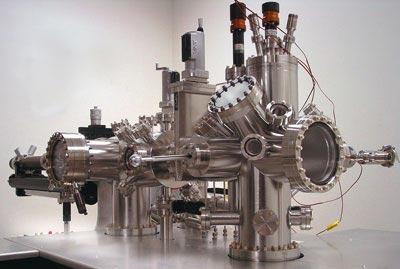
Advanced instruments, such as the scanning tunneling microscope (STM), allow scientists to visualize individual atoms on surfaces.
Direct imaging of atoms provides experimental confirmation of their existence.
2.2 Early Ideas About the Building Blocks of Matter
Historical Development of Atomic Theory
Ancient philosophers speculated about the divisibility of matter, but lacked experimental evidence.
John Dalton (1803) proposed the first modern atomic theory, stating that elements are composed of tiny, indivisible particles called atoms.
2.3 Modern Atomic Theory and the Laws That Led To It
Key Laws and Their Scientists
Law of Conservation of Mass (Lavoisier): Matter is neither created nor destroyed in chemical reactions.
Law of Definite Proportions (Proust): All samples of a compound have the same proportions of their constituent elements.
Law of Multiple Proportions (Dalton): When two elements form more than one compound, the masses of one element that combine with a fixed mass of the other are in ratios of small whole numbers.
2.4 The Discovery of the Electron
Subatomic Particles and Atomic Models
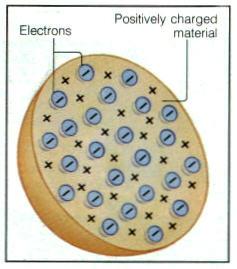
J.J. Thomson discovered the electron in 1897 using cathode ray experiments, showing that atoms contain negatively charged particles.
Thomson's "plum pudding" model depicted electrons embedded in a positively charged sphere.
2.5 The Structure of the Atom
Development of Atomic Models
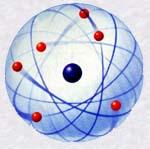
Ernest Rutherford (1911) discovered the nucleus through gold foil experiments, showing that atoms have a dense, positively charged center.
Most of the atom's volume is empty space occupied by electrons.
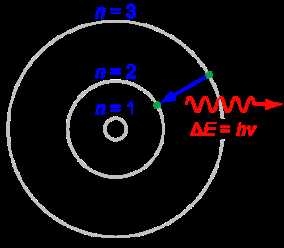
Later models (Bohr, Schrödinger) introduced quantized orbits and electron orbitals.
2.6 Subatomic Particles: Protons, Neutrons, and Electrons in Atoms
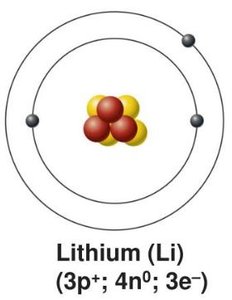
Composition of the Atom
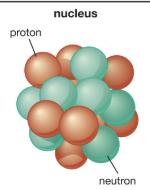
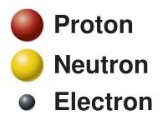
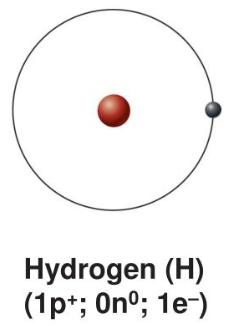
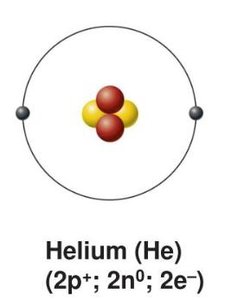
Protons (p+): Positively charged particles in the nucleus.
Neutrons (n0): Neutral particles in the nucleus.
Electrons (e-): Negatively charged particles in orbitals around the nucleus.
The number of protons defines the element (atomic number Z).
The sum of protons and neutrons gives the mass number (A).
2.6 Isotopes: When the Number of Neutrons Varies
Definition and Representation
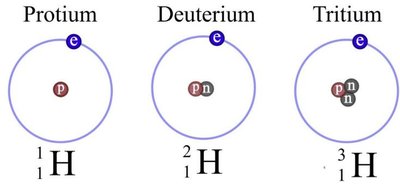
Isotopes are atoms of the same element with different numbers of neutrons.
Isotopes are represented as Element-Mass Number (e.g., C-12, C-13, C-14).
Isotopes have nearly identical chemical properties but different masses.
2.7 Finding Patterns: The Periodic Law and the Periodic Table
Organization of Elements
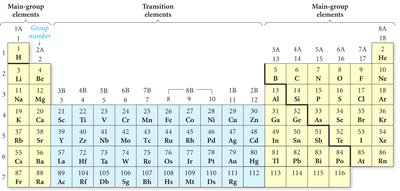
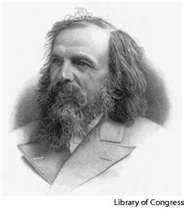
The Periodic Law states that when elements are arranged by increasing atomic number, their properties recur periodically.
The Periodic Table organizes elements into groups (columns) and periods (rows) based on similar properties.
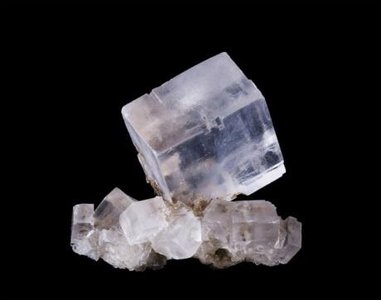
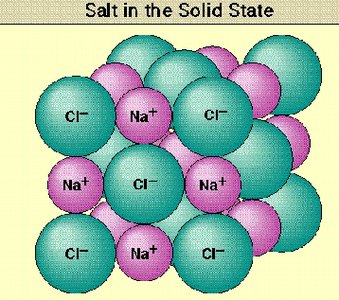
Metals tend to lose electrons and form cations; nonmetals tend to gain electrons and form anions.
2.7 Ions and the Periodic Table
Formation of Ions
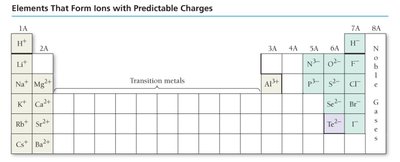
Ions are charged atoms or molecules formed by the loss or gain of electrons.
Metals (left side of the table) typically form positive ions (cations).
Nonmetals (right side of the table) typically form negative ions (anions).
2.8 Atomic Mass: The Average Mass of an Element’s Atoms
Weighted Average and Isotopic Abundance
The atomic mass of an element is the weighted average of the masses of its naturally occurring isotopes.
Atomic mass is expressed in atomic mass units (amu).
Calculation: $\text{Atomic mass} = \sum (\text{fractional abundance} \times \text{isotope mass})$
Isotope Symbol | Mass (amu) | Abundance (%) |
|---|---|---|
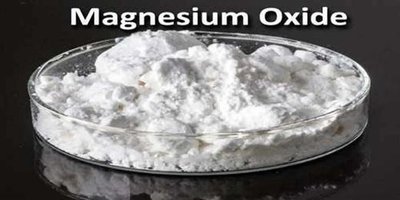
Mg-24 | 23.9850 | 78.99 |
Mg-25 | 24.9858 | 10.00 |
Mg-26 | 25.9826 | 11.01 |
2.9 Molar Mass: Counting Atoms by Weighing Them
The Mole and Avogadro’s Number
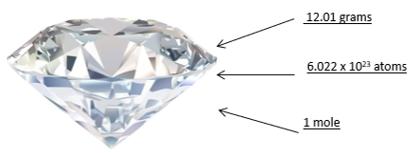
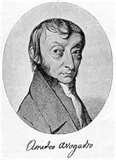
One mole contains $6.022 \times 10^{23}$ entities (Avogadro’s number).
The molar mass (g/mol) is numerically equal to the atomic or molecular mass in amu.
Conversions between mass, moles, and number of atoms use the following relationships:
$\text{Moles} = \frac{\text{Mass (g)}}{\text{Molar Mass (g/mol)}}$
$\text{Number of atoms} = \text{Moles} \times 6.022 \times 10^{23}$
Applications: Radiology and Isotopes
Medical Use of Radioisotopes
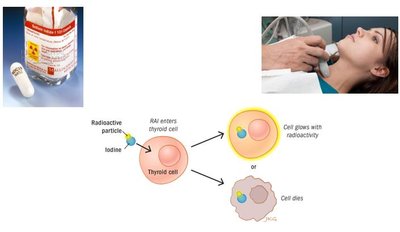
Iodine-131 is a radioactive isotope used in thyroid imaging and treatment.
The thyroid gland absorbs iodine; radioactive iodine emits particles that can destroy overactive tissue or be detected for imaging.
Understanding isotopes and atomic counting is essential for radiotracer applications in medicine.
Summary Table: Key Subatomic Particles
Particle | Symbol | Charge | Relative Mass | Location |
|---|---|---|---|---|
Proton | p+ | +1 | 1 | Nucleus |
Neutron | n0 | 0 | 1 | Nucleus |
Electron | e- | -1 | ~1/1836 | Outside nucleus |
Additional info:
Atomic models evolved from Dalton's solid sphere to Thomson's plum pudding, Rutherford's nuclear model, Bohr's quantized orbits, and Schrödinger's electron cloud model.
The periodic table is a powerful tool for predicting chemical behavior, ion formation, and element classification.
