 Indietro
Atoms and Elements: Structure, Isotopes, and the Periodic Table
Guida di studio - Note intelligenti
 Appunti personalizzati basati sui tuoi materiali, ampliati con definizioni chiave, esempi e contesto.
Atoms and Elements
Introduction
This chapter explores the foundational concepts of atomic structure, the discovery of subatomic particles, isotopes, and the organization of elements in the periodic table. Understanding these principles is essential for further study in chemistry, as they explain the nature of matter and its transformations.
2.1 Confirming the Existence of Atoms
Modern Evidence for Atoms
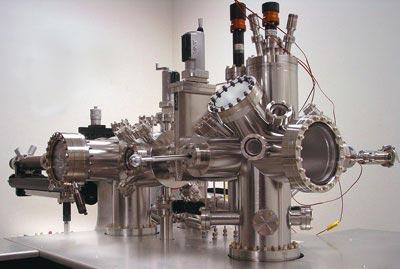
Scanning Tunneling Microscope (STM): The STM allows scientists to visualize the surface contours of individual atoms, providing direct evidence for their existence.
Atomic-Scale Imaging: The arrangement of atoms on surfaces, such as silicon in computer chips, can be observed, confirming atomic theory.
2.2 Early Ideas About the Building Blocks of Matter
Historical Development of Atomic Theory
Democritus: Proposed that matter is composed of indivisible particles called atoms.
Dalton's Atomic Theory (1803): Atoms are the fundamental building blocks of matter; each element consists of identical atoms; atoms combine in simple whole-number ratios to form compounds.
2.3 Modern Atomic Theory and the Laws That Led To It
Key Laws
Law of Conservation of Mass (Lavoisier): Matter is neither created nor destroyed in chemical reactions.
Law of Definite Proportions (Proust): All samples of a given compound have the same proportions of their constituent elements.
Law of Multiple Proportions (Dalton): When two elements form more than one compound, the masses of one element that combine with a fixed mass of the other are in ratios of small whole numbers.
2.4 The Discovery of the Electron
Subatomic Particles and Atomic Models
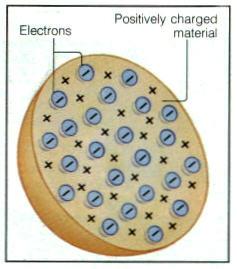
J.J. Thomson (1897): Discovered the electron using cathode ray experiments, leading to the "plum pudding" model of the atom.
Millikan Oil Drop Experiment: Measured the charge of the electron.
2.5 The Structure of the Atom
Nuclear Model and Subatomic Particles
Ernest Rutherford (1911): Gold foil experiment demonstrated that atoms have a small, dense, positively charged nucleus.
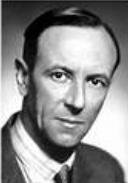
James Chadwick (1932): Discovered the neutron, completing the basic picture of atomic structure.
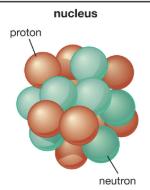
Subatomic Particles: Atoms are composed of protons (positive), neutrons (neutral), and electrons (negative).
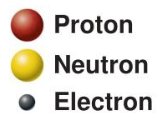
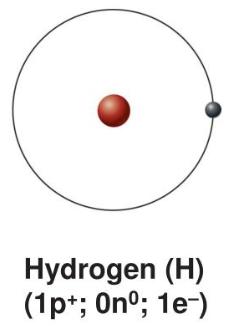
2.6 Subatomic Particles: Protons, Neutrons, and Electrons in Atoms
Atomic Notation and Isotopes
Atomic Number (Z): Number of protons in the nucleus; defines the element.
Mass Number (A): Total number of protons and neutrons.
Isotopes: Atoms of the same element with different numbers of neutrons.
Atom | Symbol | # Protons (Z) | # Neutrons | Mass Number (A) |
|---|---|---|---|---|
Neon-20 | 20Ne | 10 | 10 | 20 |
Neon-21 | 21Ne | 10 | 11 | 21 |
Neon-22 | 22Ne | 10 | 12 | 22 |
Oxygen-16 | 16O | 8 | 8 | 16 |
Oxygen-17 | 17O | 8 | 9 | 17 |
Oxygen-18 | 18O | 8 | 10 | 18 |
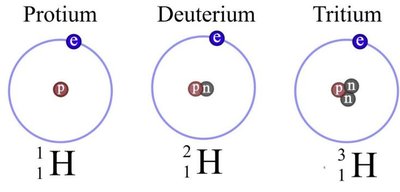
2.7 Finding Patterns: The Periodic Law and the Periodic Table
Organization of Elements
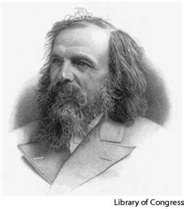
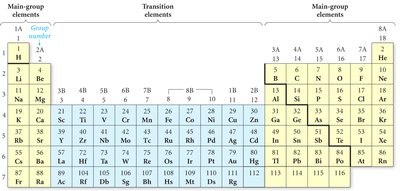
Periodic Law (Mendeleev, 1869): When elements are arranged by increasing atomic number, their properties recur periodically.
Metals: Tend to lose electrons and form cations.
Nonmetals: Tend to gain electrons and form anions.
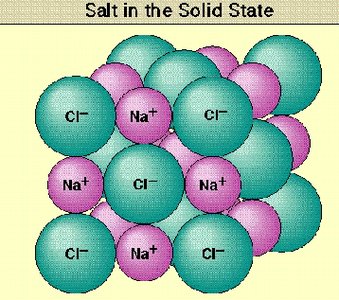
Ions: Charged atoms formed by gaining or losing electrons.
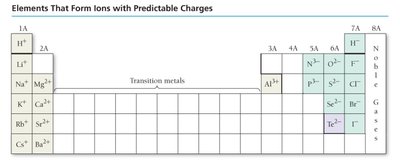
2.8 Atomic Mass: The Average Mass of an Element’s Atoms
Weighted Average and Isotopic Abundance
Atomic Mass Unit (amu): Standard unit for atomic and molecular masses.
Weighted Average: The atomic mass on the periodic table is the weighted average of all naturally occurring isotopes.
Isotope Symbol | Mass (amu) | Abundance (%) |
|---|---|---|
Mg-24 | 23.9850 | 78.99 |
Mg-25 | 24.9858 | 10.00 |
Mg-26 | 25.9826 | 11.01 |
Formula for Weighted Average:
$\text{Atomic Mass} = \sum (\text{Fractional Abundance} \times \text{Isotopic Mass})$
2.9 Molar Mass: Counting Atoms by Weighing Them
The Mole and Avogadro’s Number
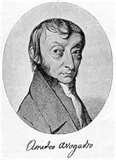
Mole (mol): The amount of substance containing $6.022 \times 10^{23}$ entities (Avogadro’s number).
Molar Mass: The mass of one mole of a substance, numerically equal to the atomic or molecular mass in grams.
Key Equations:
$\text{Number of moles} = \frac{\text{Mass (g)}}{\text{Molar Mass (g/mol)}}$
$\text{Number of atoms} = \text{Number of moles} \times 6.022 \times 10^{23}$
Applications: Radiology and Isotopes
Radioactive Isotopes in Medicine
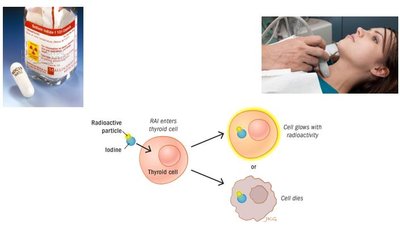
Iodine-131: Used in thyroid imaging and treatment due to its radioactive decay, which can destroy overactive thyroid tissue or allow imaging via emitted gamma rays.
Radiotracers: Rely on the unique properties of isotopes and the ability to count atoms for diagnostic and therapeutic purposes.
Summary Table: Subatomic Particles
Particle | Symbol | Charge | Relative Mass |
|---|---|---|---|
Proton | p+ | +1 | 1 |
Neutron | n0 | 0 | 1 |
Electron | e- | -1 | ~0.0005 |
Additional info:
Atomic structure models evolved from Dalton’s solid sphere, Thomson’s plum pudding, Rutherford’s nuclear model, Bohr’s quantized orbits, to the modern quantum mechanical model.
Isotopic notation: $^{A}_{Z}\text{X}$, where A = mass number, Z = atomic number, X = element symbol.
Periodic trends and groupings help predict chemical behavior and ion formation.
