 Indietro
Atoms, Elements, and Atomic Structure: General Chemistry Study Notes
Guida di studio - Note intelligenti
 Appunti personalizzati basati sui tuoi materiali, ampliati con definizioni chiave, esempi e contesto.
The Atom: Fundamental Concepts
Atoms and Molecules
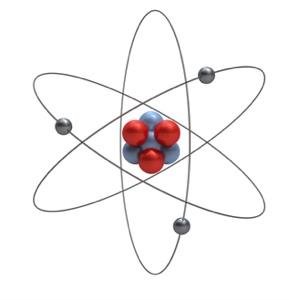
The study of chemistry begins with understanding the basic building blocks of matter: atoms and molecules. An atom is the smallest unit of an element that retains its chemical properties, while a molecule is a group of two or more atoms bonded together in a specific arrangement.
Atom: Fundamental unit of matter, composed of protons, neutrons, and electrons.
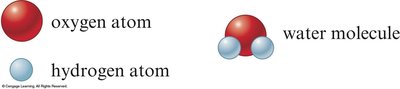
Molecule: Two or more atoms chemically bonded (e.g., H2O, O2).
Example: Water molecule consists of two hydrogen atoms and one oxygen atom.
Elements and Compounds
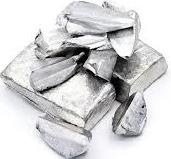
An element is a pure substance consisting of only one type of atom. A compound is a substance formed from two or more different elements chemically bonded together.
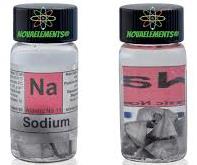
Element: Cannot be broken down by chemical means; represented by chemical symbols (e.g., Na, O, C).
Compound: Contains atoms of two or more elements in fixed ratios (e.g., NaCl, H2O).
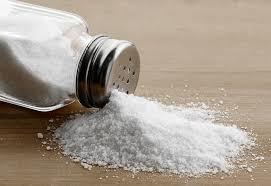
Example: Sodium chloride (NaCl) is a compound of sodium and chlorine.


Types of Matter and Classification
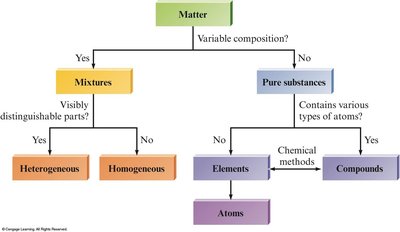
Matter can be classified based on its composition and properties. The main categories are pure substances and mixtures.
Pure Substance: Has a fixed composition; can be an element or a compound.
Mixture: Combination of two or more substances; can be homogeneous (uniform) or heterogeneous (non-uniform).
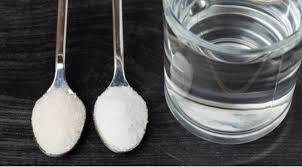
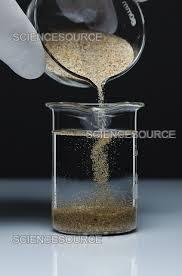
Example: Sand and water form a heterogeneous mixture; salt dissolved in water forms a homogeneous mixture.
Atomic Structure
Models of the Atom
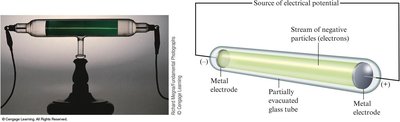
Atomic models have evolved over time, from Dalton's indivisible atom to the modern quantum mechanical model. Key experiments include Thomson's cathode ray experiment and Rutherford's gold foil experiment.
Thomson's Model: Discovered electrons; proposed the "plum pudding" model.
Rutherford's Model: Discovered the nucleus; most of the atom is empty space.
Bohr's Model: Electrons orbit the nucleus in discrete energy levels.

Subatomic Particles
Atoms are composed of three main subatomic particles: protons, neutrons, and electrons.
Proton: Positively charged, found in the nucleus.
Neutron: Neutral, found in the nucleus.
Electron: Negatively charged, orbits the nucleus.
Nuclide Symbol: Represents the element, atomic number, and mass number (e.g., ).
Isotopes and Ions
Isotopes are atoms of the same element with different numbers of neutrons. Ions are atoms or molecules that have gained or lost electrons, resulting in a net charge.
Isotope: Same number of protons, different number of neutrons (e.g., and ).
Cation: Positive ion, formed by losing electrons.
Anion: Negative ion, formed by gaining electrons.
Mass Number and Atomic Mass
The mass number is the sum of protons and neutrons in an atom. The atomic mass is the weighted average mass of all isotopes of an element.
Mass Number: Integer value;
Atomic Mass: Average value, not necessarily an integer.
Example: Chlorine atomic mass calculation:
Electron Arrangement and the Periodic Table
Bohr Model and Electron Shells
Electrons occupy energy levels or shells around the nucleus. The arrangement of electrons determines chemical properties and bonding behavior.
Shells: Each shell has a maximum number of electrons: 1st shell (2), 2nd shell (8), 3rd shell (18).
Valence Electrons: Electrons in the outermost shell; responsible for chemical bonding.
Core Electrons: Electrons in inner shells.
Periodic Table and Valence Electrons
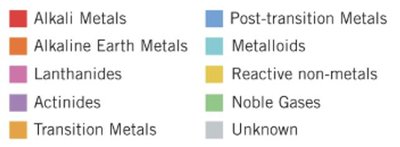
The periodic table organizes elements by increasing atomic number. The group number indicates the number of valence electrons, and the period number indicates the number of electron shells.
Group Number: Determines valence electrons (e.g., Group 1A has 1 valence electron).
Period Number: Indicates the number of electron shells.
Example: Sodium (Na) is in Group 1A, so it has 1 valence electron.

Chemical Formulas and Compounds
Chemical Formula
A chemical formula uses element symbols and subscripts to indicate the types and numbers of atoms in a compound.
Example: (carbon dioxide), (magnesium chloride).
Empirical Formula: Simplest whole-number ratio of atoms in a compound.
Writing Chemical Formulas
To write a chemical formula, determine the element symbols, their charges, and combine them to achieve charge neutrality.
Group Number: Indicates typical charge (e.g., Group 1A: +1, Group 7A: -1).
Polyatomic Ions: Groups of atoms with a net charge (e.g., , ).
Example: Sodium chloride: Na+ and Cl- combine to form NaCl.
Classification of Matter: Table
The classification of matter can be summarized in the following table:
Type | Description | Example |
|---|---|---|
Element | Pure substance, one type of atom | Gold (Au), Oxygen (O2) |
Compound | Pure substance, two or more types of atoms | Water (H2O), Sodium chloride (NaCl) |
Homogeneous Mixture | Uniform composition | Salt water, air |
Heterogeneous Mixture | Non-uniform composition | Sand and water, salad |
Applications and Relevance
Atoms in Technology, Biology, and Environment
Atoms and elements play crucial roles in various fields, including technology, biology, health, and environmental science.
Technology: Laser beams are produced by excited atoms releasing photons.
Biology: Carbon atoms form the backbone of biological molecules.
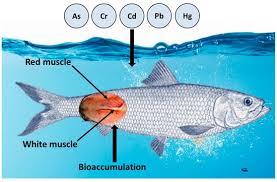
Health: Heavy metal atoms can accumulate in the body and cause toxicity.
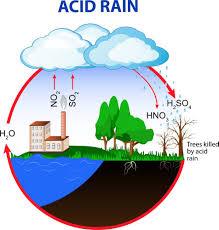
Environment: Burning fossil fuels releases sulfur compounds, causing acid rain.
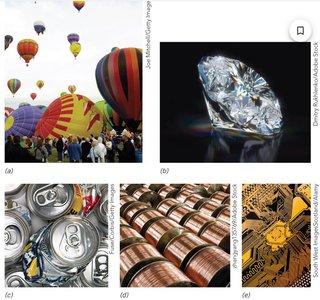
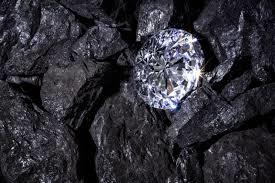
Geology: Carbon atoms are compressed into diamond deep within Earth.
Summary Table: Subatomic Particles
Particle | Charge | Location | Relative Mass |
|---|---|---|---|
Proton | +1 | Nucleus | 1 |
Neutron | 0 | Nucleus | 1 |
Electron | -1 | Electron cloud | ~0.0005 |
Key Equations
Mass Number:
Average Atomic Mass:
Additional info: Some context and examples were inferred to ensure completeness and clarity for exam preparation.
