 Indietro
Atoms, Elements, and Moles: Foundations of General Chemistry
Guida di studio - Note intelligenti
 Appunti personalizzati basati sui tuoi materiali, ampliati con definizioni chiave, esempi e contesto.
Atoms, Elements, and Moles
Historical Atomic Theory and Laws
The development of atomic theory was guided by several key scientific laws and experiments. Understanding these laws is fundamental to grasping the nature of matter and chemical reactions.
Law of Conservation of Mass: States that mass is neither created nor destroyed in a chemical reaction. The total mass of reactants equals the total mass of products.
Law of Definite Proportions: Different samples of a pure chemical substance always contain the same proportion of elements by mass.
Law of Multiple Proportions: When two elements combine to form more than one compound, the mass ratios of the elements in these compounds are small whole-number multiples of each other.
Dalton’s Atomic Theory: Proposed that elements are made of tiny, indestructible particles called atoms, atoms of the same element are identical, compounds are formed by simple whole-number ratios, and chemical reactions involve rearrangement of atoms.
Example: Sodium chloride samples always show fixed mass proportions of sodium and chlorine, illustrating the Law of Definite Proportions.
Structure of the Atom: Key Experiments and Models
Atomic structure has evolved through experimental discoveries, leading to our modern understanding of the atom.
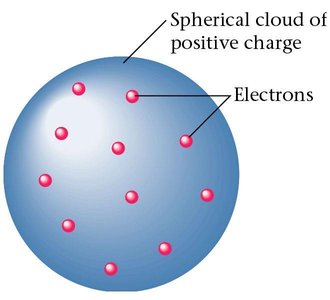
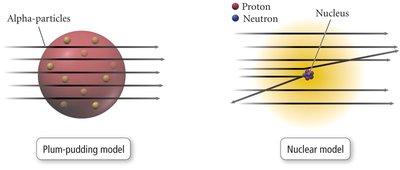
Thomson’s Cathode Ray Experiment: Demonstrated the existence of electrons and led to the 'Plum Pudding' model, where electrons are embedded in a sphere of positive charge.
Millikan’s Oil Drop Experiment: Measured the charge of the electron.
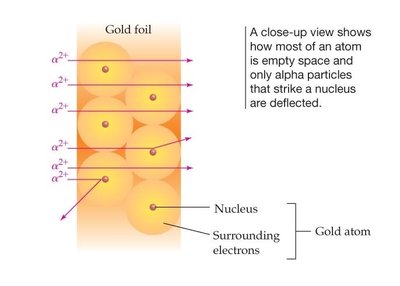
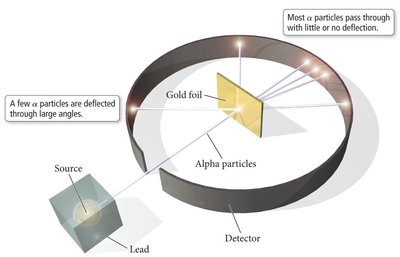
Rutherford’s Gold Foil Experiment: Revealed that atoms have a dense, positively charged nucleus and are mostly empty space.
Moseley’s X-ray Spectroscopy: Established the concept of atomic number as the number of protons in the nucleus.
Chadwick’s Discovery: Identified the neutron as a neutral particle in the nucleus.
Comparison of Models: The Plum Pudding model was replaced by the Nuclear model, which accurately describes the atom as mostly empty space with a dense nucleus.
Subatomic Particles: Protons, Neutrons, and Electrons
Atoms are composed of three fundamental subatomic particles, each with distinct properties.
Proton: Positively charged particle found in the nucleus; defines the atomic number.
Neutron: Neutral particle found in the nucleus; contributes to atomic mass.
Electron: Negatively charged particle found in a cloud around the nucleus; responsible for chemical behavior.
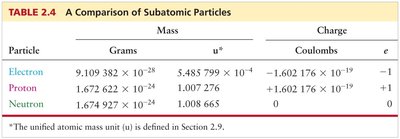
Mass Comparison: Protons and neutrons have similar masses, much greater than electrons.
Charge Comparison: Protons (+1), electrons (–1), neutrons (0).
Particle | Mass (grams) | Charge (Coulombs) | Charge (e) |
|---|---|---|---|
Electron | 9.109382 × 10⁻²⁸ | –1.602176 × 10⁻¹⁹ | –1 |
Proton | 1.672622 × 10⁻²⁴ | +1.602176 × 10⁻¹⁹ | +1 |
Neutron | 1.674927 × 10⁻²⁴ | 0 | 0 |
Elements, Isotopes, and Atomic Structure
An element is defined as a substance that cannot be broken down into simpler substances by chemical means. Isotopes are atoms of the same element with different numbers of neutrons.
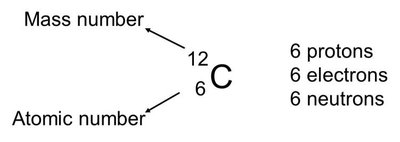
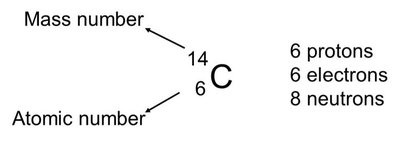
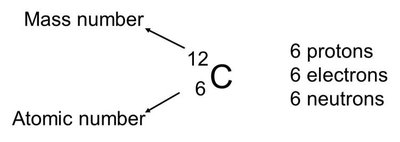
Atomic Number (Z): Number of protons in the nucleus; unique to each element.
Mass Number (A): Sum of protons and neutrons in the nucleus.
Isotope Symbol: Written as where X is the element symbol.
Example: Carbon-12 () has 6 protons, 6 neutrons, 6 electrons; Carbon-14 () has 6 protons, 8 neutrons, 6 electrons.
The Periodic Table: Organization and Properties
The periodic table organizes elements by increasing atomic number and groups elements with similar properties together. It is a powerful tool for predicting chemical behavior.
Groups: Vertical columns; elements in the same group have similar properties.
Periods: Horizontal rows.
Special Groups: Alkali metals (Group 1), alkaline earth metals (Group 2), halogens (Group 17), noble gases (Group 18), transition metals (Groups 3–12).
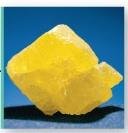
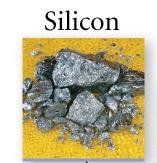
Metals: Shiny, conductive, malleable, ductile; located on the left and center.
Nonmetals: Poor conductors, brittle, gain electrons; located on the right.
Metalloids: Intermediate properties; located between metals and nonmetals.
Physical and Chemical Properties
Properties of matter are classified as physical or chemical, and as intensive or extensive.
Physical Properties: Do not involve a change in chemical composition (e.g., color, melting point).
Chemical Properties: Involve a change in chemical composition (e.g., rusting, combustion).
Intensive Properties: Independent of sample size (e.g., density).
Extensive Properties: Dependent on sample size (e.g., mass, volume).
Classification of Matter
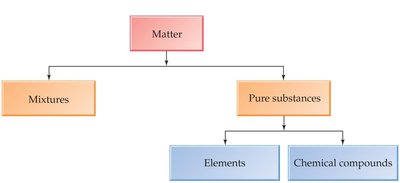
Matter is classified as either mixtures or pure substances. Pure substances are further divided into elements and compounds.
Mixtures: Combinations of two or more substances that retain their individual properties.
Pure Substances: Have a fixed composition; can be elements or compounds.
Elements: Cannot be broken down by chemical means.
Compounds: Composed of two or more elements chemically combined in fixed ratios.
The Mole and Avogadro’s Number
The mole is a fundamental unit in chemistry for counting atoms, molecules, or ions. Avogadro’s number defines the number of particles in one mole.
1 mole = particles
Molar Mass: The mass in grams of one mole of a substance; numerically equal to the atomic or molecular mass in amu.
Conversion Factors: Used to convert between mass, moles, and number of particles.
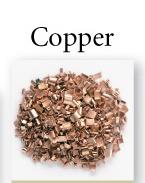
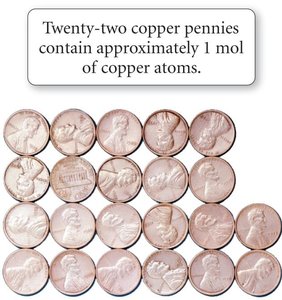
Example: 1 mole of copper (Cu) = 63.55 g = atoms.

Calculating Average Atomic Mass
The average atomic mass of an element is calculated as the weighted average of the masses of its naturally occurring isotopes.
Formula:
Example: For carbon: amu
Mass Spectrometry and Isotope Abundance
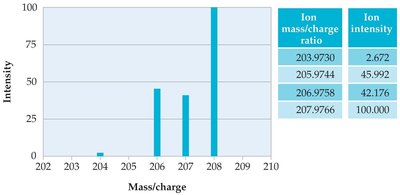
Mass spectrometry is used to determine the masses and abundances of isotopes, allowing calculation of average atomic mass.
Mass Spectrum: Shows peaks corresponding to different isotopes; peak height indicates relative abundance.
Calculation: Convert intensity to percentage, then use the weighted average formula.
Example: For an element with four isotopes, calculate average atomic mass using their masses and abundances.
Conversions: Moles, Mass, and Number of Particles
Converting between moles, mass, and number of particles is essential for quantitative chemistry.
Mass to Moles:
Moles to Particles:
Example: Calculate the number of copper atoms in 2.45 mol of copper: atoms.
Summary Table: Key Concepts
Concept | Definition | Example |
|---|---|---|
Element | Substance with only one type of atom | Oxygen (O2) |
Compound | Substance with two or more elements chemically combined | Water (H2O) |
Isotope | Atoms of same element with different mass numbers | Carbon-12, Carbon-14 |
Mole | 6.022 × 10²³ particles | 1 mol Cu = 63.55 g |
Molar Mass | Mass of 1 mole of substance | Cu: 63.55 g/mol |
