 Indietro
Atoms, Elements, and the Periodic Table: Foundations of Modern Chemistry
Guida di studio - Note intelligenti
 Appunti personalizzati basati sui tuoi materiali, ampliati con definizioni chiave, esempi e contesto.
Atoms, Molecules & Ions
Elements and Their Symbols
An element is a fundamental substance that cannot be chemically changed or broken down into simpler substances. There are 118 known elements, each with a unique symbol (e.g., H for hydrogen, O for oxygen, Fe for iron). The symbols are often derived from their English or Latin names (e.g., Na for sodium from natrium).
Most abundant elements in the universe: Hydrogen (H, ~75%) and Helium (He, ~23%).
Most abundant elements on Earth: Iron (Fe, ~35%) and Oxygen (O, ~30%).
The Periodic Table: Historical and Modern Perspectives
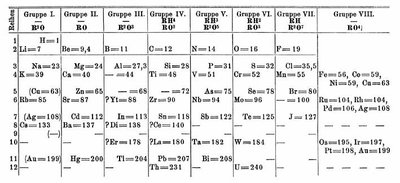
The periodic table organizes elements based on their atomic number and recurring chemical properties. Early chemists noticed similarities among triads of elements (e.g., Cl, Br, I; Li, Na, K). Dmitri Mendeleev arranged elements by increasing atomic mass and grouped similar elements, leaving gaps for undiscovered elements and predicting their properties with remarkable accuracy.
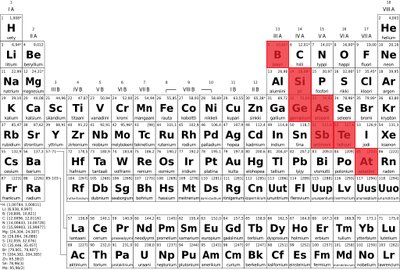
Modern Periodic Table: The table consists of 7 periods (rows) and 18 groups (columns). Elements are arranged by increasing atomic number, and groups share similar chemical properties.
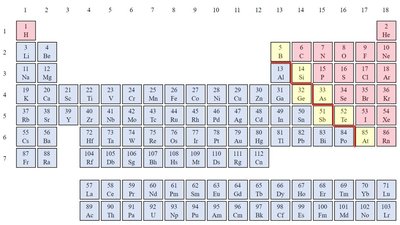
Periodic Table Groups and Properties
Groups in the periodic table have characteristic properties:
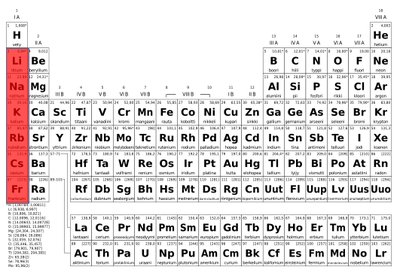
Group 1: Alkali Metals (Li, Na, K, Rb, Cs, Fr) – Soft, silvery, highly reactive with water, never found in elemental form in nature, combine with halogens in a 1:1 ratio.
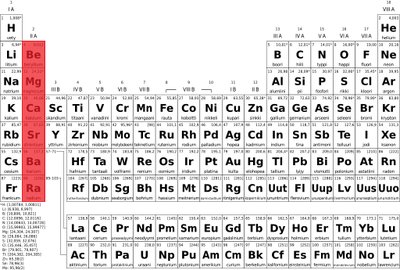
Group 2: Alkaline Earth Metals (Be, Mg, Ca, Sr, Ba, Ra) – Shiny, silvery, less reactive than alkali metals, never found in elemental form, combine with halogens in a 1:2 ratio.
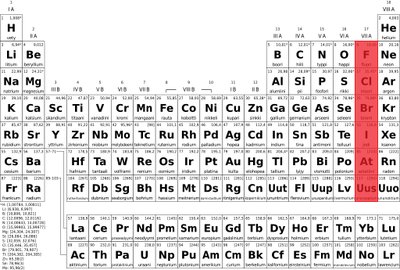
Group 17: Halogens (F, Cl, Br, I, At) – Colorful, corrosive nonmetals, highly reactive, exist in various physical states at room temperature (F, Cl: gases; Br: liquid; I: solid).
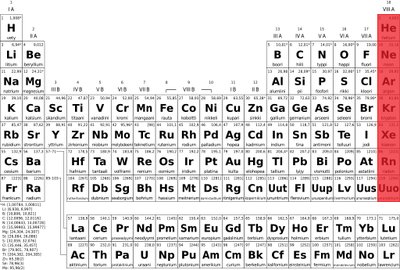
Group 18: Noble Gases (He, Ne, Ar, Kr, Xe, Rn) – Colorless, inert gases, very low chemical reactivity.
Classification of Elements: Metals, Nonmetals, and Metalloids
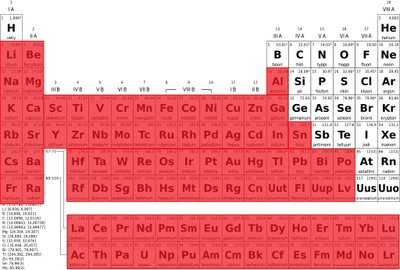
Metals: Shiny, solid (except mercury), ductile, malleable, good conductors of heat and electricity, high melting/boiling points.
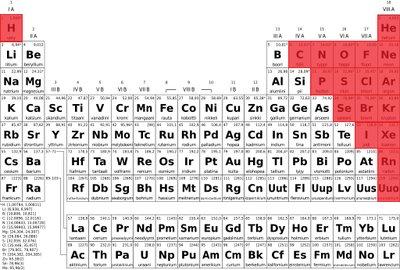
Nonmetals: Occur as solids, liquids, or gases; brittle; poor conductors; low melting/boiling points; variable colors.
Metalloids (Semimetals): Properties intermediate between metals and nonmetals; typically shiny but brittle; intermediate conductivity and melting/boiling points.
Physical and Chemical Properties
Extensive vs. Intensive Properties
Extensive Properties: Depend on sample size (e.g., length, volume, mass).
Intensive Properties: Independent of sample size (e.g., density, melting point, temperature).
Physical vs. Chemical Properties
Physical Properties: Observed without changing composition (e.g., color, melting point, electrical conductivity).
Chemical Properties: Observed when a substance undergoes a chemical change (e.g., rusting, combustion, tarnishing).
Evidence for Atomic Theory
Development of Atomic Theory
Robert Boyle: Provided evidence for the existence of elements as fundamental substances.
Joseph Priestley: Isolated oxygen, enabling the use of chemical equations to describe reactions.
Example reaction:
Law of Conservation of Mass
Antoine Lavoisier demonstrated that mass is neither created nor destroyed in chemical reactions. The total mass of reactants equals the total mass of products.
Law of Definite Proportions
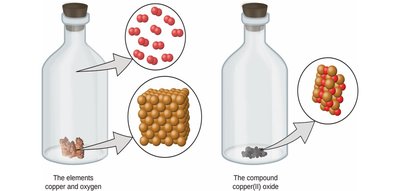
Joseph Proust established that a pure chemical compound always contains the same proportion of elements by mass. For example, water always contains hydrogen and oxygen in an 1:8 mass ratio.
Law of Multiple Proportions
John Dalton observed that elements can combine in different ratios to form different compounds, and these ratios are small whole-number multiples. For example, nitrogen and oxygen form NO, NO2, and N2O with different mass ratios.
Compound | Mass Ratio (N:O) | O per 1g N | Multiple |
|---|---|---|---|
NO | 14:16 | 1.14 | 2 |
NO2 | 14:32 | 2.29 | 4 |
N2O | 28:16 | 0.571 | 1 |
Dalton's Atomic Theory
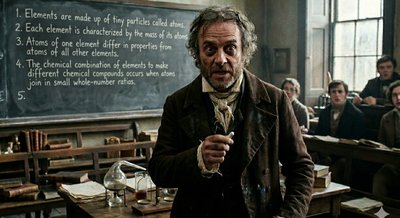
Elements are made of tiny particles called atoms.
Each element is characterized by the mass of its atoms.
Atoms of one element differ from those of other elements.
Atoms combine in fixed proportions to form compounds.
Chemical reactions rearrange atoms but do not change them.
Atomic Structure and Subatomic Particles
Discovery of the Electron
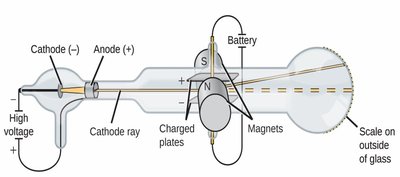
J.J. Thomson's cathode ray experiment demonstrated the existence of negatively charged particles (electrons). The charge-to-mass ratio was determined as:
Electron Charge and Mass
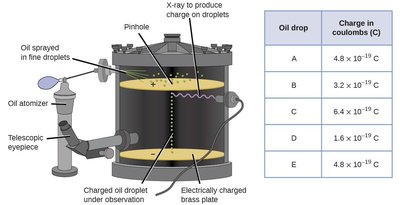
R.A. Millikan's oil drop experiment measured the charge of an electron as C. Combining this with Thomson's ratio, the mass of an electron was calculated:
Discovery of the Nucleus: Gold Foil Experiment
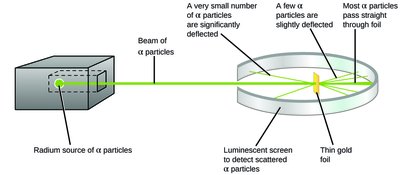
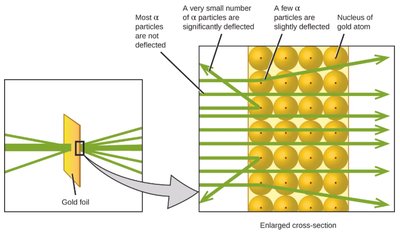
Ernest Rutherford's gold foil experiment showed that atoms have a small, dense, positively charged nucleus. Most alpha particles passed through the foil, but some were deflected, indicating a concentrated center of positive charge (the nucleus).
Protons, Neutrons, and Electrons
Protons and neutrons are located in the nucleus; electrons occupy the surrounding electron cloud. Protons and neutrons have similar masses, while electrons are much lighter.
Particle | Mass (g) | Mass (amu) | Charge (C) | Charge (e) |
|---|---|---|---|---|
Electron | 9.109 382 x 10−28 | 5.485 799 x 10−4 | −1.602 176 x 10−19 | −1 |
Proton | 1.672 622 x 10−24 | 1.007 276 | +1.602 176 x 10−19 | +1 |
Neutron | 1.674 927 x 10−24 | 1.008 665 | 0 | 0 |
Isotopes
The atomic number (Z) is the number of protons in the nucleus and defines the element. The mass number (A) is the sum of protons and neutrons. Atoms of the same element with different numbers of neutrons are called isotopes. Isotopes have the same chemical properties but different masses.
Practice Problems
Identify the number of protons, neutrons, and electrons in 75Se.
An atom with 47 protons and 62 neutrons: Identify the element and write its isotope symbol.
