 Indietro
Atoms, Elements, and the Structure of Matter: Foundations of Atomic Theory
Guida di studio - Note intelligenti
 Appunti personalizzati basati sui tuoi materiali, ampliati con definizioni chiave, esempi e contesto.
Atomic Theory of Matter
Historical Development and Dalton's Atomic Theory
The concept that matter is composed of fundamental, indivisible particles called atoms was revitalized in the early 19th century by John Dalton. Dalton's atomic theory laid the groundwork for modern chemistry by providing a systematic explanation for the composition and behavior of matter.
Dalton's Postulates:
Each element is composed of extremely small particles called atoms.
All atoms of a given element are identical in mass and properties, but differ from those of other elements.
Atoms are neither created nor destroyed in chemical reactions; they are simply rearranged.
Compounds are formed when atoms of more than one element combine in fixed, simple ratios.
Law of Conservation of Mass: The total mass of substances remains unchanged during a chemical reaction.

Additional info: Dalton's theory explained the fixed composition of compounds and the conservation of mass in reactions.
Discovery of Subatomic Particles
The Electron
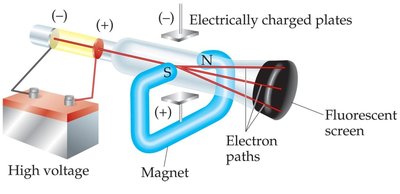
The electron was the first subatomic particle to be discovered. J. J. Thomson, through experiments with cathode ray tubes, demonstrated the existence of negatively charged particles (electrons) and measured their charge-to-mass ratio.
Charge-to-mass ratio of electron: coulombs/gram
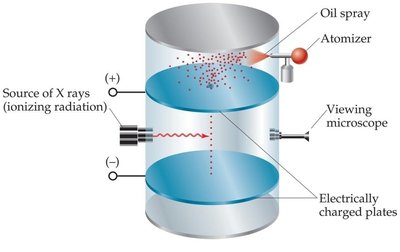
Millikan Oil Drop Experiment: Robert Millikan determined the charge of the electron, allowing calculation of its mass.
Radioactivity and the Nucleus
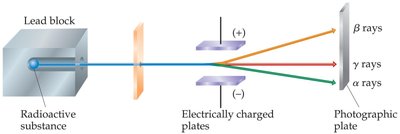
Radioactivity is the spontaneous emission of radiation by unstable atomic nuclei. Henri Becquerel, and later Marie and Pierre Curie, discovered and studied this phenomenon. Ernest Rutherford identified three types of radiation: alpha (α), beta (β), and gamma (γ) rays.
Models of the Atom
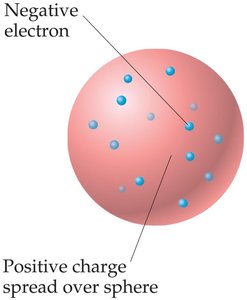
Plum Pudding Model: Proposed by Thomson, this model depicted the atom as a sphere of positive charge with embedded electrons.
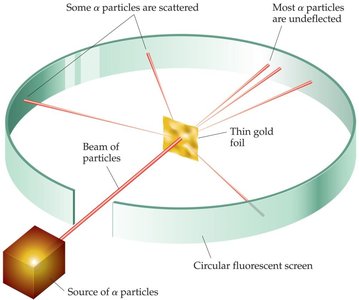
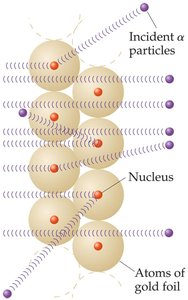
Rutherford's Gold Foil Experiment: Alpha particles were directed at a thin gold foil, and their scattering patterns revealed that atoms have a small, dense, positively charged nucleus.
Structure of the Nucleus and Subatomic Particles
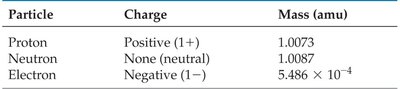
The nucleus contains protons (positively charged) and neutrons (neutral). Electrons are found in the space surrounding the nucleus. Protons and neutrons have nearly identical masses, while electrons are much lighter.
Proton: Charge = +1, Mass ≈ 1.0073 amu
Neutron: Charge = 0, Mass ≈ 1.0087 amu
Electron: Charge = -1, Mass ≈ amu
Atomic Number, Mass Number, and Isotopes
Symbols and Atomic Structure
Each element is represented by a unique symbol. The atomic number (Z) is the number of protons in the nucleus, which defines the element. The mass number (A) is the sum of protons and neutrons.
Isotopes: Atoms of the same element with different numbers of neutrons (and thus different masses).
Example: Carbon-12, Carbon-13, and Carbon-14 are isotopes of carbon.
Calculating Subatomic Particles
Number of protons = atomic number (Z)
Number of neutrons = mass number (A) - atomic number (Z)
Number of electrons = number of protons (in a neutral atom)
Average Atomic Mass
The average atomic mass of an element is calculated using the masses and natural abundances of its isotopes:
Example: If copper is 69.17% Cu-63 (62.9396 amu) and 30.83% Cu-65 (64.9278 amu):
Ions: Charged Atoms and Their Properties
Formation of Ions
Atoms become ions by gaining or losing electrons. Cations are positively charged (loss of electrons), and anions are negatively charged (gain of electrons).
Metals tend to lose electrons and form cations (e.g., Na+, Ca2+).
Nonmetals tend to gain electrons and form anions (e.g., Cl-, O2-).
Anions are named by changing the ending of the element name to -ide (e.g., fluoride, oxide).
The Periodic Table and Classification of Elements
Metals, Nonmetals, and Metalloids
Elements are classified based on their physical and chemical properties:
Metals: Shiny, good conductors, malleable, ductile, form cations, mostly solids at room temperature.
Nonmetals: Poor conductors, brittle, can be solids, liquids, or gases, form anions.
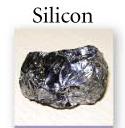
Metalloids: Exhibit properties intermediate between metals and nonmetals; often semiconductors.
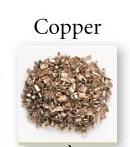
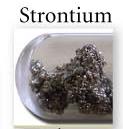
The Modern Periodic Table
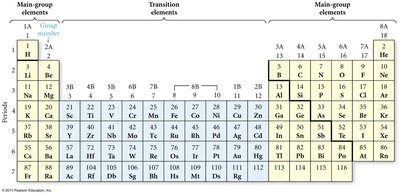
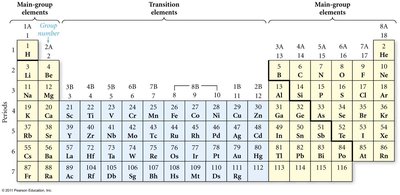
The periodic table arranges elements by increasing atomic number. Elements with similar properties are grouped in columns called groups or families. Rows are called periods. Main group elements are in the "A" groups, transition metals in the "B" groups, and inner transition elements are the lanthanides and actinides.
Ion Charges and the Periodic Table
The charge of ions formed by main group elements can often be predicted from their group number:
Group 1A: +1 charge
Group 2A: +2 charge
Group 7A: -1 charge
Group 6A: -2 charge
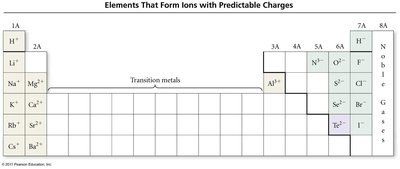
Additional info: Transition metals can form ions with variable charges, which are not as easily predicted.
