 Indietro
Atoms, Molecules, and Ions: Foundations of Atomic Theory and Structure
Guida di studio - Note intelligenti
 Appunti personalizzati basati sui tuoi materiali, ampliati con definizioni chiave, esempi e contesto.
Chapter 2: Atoms, Molecules, and Ions
Introduction
This chapter introduces the fundamental concepts of atomic theory, the structure of atoms, and the laws governing the behavior of matter. Understanding these principles is essential for studying chemical reactions, properties of elements, and the organization of the periodic table.
History and Development of Atomic Theory
The concept of the atom has evolved over centuries, beginning with early philosophical ideas and culminating in modern scientific models.
Democritus (460–370 BC): Proposed that matter is composed of indivisible particles called "atomos."
Dalton's Atomic Theory (1803–1807): Formulated the first scientific atomic theory, which included several key postulates:
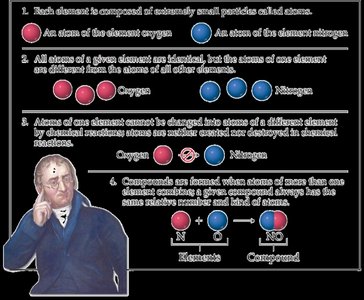
Each element is composed of extremely small particles called atoms.
All atoms of a given element are identical, but differ from atoms of other elements.
Atoms cannot be created or destroyed in chemical reactions.
Compounds are formed when atoms of more than one element combine in fixed ratios.
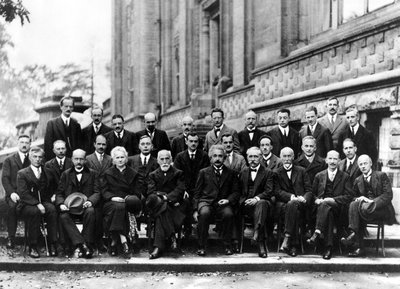
Example: The 1927 Solvay Conference brought together leading scientists who contributed to quantum mechanics and atomic theory.
Fundamental Laws Derived from Atomic Theory
Dalton's atomic theory led to the establishment of three fundamental laws:
Law of Constant Composition: The relative number of atoms of each element in a compound is always the same, regardless of the sample.
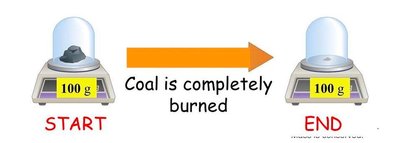
Law of Conservation of Mass: The total mass of substances remains unchanged during a chemical reaction.
Law of Multiple Proportions: When two elements form more than one compound, the ratios of the masses of the second element that combine with a fixed mass of the first element are small whole numbers.
Law of Constant Composition
All samples of a compound have the same composition. For example, water (H2O) always contains two hydrogen atoms and one oxygen atom, regardless of its source.
Discovered by: Joseph Proust



Law of Conservation of Mass
Mass is neither created nor destroyed in a chemical reaction. The mass of reactants equals the mass of products.
Discovered by: Antoine Lavoisier
Law of Multiple Proportions
If two elements form more than one compound, the masses of one element that combine with a fixed mass of the other are in ratios of small whole numbers. For example, carbon and oxygen form both CO and CO2, with different ratios of oxygen to carbon.
Discovered by: John Dalton
Example: CO vs CO2, H2O vs H2O2
Modern Atomic Structure
Atoms are composed of three primary subatomic particles: protons, neutrons, and electrons. The arrangement and properties of these particles define the characteristics of each element.
Protons (p+): Positively charged, located in the nucleus.
Neutrons (n0): Neutral, located in the nucleus.
Electrons (e-): Negatively charged, found in a cloud surrounding the nucleus.
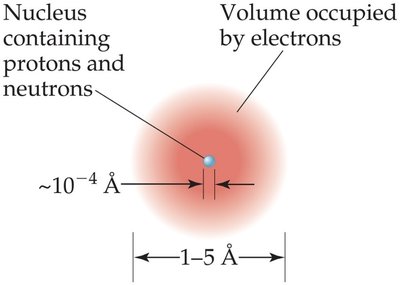
The nucleus is extremely small compared to the overall size of the atom, which is mostly empty space. Atomic dimensions are typically 1–5 Å (100–500 pm).
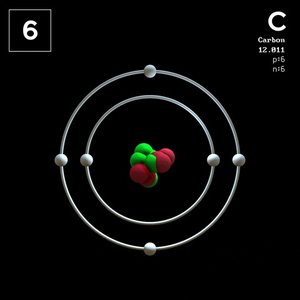
Subatomic Particles: Properties and Comparison
Protons and neutrons have nearly identical masses, while electrons are much lighter. The atomic mass unit (amu) is used to express these small masses.
1 amu = 1.66054 × 10⁻²⁴ g
Proton and neutron: relative mass ≈ 1 amu
Electron: relative mass ≈ 0 (about 1/1840 of a proton)
Atomic Numbers, Mass Numbers, and Isotopes
Each element is defined by its atomic number (Z), which is the number of protons in the nucleus. The mass number (A) is the sum of protons and neutrons. Isotopes are atoms of the same element with different numbers of neutrons.
Atomic number (Z): Number of protons
Mass number (A): Number of protons + neutrons
Isotopes: Same number of protons, different number of neutrons
For a neutral atom: Number of protons = Number of electrons
Formula: Number of neutrons = Mass number (A) – Atomic number (Z)
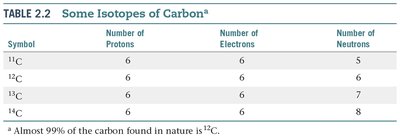
Table: Isotopes of Carbon
The table below compares four isotopes of carbon, showing their numbers of protons, electrons, and neutrons.
Symbol | Number of Protons | Number of Electrons | Number of Neutrons |
|---|---|---|---|
11C | 6 | 6 | 5 |
12C | 6 | 6 | 6 |
13C | 6 | 6 | 7 |
14C | 6 | 6 | 8 |
Examples: Determining Subatomic Particles
Use the periodic table to determine the number of protons, neutrons, and electrons in various atoms:
Barium (Ba): Atomic number = 56, Mass number = 137
Nickel (Ni): Atomic number = 28, Mass number = 59
Gold (Au): Atomic number = 79, Mass number = 197
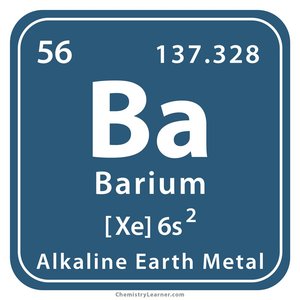
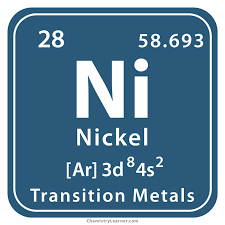
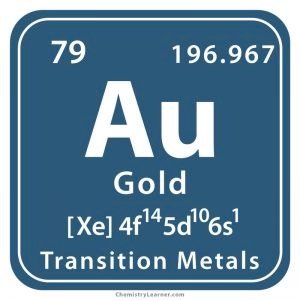
Example Calculation: For 137Ba: Protons = 56, Neutrons = 137 – 56 = 81, Electrons = 56 (neutral atom)
Atomic Mass Unit (amu) and Atomic Weight
Atomic mass units are used to express the masses of atoms and subatomic particles. The atomic weight (average atomic mass) of an element is calculated based on the masses and relative abundances of its isotopes.
1 amu = 1.66054 × 10⁻²⁴ g
1 g = 6.02214 × 10²³ amu
Mass of 12C = 12 amu
Mass of 1H = 1.0078 amu
Mass of 16O = 15.9949 amu
Calculating Atomic Weight
The atomic weight is the weighted average of the masses of an element's isotopes, based on their natural abundances.
Formula:
Example: Carbon consists of 98.93% 12C (12 amu) and 1.07% 13C (13.00335 amu):
