 Indietro
Atoms, Molecules, and Ions: Foundations of General Chemistry
Guida di studio - Note intelligenti
 Appunti personalizzati basati sui tuoi materiali, ampliati con definizioni chiave, esempi e contesto.
Atoms, Molecules, and Ions
Early History of Chemistry
The development of chemistry as a science began with ancient civilizations and evolved through the contributions of many scientists. Early ideas about matter and its composition laid the foundation for modern atomic theory.
Ancient Civilizations: Early processing of ores for metals and use of embalming fluids.
Greek Philosophy: Proposed four elements—fire, earth, water, air. Democritus introduced the term atomos for indivisible particles.
Alchemy: A pseudoscience focused on turning metals into gold, which led to many discoveries through experimentation.
Georg Bauer & Paracelsus: Advanced metallurgy and medicinal chemistry.
Robert Boyle: First quantitative experiments; defined "element" and studied pressure-volume relationships.
Phlogiston Theory: Proposed by Georg Stahl; later disproved.
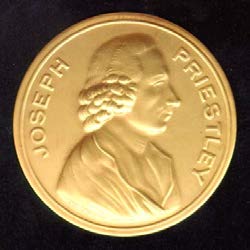
Joseph Priestley: Discovered oxygen, originally called "dephlogisticated air."
Fundamental Chemical Laws
Several key laws govern chemical reactions and the behavior of matter:
Law of Conservation of Mass: Mass is neither created nor destroyed in a chemical reaction.
Law of Definite Proportions: A compound always contains the same proportion of elements by mass.
Law of Multiple Proportions: When two elements form more than one compound, the ratios of the masses of the second element that combine with one gram of the first can be reduced to small whole numbers.
Example: Carbon and oxygen form CO and CO2 with mass ratios of oxygen to carbon as 1.33:2.66.
Dalton's Atomic Theory
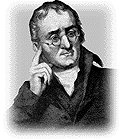
John Dalton proposed the first modern atomic theory, which explained the nature of matter and chemical reactions.
All matter is made of indivisible atoms.
Atoms of the same element are identical; atoms of different elements differ in mass and properties.
Compounds are formed by combining atoms in simple whole-number ratios.
Chemical reactions involve rearrangement of atoms; atoms are not created or destroyed.
Modifications: Discovery of subatomic particles and isotopes.
Avogadro's Hypothesis
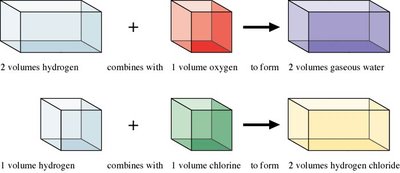
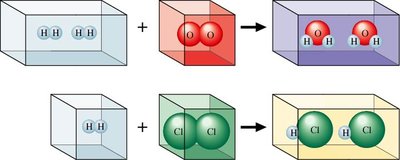
Avogadro proposed that equal volumes of gases at the same temperature and pressure contain equal numbers of particles.
Important for understanding gas reactions and stoichiometry.
Characterization of the Atom
Experiments by Thomson, Millikan, and Rutherford revealed the structure of the atom and the existence of subatomic particles.
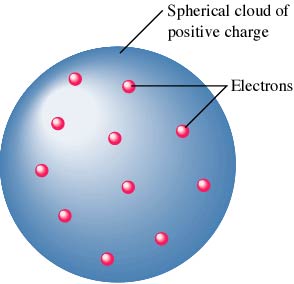
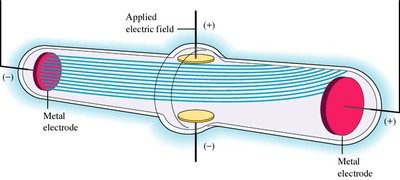
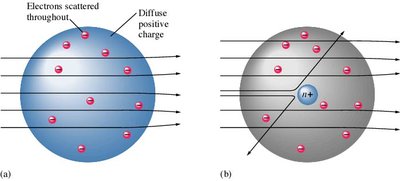
J.J. Thomson: Discovered the electron using cathode ray tubes; proposed the "plum pudding" model.
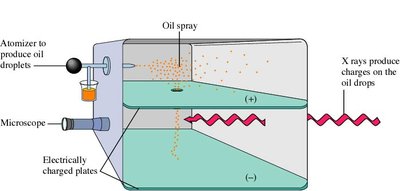
Robert Millikan: Measured the charge of the electron using the oil drop experiment.
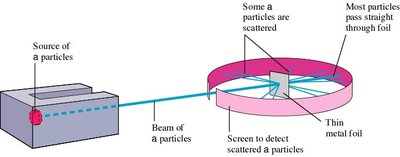
Ernest Rutherford: Gold foil experiment led to the nuclear model of the atom, with a dense positive nucleus.
Radioactivity
Henri Becquerel discovered radioactivity, leading to the identification of three types of radioactive emissions:
Alpha (α): Helium nucleus, largest particle emitted.
Beta (β): High-speed electron.
Gamma (γ): Pure energy, most penetrating.
Modern Atomic Structure
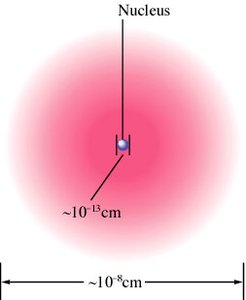
Atoms consist of a nucleus (protons and neutrons) surrounded by electrons. The atomic number defines the element, while the mass number indicates the sum of protons and neutrons.
Proton (p+): Positive charge, defines atomic number.
Neutron (n0): No charge, alters mass number.
Electron (e−): Negative charge, responsible for bonding.
Isotopes
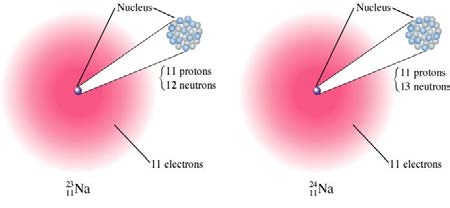
Isotopes are atoms of the same element with different numbers of neutrons. Most elements have multiple stable isotopes.
Example: Hydrogen has three isotopes—hydrogen, deuterium, and tritium.
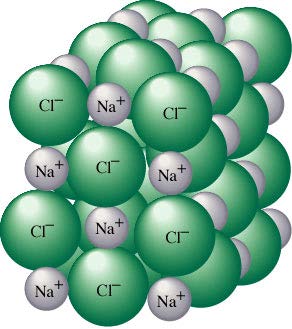
Molecules and Ions
Chemical bonds hold atoms together. Covalent bonds involve sharing electrons, forming molecules. Ionic bonds involve transfer of electrons, forming ions.
Molecule: Smallest unit of a compound with its chemical properties.
Cation: Positive ion, usually a metal.
Anion: Negative ion, usually a nonmetal.
Polyatomic Ion: Group of atoms acting as a single charged entity.
Ionic Solids: Held together by electrostatic forces, described by Coulomb's Law.
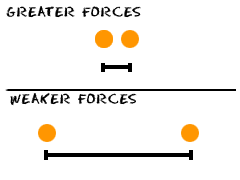
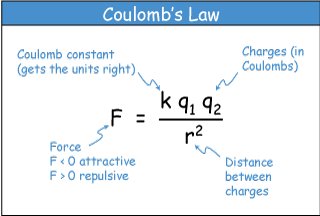
Coulomb's Law:
Introduction to the Periodic Table
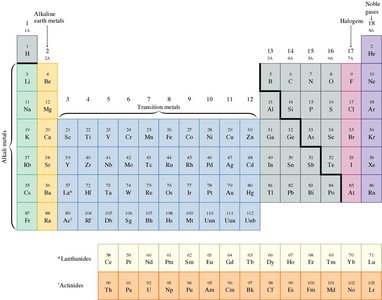
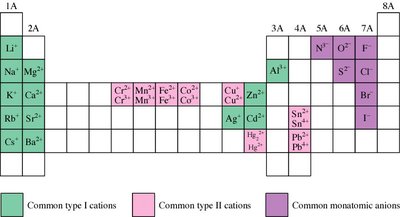
The periodic table organizes elements by atomic number and properties. Groups (columns) share similar properties, while periods (rows) show progression from metals to nonmetals.
Group 1A: Alkali metals
Group 2A: Alkaline earth metals
Group 7A: Halogens
Group 8A: Noble gases
Naming Simple Compounds
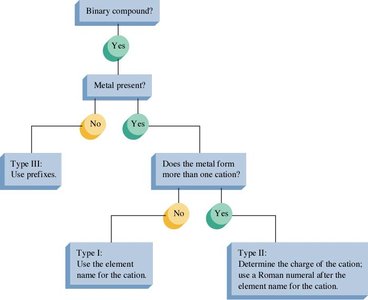
Systematic nomenclature is essential for identifying compounds. Binary ionic compounds, covalent compounds, and acids follow specific naming rules.
Type I: Metal forms only one cation; use element name.
Type II: Metal forms more than one cation; use Roman numerals.
Type III: Covalent compounds; use prefixes.
Naming Acids
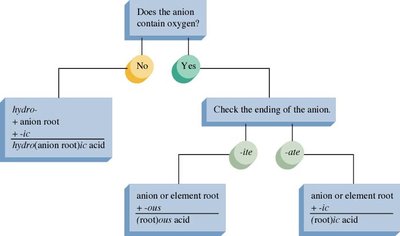
Acids are named based on the anion present:
If the anion ends in -ide: hydro[anion root]ic acid
If the anion ends in -ate: [anion root]ic acid
If the anion ends in -ite: [anion root]ous acid
Summary Table: Subatomic Particles
Particle | Mass (kg) | Charge |
|---|---|---|
Electron (e−) | 9.11 × 10⁻³¹ | −1 |
Proton (p+) | 1.67 × 10⁻²⁷ | +1 |
Neutron (n0) | 1.67 × 10⁻²⁷ | 0 |
Summary Table: Common Polyatomic Ions
Ion | Formula |
|---|---|
Ammonium | NH4+ |
Chlorate | ClO3− |
Sulfate | SO42− |
Nitrate | NO3− |
Carbonate | CO32− |
Phosphate | PO43− |
Hydroxide | OH− |
Perchlorate | ClO4− |
Sulfite | SO32− |
Additional info: These notes cover foundational concepts from Ch.2 (Atoms & Elements), Ch.3 (Molecules and Compounds), and Ch.9 (Periodic Properties of the Elements), as well as introductory material relevant to Ch.1 and Ch.4. The content is structured to provide a comprehensive overview for General Chemistry students preparing for exams.
