 Indietro
Atoms: Structure, Properties, and the Foundations of Chemistry
Guida di studio - Note intelligenti
 Appunti personalizzati basati sui tuoi materiali, ampliati con definizioni chiave, esempi e contesto.
Atoms and the Structure of Matter
Introduction to Chemistry and Matter
Chemistry is the scientific study of matter, its properties, and the changes it undergoes. Matter is defined as anything that has mass and occupies space. At the most fundamental level, matter is composed of atoms and molecules, whose arrangements and interactions determine the observable properties of substances.
Imaging and Moving Atoms
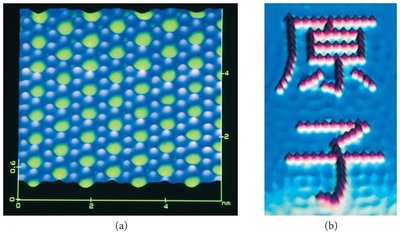
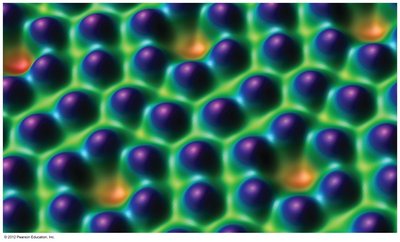
Modern technology, such as Scanning Tunneling Microscopy (STM), allows scientists to visualize and manipulate atoms on surfaces. This has revolutionized our understanding of atomic structure and the arrangement of atoms in materials.
Classification of Matter
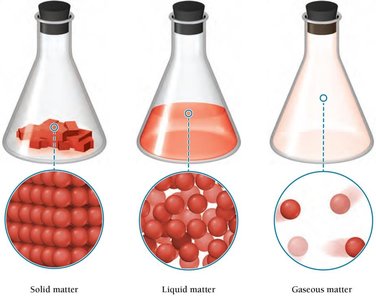
Matter can be classified based on its physical state and composition. The three main physical states are solid, liquid, and gas, each with distinct particle arrangements and properties:
Solid: Definite shape and volume; particles are closely packed in an orderly arrangement.
Liquid: Definite volume but no fixed shape; particles are close but can move past one another.
Gas: No definite shape or volume; particles are far apart and move freely.
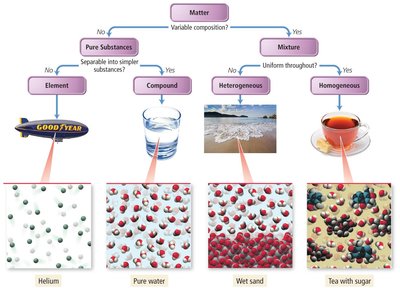
Matter is also classified by composition:
Pure Substances: Have a fixed composition and distinct properties. They are either elements or compounds.
Mixtures: Combinations of two or more substances in variable proportions. They can be homogeneous (uniform throughout) or heterogeneous (composition varies in different regions).
Atoms, Molecules, Elements, and Compounds
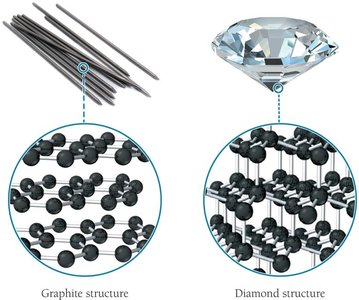
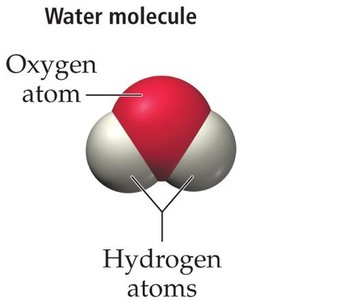
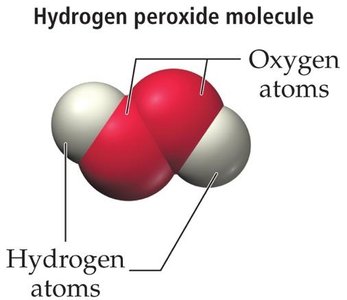
Atoms are the smallest units of elements that retain the chemical properties of the element. Molecules are groups of two or more atoms bonded together. Elements consist of only one type of atom, while compounds are composed of atoms of two or more elements in fixed ratios.
Element: A substance that cannot be broken down into simpler substances by chemical means.
Compound: A substance composed of two or more elements chemically combined in a fixed ratio.
Mixtures
Mixtures can be separated into their components by physical means. Homogeneous mixtures (solutions) have uniform composition, while heterogeneous mixtures have visibly different parts.
The Scientific Method
Scientific Approach and Terminology
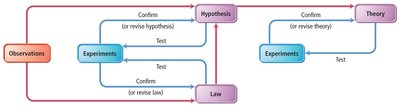
The scientific method is a systematic approach to acquiring knowledge through observation, experimentation, and reasoning. Key terms include:
Observation: Gathering information about phenomena.
Hypothesis: A tentative explanation for an observation.
Experiment: A controlled procedure to test a hypothesis.
Scientific Law: A statement that summarizes consistent experimental observations.
Theory: A well-substantiated explanation of some aspect of the natural world.
Atomic Theory and Its Laws
Historical Development of Atomic Theory
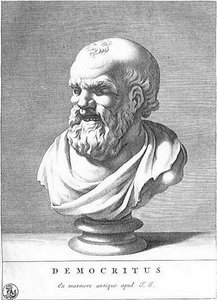
The concept of the atom dates back to ancient Greek philosophers, such as Democritus, who proposed that matter is composed of indivisible particles called "atomos." Modern atomic theory was developed through experimental evidence and the formulation of scientific laws.
Law of Conservation of Mass
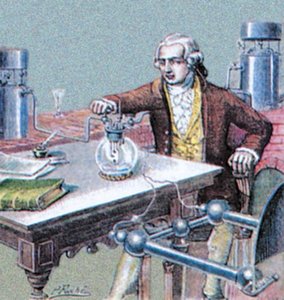
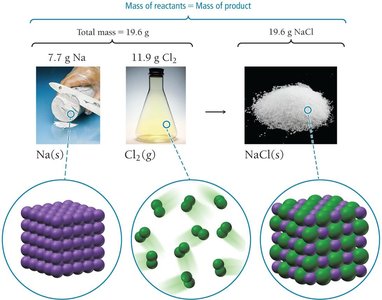
Formulated by Antoine Lavoisier, this law states that matter is neither created nor destroyed in a chemical reaction. The total mass of reactants equals the total mass of products.
Equation:
Law of Definite Proportions
Joseph Proust observed that a given compound always contains the same proportion of elements by mass, regardless of its source or preparation method.
Example: Water () always decomposes into hydrogen and oxygen in an 8:1 mass ratio.
Law of Multiple Proportions
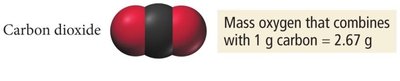
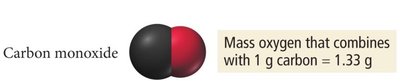
John Dalton found that when two elements form more than one compound, the masses of one element that combine with a fixed mass of the other are in ratios of small whole numbers.
Example: Carbon monoxide (CO) and carbon dioxide (CO2) have oxygen-to-carbon mass ratios of 1.33:1 and 2.67:1, respectively. The ratio of these masses (2.67/1.33 = 2) is a small whole number.
Dalton's Atomic Theory
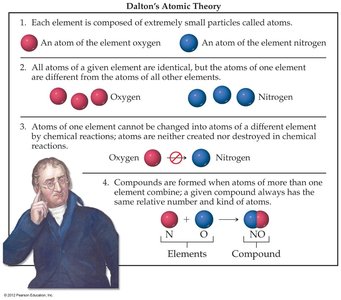
John Dalton proposed a theory to explain the laws of chemical combination:
1. Each element is composed of extremely small particles called atoms.
2. All atoms of a given element are identical in mass and properties, but differ from atoms of other elements.
3. Atoms are neither created nor destroyed in chemical reactions.
4. Compounds are formed when atoms of different elements combine in fixed ratios.
The Discovery and Modern View of Atomic Structure
Discovery of Subatomic Particles
Experiments with cathode ray tubes led to the discovery of the electron by J. J. Thomson. Later, the proton and neutron were identified as additional subatomic particles.
Electron: Negatively charged, very small mass.
Proton: Positively charged, mass nearly equal to that of a neutron.
Neutron: No charge, similar mass to proton.
Rutherford's Nuclear Model
Ernest Rutherford's gold foil experiment demonstrated that atoms have a small, dense, positively charged nucleus, with electrons occupying the surrounding space. Most of the atom's volume is empty space.
Subatomic Particles and Atomic Number
The number of protons in the nucleus (atomic number) determines the identity of an element. In a neutral atom, the number of electrons equals the number of protons. Neutrons contribute to the atom's mass but not its charge.
Ions and Isotopes
Atoms can gain or lose electrons to form ions:
Cation: Positively charged ion (loss of electrons).
Anion: Negatively charged ion (gain of electrons).
Isotopes are atoms of the same element with different numbers of neutrons, resulting in different mass numbers.
The Mole and Molar Mass
The Mole Concept
The mole is a counting unit that relates the mass of a substance to the number of particles it contains. One mole contains Avogadro's number () of particles (atoms, molecules, or ions).
Avogadro's Number: particles/mol
Molar Mass
The molar mass of an element or compound is the mass of one mole of its particles, expressed in grams per mole (g/mol). The molar mass (in g/mol) is numerically equal to the atomic or molecular mass (in amu).
Example: 1 mole of carbon (C) has a mass of 12.011 g and contains atoms.
Calculating Moles, Mass, and Number of Particles
To convert between mass, moles, and number of particles, use the following relationships:
Mass to Moles:
Moles to Number of Particles:
Example: How many moles of copper are in a 3.11 g pre-1982 penny? (Molar mass of Cu = 63.55 g/mol)
Example: How many Mg atoms are in 4.25 g of Mg? (Molar mass = 24.305 g/mol)
Summary Table: Classification of Matter
Type | Description | Example |
|---|---|---|
Element | Cannot be decomposed into simpler substances | O2, Fe, He |
Compound | Composed of two or more elements in fixed ratios | H2O, CO2 |
Homogeneous Mixture | Uniform composition throughout | Salt water, air |
Heterogeneous Mixture | Composition varies in different regions | Sand, granite |
Additional info: These notes provide a comprehensive overview of the foundational concepts in atomic theory, matter classification, and the quantitative relationships used in chemistry, suitable for introductory college-level general chemistry.
