 Indietro
Atoms: Structure, Theories, and Quantitative Concepts
Guida di studio - Note intelligenti
 Appunti personalizzati basati sui tuoi materiali, ampliati con definizioni chiave, esempi e contesto.
Atoms: Structure, Theories, and Quantitative Concepts
Introduction to Chemistry and Atoms
Chemistry is the study of matter, its properties, and the changes it undergoes. At the core of chemistry is the atom, the smallest unit of an element that retains its chemical properties. Understanding atoms and their structure is fundamental to all chemical sciences.
Classification of Matter
States of Matter
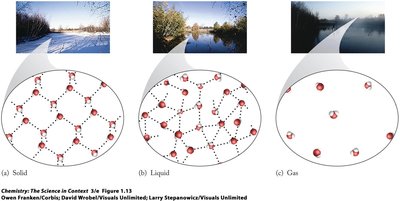
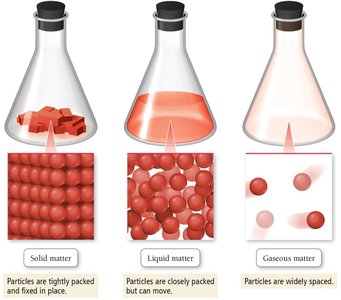
Matter exists in several physical states, each defined by the arrangement and movement of its particles:
Solid: Fixed volume and rigid shape; particles are tightly packed and vibrate in place.
Liquid: Fixed volume but no fixed shape; particles are closely packed but can move past one another.
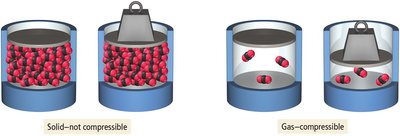
Gas: No fixed volume or shape; particles are widely spaced and move freely, making gases compressible.
Plasma: A high-energy state consisting of ionized particles.
Classification by Composition
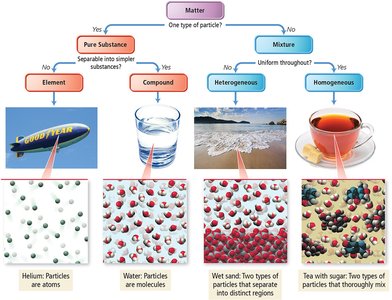
Matter can also be classified based on its composition:
Pure Substance: Composed of only one type of particle (element or compound).
Mixture: Contains two or more types of particles in variable proportions.
Element: Cannot be chemically broken down into simpler substances.
Compound: Composed of two or more elements in fixed, definite proportions.
Heterogeneous Mixture: Composition varies from one region to another.
Homogeneous Mixture: Uniform composition throughout (also called a solution).
Early Atomic Theories
Ancient Greek Ideas
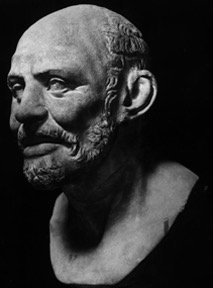
Leucippus and Democritus first proposed that matter is composed of small, indivisible particles called atoms. This idea was not widely accepted until much later.

Dalton’s Atomic Theory
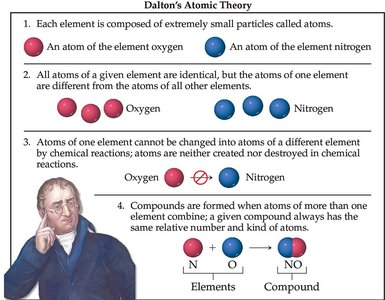
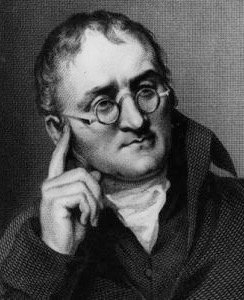
John Dalton (1766–1844) provided experimental evidence for the existence of atoms and formulated the modern atomic theory, which includes:
Elements are composed of tiny, indestructible particles called atoms.
All atoms of a given element have the same mass and properties.
Atoms combine in simple, whole-number ratios to form compounds.
Atoms are not changed into other elements in chemical reactions; they only rearrange.
Laws Leading to Modern Atomic Theory
Law of Conservation of Mass
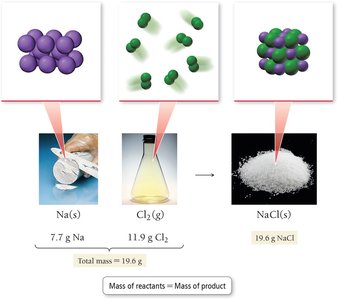
In a chemical reaction, matter is neither created nor destroyed. The total mass of reactants equals the total mass of products.
Equation:
Law of Definite Proportions
All samples of a given compound have the same proportions of their constituent elements, regardless of source or preparation method.
Law of Multiple Proportions
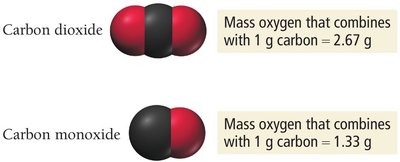
When two elements form more than one compound, the masses of one element that combine with a fixed mass of the other are in ratios of small whole numbers.
Structure of the Atom
Discovery of Subatomic Particles
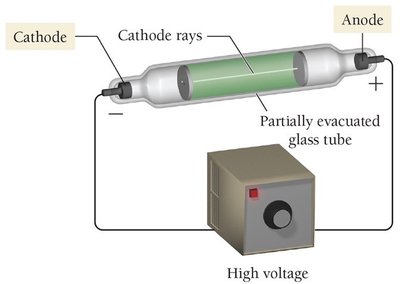
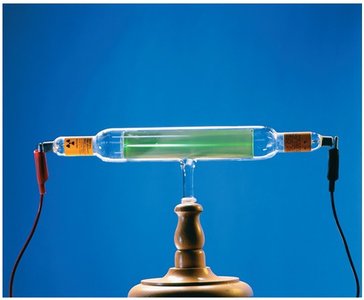
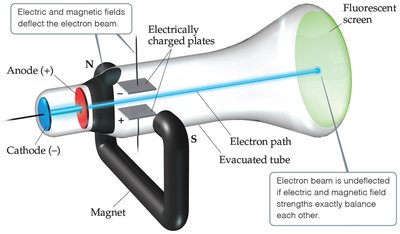
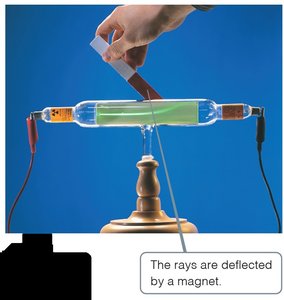
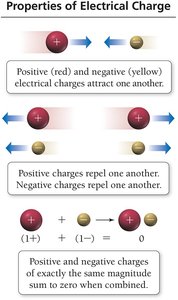
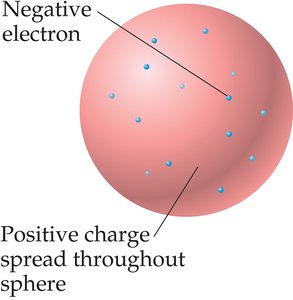
Electron: Discovered by J.J. Thomson using cathode ray experiments. Electrons are negatively charged, low-mass particles present in all atoms.
Proton: Positively charged particle found in the nucleus.
Neutron: Neutral particle with a mass similar to the proton, also found in the nucleus (discovered by James Chadwick).
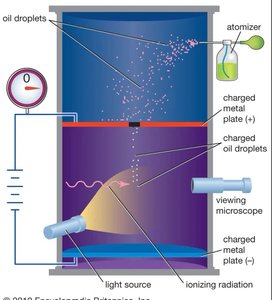
Millikan’s Oil Drop Experiment
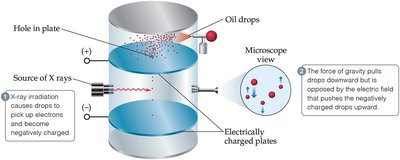
Millikan measured the charge of a single electron by observing the behavior of charged oil droplets in an electric field. He found that the charge was always a whole-number multiple of C.
Radioactivity
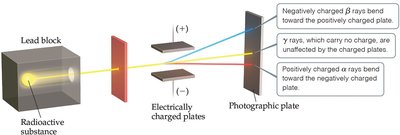
Three types of radiation were discovered:
Alpha (α) particles: Positively charged
Beta (β) particles: Negatively charged, like electrons
Gamma (γ) rays: Uncharged
Rutherford’s Gold Foil Experiment
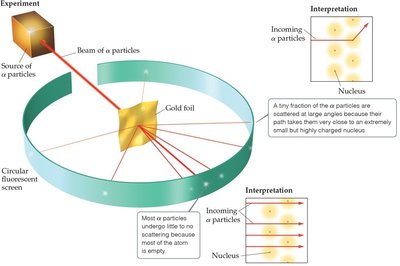
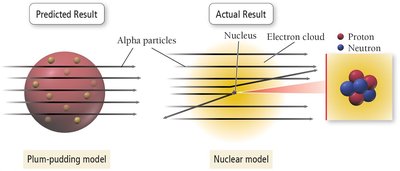
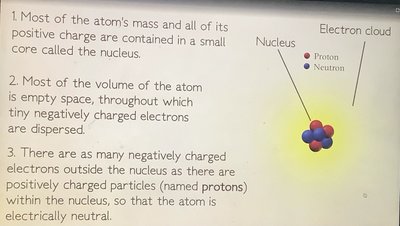
Rutherford directed alpha particles at a thin gold foil and observed that most passed through, but some were deflected at large angles. This led to the nuclear model of the atom, where a small, dense nucleus contains most of the atom’s mass and positive charge.
Subatomic Particles and Atomic Structure
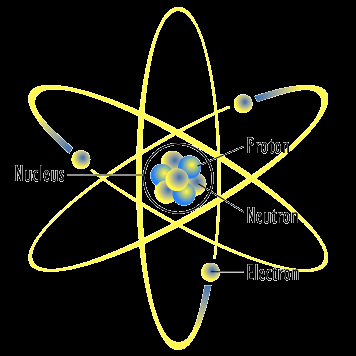
Protons (p+): Positively charged, found in the nucleus
Neutrons (n): Neutral, found in the nucleus
Electrons (e–): Negatively charged, found outside the nucleus
Atomic Number, Mass Number, and Isotopes
Atomic Number (Z)
The atomic number is the number of protons in the nucleus and defines the element. It is represented by the symbol Z.
Mass Number (A)
The mass number is the sum of protons and neutrons in the nucleus: .
Isotopes
Isotopes are atoms of the same element (same number of protons) but with different numbers of neutrons. They have different mass numbers but identical chemical properties.
Ions
Atoms can gain or lose electrons to form ions:
Cation: Positively charged ion (loss of electrons)
Anion: Negatively charged ion (gain of electrons)
Atomic Mass and the Mole Concept
Atomic Mass
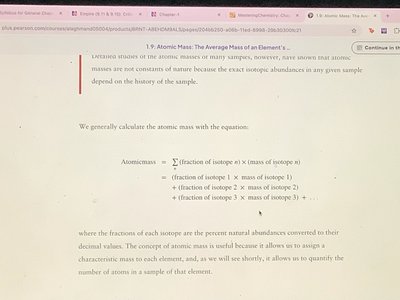
The atomic mass (or atomic weight) of an element is the weighted average of the masses of its naturally occurring isotopes. It is calculated as:
Example: Calculating Atomic Mass
For chlorine, which has two main isotopes:
Cl-35: 75.77% abundance, mass = 34.97 amu
Cl-37: 24.23% abundance, mass = 36.97 amu
Atomic mass of Cl = amu
The Mole and Avogadro’s Number
A mole (mol) is a counting unit for atoms, molecules, or other particles. One mole contains entities (Avogadro’s number). The mass of one mole of an element (in grams) is numerically equal to its atomic mass (in amu).
Conversion factors:
1 mol = particles
Molar mass (g/mol) = atomic mass (amu)
Converting Between Mass, Moles, and Number of Atoms
To convert from mass to moles:
To convert from moles to number of atoms:
Summary Table: Subatomic Particles
Particle | Symbol | Charge | Location | Relative Mass |
|---|---|---|---|---|
Proton | p+ | +1 | Nucleus | 1 |
Neutron | n | 0 | Nucleus | 1 |
Electron | e– | –1 | Outside nucleus | ~0.0005 |
Key Learning Outcomes
Classify matter by state and composition.
Describe the evolution of atomic theory from ancient to modern times.
Apply the laws of conservation of mass, definite proportions, and multiple proportions.
Identify the experiments that led to the discovery of subatomic particles.
Determine atomic number, mass number, and isotope symbols.
Distinguish between isotopes and ions.
Convert between mass, moles, and number of atoms using Avogadro’s number and molar mass.
Calculate atomic mass from isotope abundance.
