 Indietro
Balancing Chemical Equations: Self Study Assignment
Guida di studio - Note intelligenti
 Appunti personalizzati basati sui tuoi materiali, ampliati con definizioni chiave, esempi e contesto.
Balancing Chemical Equations
Introduction to Balancing Equations
Balancing chemical equations is a fundamental skill in General Chemistry, ensuring that the law of conservation of mass is obeyed in chemical reactions. This process involves adjusting the coefficients of reactants and products so that the number of atoms of each element is equal on both sides of the equation.
Key Principles of Balancing Equations
Law of Conservation of Mass: The total mass of reactants must equal the total mass of products. This means the number of atoms for each element must be the same on both sides of the equation.
Coefficients: Numbers placed in front of chemical formulas to indicate the number of molecules or moles. Only coefficients are changed, never subscripts.
Reactants and Products: Reactants are substances consumed in the reaction, while products are substances formed.
Step-by-Step Method for Balancing Equations
Follow these steps to systematically balance a chemical equation:
Balance free elements last. Free elements (those not combined with other elements in a compound) should be balanced after all other atoms. This is because their coefficients can be adjusted without affecting other compounds.

Balance molecules where atoms exist in one place on either side of an arrow. Start with compounds or molecules that contain elements appearing only once on each side of the equation. This simplifies the balancing process.
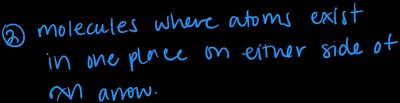
Balance polyatomic ions as a unit (if unchanged). If a polyatomic ion appears unchanged on both sides, balance it as a whole rather than individual atoms.
Check your work. After balancing, verify that the number of atoms for each element is equal on both sides.
Examples of Balancing Equations
Example 1: Combustion of Ethylene
Unbalanced equation:
Balance C atoms: 2 on left, 1 on right. Place coefficient 2 before CO2.
Balance H atoms: 4 on left, 2 on right. Place coefficient 2 before H2O.
Balance O atoms: 2 on left, 2×2 + 2×1 = 6 on right. Place coefficient 3 before O2.
Balanced equation:
Example 2: Single Replacement Reaction
Unbalanced equation:
Balance Cr atoms: 1 on left, 1 on right.
Balance Fe atoms: 1 on left, 1 on right.
Balance NO3 groups: 2 on left, 3 on right. Place coefficient 3 before Fe(NO3)2 and 2 before Cr(NO3)3.
Balanced equation:
Example 3: Synthesis Reaction
Unbalanced equation:
Balance N atoms: 2 on right, 1 on left. Place coefficient 2 before NH3.
Balance H atoms: 6 on left, 2 on right. Place coefficient 3 before H2O.
Balance O atoms: 2 on left, 3 on right. Place coefficient 3 before O2.
Balanced equation:
Common Mistakes and Tips
Never change subscripts in chemical formulas; only adjust coefficients.
Balance hydrogen and oxygen atoms last, especially in combustion reactions.
Double-check polyatomic ions and ensure they are balanced as units if unchanged.
Summary Table: Steps for Balancing Equations
Step | Description |
|---|---|
1 | Balance atoms in compounds first |
2 | Balance free elements last |
3 | Balance polyatomic ions as units |
4 | Check atom counts for all elements |
Practice Problems
Balance the following equation:
Balance the following equation:
Additional info: The images included directly reinforce the stepwise method for balancing equations, specifically the importance of balancing free elements last and starting with molecules where atoms exist in only one place on either side of the equation.
