 Indietro
Chapter 1: Atoms and the Particulate Nature of Matter – General Chemistry Study Notes
Guida di studio - Note intelligenti
 Appunti personalizzati basati sui tuoi materiali, ampliati con definizioni chiave, esempi e contesto.
A Particulate View of the World: Structure Determines Properties
Introduction to Matter
Matter is defined as anything that occupies space and has mass. The composition and structure of matter at the particulate level (atoms and molecules) determine its observable properties. Understanding the arrangement and interactions of these particles is fundamental to chemistry.
Matter: Anything with mass and volume.
Composition: Matter is made of particles (atoms, molecules).
Properties: Determined by the structure and arrangement of particles.
Atoms: Basic particles that compose ordinary matter; about 91 types naturally exist.
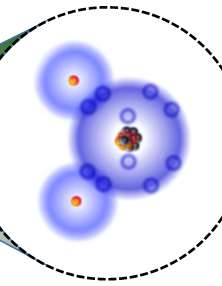
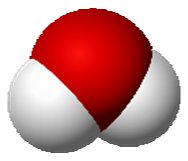
Molecules: Groups of atoms bonded in specific geometrical arrangements.
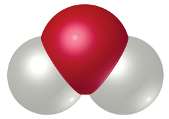
Example: Water molecule (H2O) has a bent structure, which gives it unique properties compared to a linear structure.

Classifying Matter: States and Composition
States of Matter
The physical state of matter is determined by the relative position of particles and the strength of their interactions.
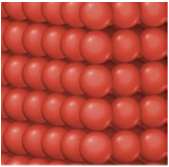
Solid: Particles are fixed in place and can only vibrate. Strong interparticular interactions, fixed volume and shape.
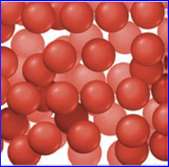
Liquid: Particles are closely packed but can move past one another, allowing flow and variable shape. Slightly weaker attractions, fixed volume but not fixed shape.
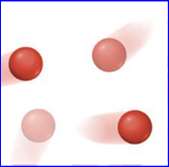
Gas: Particles are widely spaced and move freely, making gases compressible. Negligible interparticular interactions, variable shape and volume.
Classification by Composition
Pure Substance: Made up of only one type of particle; invariant composition.
Element: Chemically indivisible into simpler substances.
Compound: Composed of two or more elements in fixed, definite proportions.
Mixture: Composed of two or more particles in proportions that can vary.
Homogeneous Mixture: Uniform composition throughout.
Heterogeneous Mixture: Variable composition from one region to another.
The Scientific Approach to Knowledge
Empirical Science
Scientific knowledge is based on observation and experiment, contrasting with philosophical reasoning alone. The scientific method involves making observations, forming hypotheses, conducting experiments, and developing theories.
Observation: Gathering data from the physical world.
Hypothesis: Tentative interpretation or explanation.
Experiment: Testing hypotheses under controlled conditions.
Law: Statement summarizing observed behavior (e.g., Law of Conservation of Mass).
Theory: Pinnacle of scientific knowledge, explaining laws and observations.
Historical Development of Atomic Theory
Philosophical and Scientific Contributions
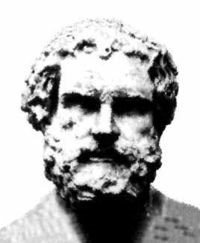
Democritus and Leucippus: Proposed the existence of indivisible particles called "atomos".
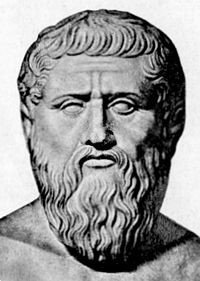
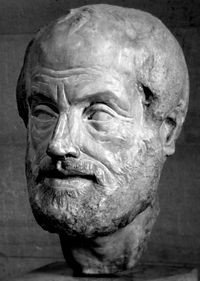
Plato and Aristotle: Argued against indivisible particles.
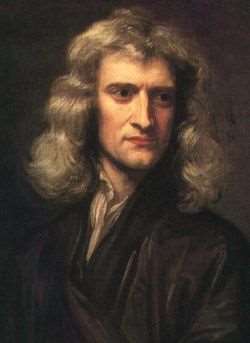
Isaac Newton: Distinguished between invisible particles in air and fundamental building blocks.
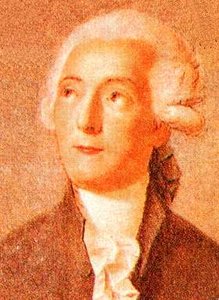
Antoine Lavoisier: Formulated the Law of Conservation of Mass.
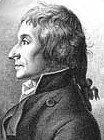
Joseph Proust: Law of Constant Composition (Definite Proportion).
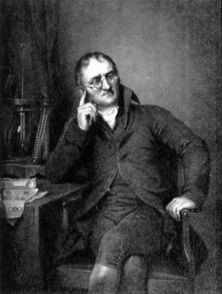
John Dalton: Law of Multiple Proportions and modern atomic theory.
Dalton's Atomic Theory
Each element is composed of extremely small, indestructible particles called atoms.
All atoms of a given element are identical in mass and properties.
Atoms combine in simple, whole-number ratios to form compounds.
In chemical reactions, atoms only change the way they are bound together.


Discovery of Subatomic Particles
Electrons
The electron was discovered through cathode ray experiments by J. J. Thomson, who determined the charge-to-mass ratio of the electron.
Charge-to-mass ratio:
Millikan's Oil Drop Experiment: Measured the charge of the electron as
Electron mass:


Atomic Models
Thomson's Plum-Pudding Model: Electrons embedded in a positively charged sphere.
Rutherford's Nuclear Model: Most of the atom's mass and positive charge are in a small nucleus; electrons occupy the surrounding space.
Discovery of Neutrons: James Chadwick identified neutrons as neutral particles in the nucleus.
Subatomic Particles: Protons, Neutrons, and Electrons
Properties and Definitions
Proton: Charge +1, mass ≈ 1 amu
Neutron: Charge 0, mass ≈ 1 amu
Electron: Charge -1, mass ≈ 0.0005 amu
Atomic mass unit (amu): Defined as 1/12 the mass of a carbon-12 atom
Atomic Number and Mass Number
Atomic Number (Z): Number of protons in the nucleus; defines the element.
Mass Number: Total number of protons and neutrons.
Isotopes: Atoms of the same element with different mass numbers.
Ions: Losing and Gaining Electrons
Formation of Ions
Cation: Formed by losing electrons (e.g., Li → Li+ + e-).
Anion: Formed by gaining electrons (e.g., F + e- → F-).
Atomic Mass and Isotopes
Average Atomic Mass
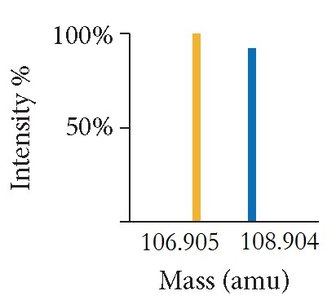
The atomic mass of an element is the weighted average of the masses of its isotopes, based on their natural abundance.
Atomic mass unit (amu): 1 amu = g
Example:
Mass Spectrometry
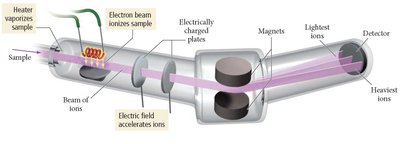
Mass spectrometry is used to measure the masses and percent abundances of isotopes.
Converting Between Units
Dimensional Analysis
Dimensional analysis uses units as a guide to solving problems. Conversion factors are used to change from one unit to another.
Conversion factor: Fractional quantity with units to convert from on the bottom and units to convert to on the top.
Example:
Units Raised to a Power
When raising units to a power, both the number and the unit must be raised.
Example:
Atoms and the Mole: How Many Particles?
The Mole Concept
The mole is a counting unit in chemistry, defined as the amount of matter containing as many particles as there are atoms in exactly 12 g of pure carbon-12.
Avogadro's Number: particles per mole
Molar Mass: Mass in grams of one mole of a substance
Example: One mole of H2O contains molecules and has a mass of 18.02 g.

Converting Between Mass, Moles, and Number of Particles
Use molar mass to convert between grams and moles.
Use Avogadro's number to convert between moles and number of particles.
Example: To find the number of atoms in 1.00 g of silver (Ag):
Molar mass of Ag = 107.9 g/mol
The Origins of Atoms and Elements
The Big Bang Theory
The Big Bang Theory describes the birth of the universe and the formation of the first atoms and elements.
Additional info: The notes cover foundational concepts in General Chemistry, including atomic theory, structure of matter, scientific method, subatomic particles, isotopes, and the mole concept. These are essential for understanding subsequent chapters in General Chemistry.
