 Indietro
Kavi Study Guide 1.
Guida di studio - Note intelligenti
 Appunti personalizzati basati sui tuoi materiali, ampliati con definizioni chiave, esempi e contesto.
Classification of Matter
Overview of Matter
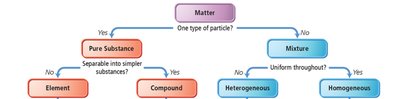
Matter is anything that has mass and occupies space. It can be classified based on its composition and properties into pure substances and mixtures. Understanding these classifications is fundamental to the study of chemistry.
Pure Substances
Pure substances are forms of matter that have a fixed composition and distinct properties. They can be further divided into elements and compounds.
Element: A substance that cannot be broken down into simpler substances by chemical means. Each element is made up of only one kind of atom.
Compound: A substance composed of two or more elements chemically combined in fixed proportions. Compounds can be decomposed into simpler substances by chemical means.
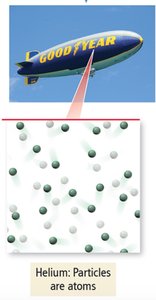
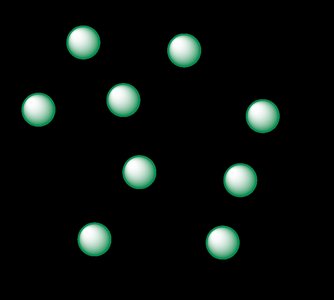
Example of an Element: Helium gas in a blimp consists of individual helium atoms.
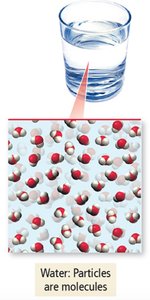
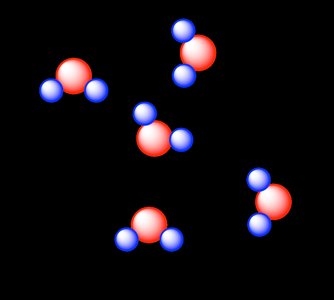
Example of a Compound: Water consists of molecules, each containing two hydrogen atoms and one oxygen atom.
Mixtures
Mixtures are combinations of two or more pure substances in variable proportions. They can be separated by physical means and are classified as homogeneous or heterogeneous based on their uniformity.
Homogeneous Mixture (Solution): Has a uniform composition throughout; components are not visibly distinguishable.
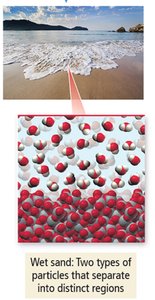
Heterogeneous Mixture: Does not have a uniform composition; components are visibly distinguishable.
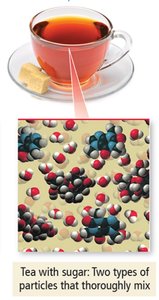
Example of a Homogeneous Mixture: Tea with dissolved sugar, where the sugar and tea are evenly mixed.
Example of a Heterogeneous Mixture: Wet sand, where sand and water remain in separate regions.
Classification Examples
Common substances can be classified as elements, compounds, homogeneous mixtures, or heterogeneous mixtures:
Sample | Classification |
|---|---|
14-carat gold ring | Homogeneous mixture (alloy) |
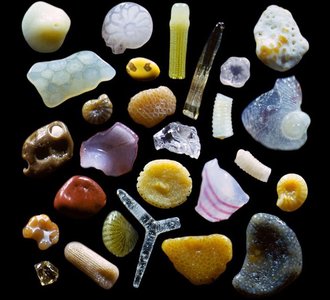
Sand | Heterogeneous mixture |
Pure carbon dioxide gas (CO2) | Compound |
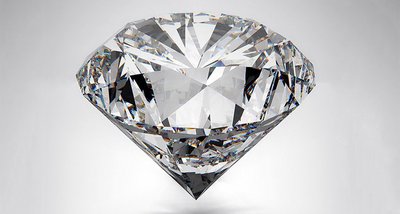
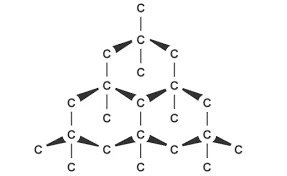
Pure diamond | Element (carbon) |

Atomic Theory of Matter
Historical Background
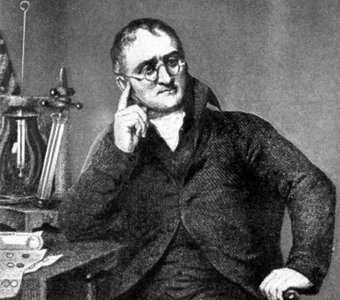
The concept that matter is composed of small, indivisible particles called atoms dates back to ancient Greece, with philosophers like Leucippus and Democritus. The modern atomic theory was formulated by John Dalton in the early 19th century.
Dalton’s Atomic Theory
Dalton’s Atomic Theory laid the foundation for modern chemistry. The four main postulates are:
Each element is composed of tiny, indestructible particles called atoms.
All atoms of a given element have the same mass and properties that distinguish them from atoms of other elements.
Atoms combine in simple, whole-number ratios to form compounds.
Atoms of one element cannot change into atoms of another element; in chemical reactions, atoms only change the way they are bound together.
Discovery of Subatomic Particles
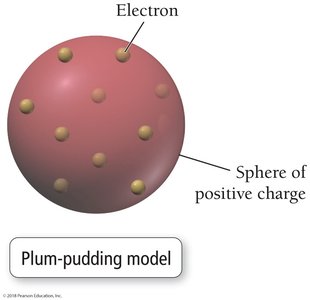
Dalton’s model was later refined as scientists discovered that atoms are made of smaller particles: electrons, protons, and neutrons. Early models, such as Thomson’s "plum pudding" model, depicted electrons embedded in a sphere of positive charge.
Rutherford’s Nuclear Theory
Ernest Rutherford’s gold foil experiment led to the nuclear model of the atom, which has three main points:
Most of the atom’s mass and all of its positive charge are concentrated in a small nucleus.
Most of the atom’s volume is empty space, with electrons dispersed throughout.
The number of electrons equals the number of protons, making the atom electrically neutral.
Subatomic Particles
Protons, Neutrons, and Electrons
Atoms are composed of three main subatomic particles:
Protons (p+): Positively charged particles found in the nucleus; the number of protons defines the element (atomic number, Z).
Neutrons (n0): Neutral particles found in the nucleus; contribute to atomic mass but not charge.
Electrons (e–): Negatively charged particles found outside the nucleus; their number equals the number of protons in a neutral atom.
Isotopes
Isotopes are atoms of the same element with different numbers of neutrons. They have the same atomic number but different mass numbers (A).
Mass number (A): The sum of protons and neutrons in the nucleus.
Isotope notation: AZX or X-A (e.g., 14C or C-14).
Example: Carbon-12 (12C) and Carbon-14 (14C) are isotopes of carbon.
Ions
Atoms can gain or lose electrons to form ions:
Cation: Positively charged ion (loss of electrons). Example: Na → Na+ + e–
Anion: Negatively charged ion (gain of electrons). Example: F + e– → F–
To determine the number of electrons in an ion: Number of electrons = Atomic number (Z) – charge
Atomic Mass and the Mole Concept
Atomic Mass
The atomic mass of an element is the weighted average of the masses of its naturally occurring isotopes. It is a fundamental property and is listed on the periodic table.
Calculation Example:
For chlorine:
Cl-35: 34.97 amu, 75.77% abundance
Cl-37: 36.97 amu, 24.23% abundance
Atomic mass = (0.7577 × 34.97 amu) + (0.2423 × 36.97 amu) = 35.45 amu
The Mole Concept
The mole is a counting unit in chemistry, defined as the amount of substance containing as many entities (atoms, molecules, ions) as there are atoms in exactly 12 grams of carbon-12. This number is Avogadro’s number ().
Conversions:
Number of entities ↔ moles:
Mass ↔ moles:
Moles ↔ number of entities:
Example: To convert 3.00 mL to µL:
*Additional info: The above notes integrate foundational concepts from Chapter 1 of a General Chemistry course, including the classification of matter, atomic theory, subatomic particles, isotopes, ions, atomic mass, and the mole concept. These are essential for understanding chemical reactions, stoichiometry, and the structure of matter.*
