 Indietro
Chapter 1: Introduction to Matter, Energy, and Measurement
Guida di studio - Note intelligenti
 Appunti personalizzati basati sui tuoi materiali, ampliati con definizioni chiave, esempi e contesto.
Introduction to Chemistry
The Scope and Importance of Chemistry
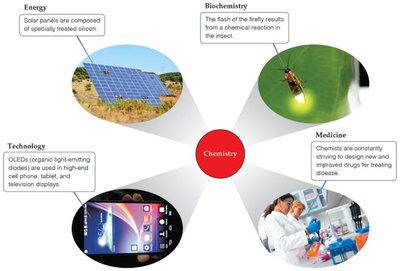
Chemistry is the study of matter, its properties, the changes it undergoes, and the energy associated with those changes. Chemistry is central to many scientific disciplines and impacts various aspects of daily life, including energy, biochemistry, technology, and medicine.
Matter and Its Classification
Definition of Matter
Matter is anything that has mass and occupies space. All physical objects are forms of matter.
States of Matter
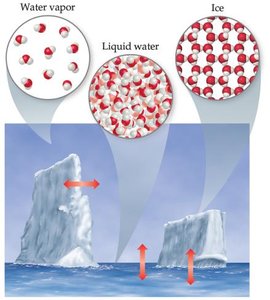
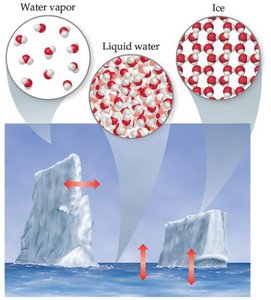
Matter exists in three primary states:
Solid: Definite shape and volume.
Liquid: Definite volume but takes the shape of its container.
Gas: No definite shape or volume; expands to fill its container.
Classification by Composition
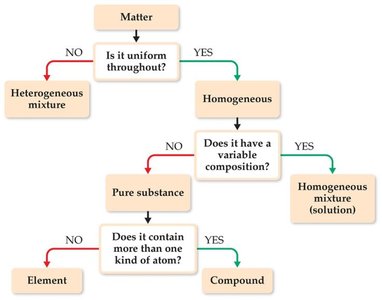
Matter can be classified based on its composition:
Pure Substances: Have a fixed composition and distinct properties. Subdivided into:
Elements: Cannot be decomposed into simpler substances.
Compounds: Composed of two or more elements in fixed proportions.
Mixtures: Combinations of two or more substances where each retains its own identity and properties. Subdivided into:
Homogeneous Mixtures (Solutions): Uniform composition throughout.
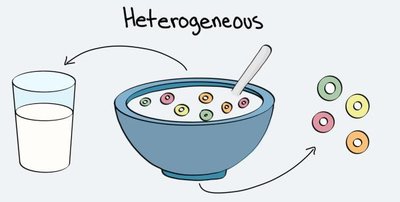
Heterogeneous Mixtures: Non-uniform composition.
Atomic and Molecular Representations
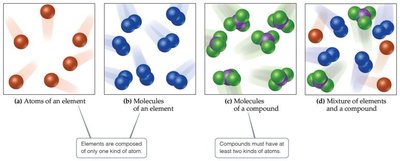
Elements and compounds can be represented at the atomic and molecular level:
Elements are composed of only one kind of atom.
Compounds contain at least two different kinds of atoms chemically bonded.
Mixtures can contain both elements and compounds.
Examples of Elements and Compounds
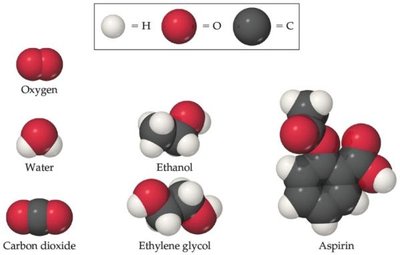
Common elements and compounds can be represented by molecular models:
Oxygen (O2), Water (H2O), Carbon Dioxide (CO2), Ethanol (C2H5OH), Ethylene Glycol (C2H6O2), Aspirin (C9H8O4).
Elements in Earth's Crust and Human Body
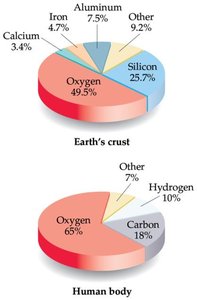
Only a few elements make up the majority of Earth's crust and the human body by mass. Oxygen is the most abundant element in both.
Physical and Chemical Properties and Changes
Physical vs. Chemical Properties
Physical Properties: Can be observed without changing the substance (e.g., color, density, melting point).
Chemical Properties: Can only be observed when a substance is transformed into another substance (e.g., flammability, reactivity).
Intensive vs. Extensive Properties
Intensive Properties: Independent of the amount of substance (e.g., density, boiling point).
Extensive Properties: Depend on the amount of substance (e.g., mass, volume).
Physical vs. Chemical Changes
Physical Changes: Do not alter the composition of a substance (e.g., melting, boiling, dissolving).
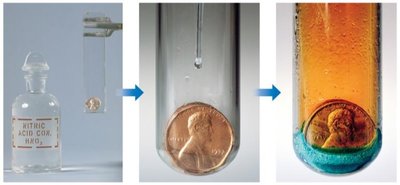
Chemical Changes: Result in the formation of new substances (e.g., combustion, oxidation).
Separation of Mixtures
Physical Methods of Separation
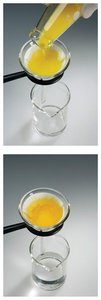
Filtration: Separates solids from liquids.
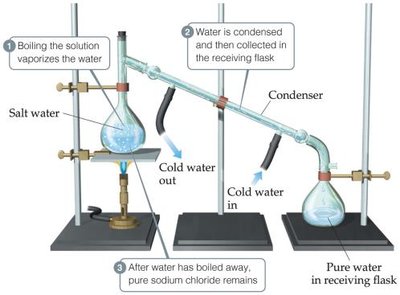
Distillation: Separates components based on differences in boiling points.
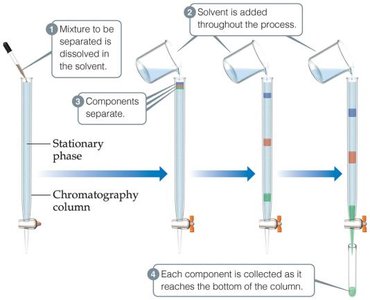
Chromatography: Separates substances based on their ability to adhere to a solid surface.
Energy and Its Forms
Definition and Types of Energy
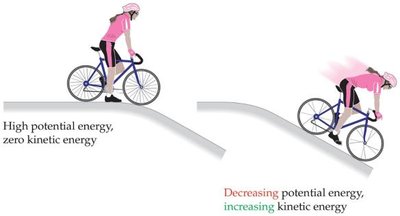
Energy is the capacity to do work or transfer heat. The two fundamental forms are:
Kinetic Energy: Energy of motion, calculated as
Potential Energy: Energy due to position or composition.
Units of Energy
The SI unit of energy is the joule (J):
Another common unit is the calorie (cal):
1 nutritional Calorie (Cal) = 1 kcal = 1000 cal
Measurement and Units
SI Base Units
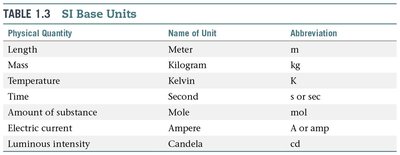
The International System of Units (SI) uses specific base units for each physical quantity:
Physical Quantity | Name of Unit | Abbreviation |
|---|---|---|
Length | Meter | m |
Mass | Kilogram | kg |
Temperature | Kelvin | K |
Time | Second | s or sec |
Amount of substance | Mole | mol |
Electric current | Ampere | A or amp |
Luminous intensity | Candela | cd |
Metric System Prefixes
Prefixes are used to indicate multiples or fractions of units:
Prefix | Abbreviation | Meaning | Example |
|---|---|---|---|
Kilo | k | 103 | 1 kilometer (km) = 103 m |
Centi | c | 10-2 | 1 centimeter (cm) = 10-2 m |
Milli | m | 10-3 | 1 milliliter (mL) = 10-3 L |
Micro | μ | 10-6 | 1 micrometer (μm) = 10-6 m |
Nano | n | 10-9 | 1 nanometer (nm) = 10-9 m |
Volume and Its Units
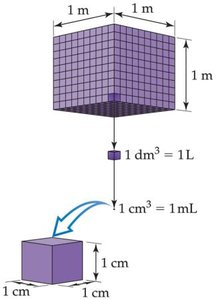
Volume is a derived unit from length. Common units include:
1 liter (L) = 1 dm3
1 milliliter (mL) = 1 cm3
Temperature Scales
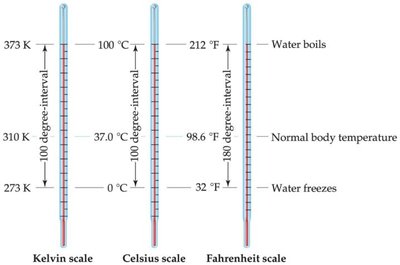
Temperature can be measured in Celsius (°C), Kelvin (K), or Fahrenheit (°F):
Kelvin is the SI unit; absolute zero is 0 K.
Conversion formulas:
Density
Density is a physical property defined as mass per unit volume:
Formula:
Common units: g/mL or g/cm3
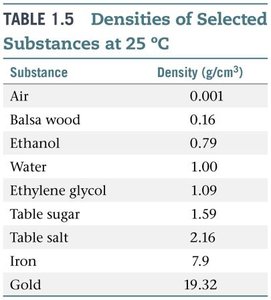
Substance | Density (g/cm3) |
|---|---|
Air | 0.001 |
Balsa wood | 0.16 |
Ethanol | 0.79 |
Water | 1.00 |
Ethylene glycol | 1.09 |
Table sugar | 1.59 |
Table salt | 2.16 |
Iron | 7.9 |
Gold | 19.32 |
Measurement, Uncertainty, and Significant Figures
Exact vs. Inexact Numbers
Exact Numbers: Defined values or counted quantities (e.g., 12 eggs in a dozen).
Inexact Numbers: Measured values subject to uncertainty.
Accuracy and Precision
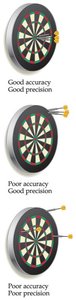
Accuracy: How close a measurement is to the true value.
Precision: How close repeated measurements are to each other.
Significant Figures
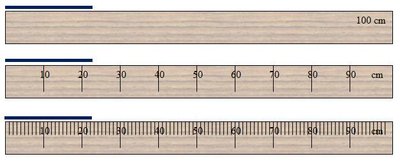
All nonzero digits are significant.
Zeros between nonzero digits are significant.
Leading zeros are not significant.
Trailing zeros are significant if there is a decimal point.
Rules for Calculations
Addition/Subtraction: Round to the least number of decimal places.
Multiplication/Division: Round to the least number of significant figures.

Dimensional Analysis
Unit Conversions
Dimensional analysis uses conversion factors to change units. Set up ratios so that units cancel appropriately. Multiple conversions can be chained together as long as each is an equality.
Example: To convert 2.22 m to inches, use .
Summary Table: Classification of Matter
Type | Description | Example |
|---|---|---|
Element | Cannot be decomposed into simpler substances | Oxygen (O2), Iron (Fe) |
Compound | Composed of two or more elements in fixed proportions | Water (H2O), Carbon dioxide (CO2) |
Homogeneous Mixture | Uniform composition throughout | Salt water, Air |
Heterogeneous Mixture | Non-uniform composition | Salad, Cereal in milk |
