 Indietro
Chapter 1: Introduction to Matter, Energy, and Measurement – General Chemistry Study Notes
Guida di studio - Note intelligenti
 Appunti personalizzati basati sui tuoi materiali, ampliati con definizioni chiave, esempi e contesto.
Classification of Matter
Types of Matter
Chemistry is the study of matter and the changes it undergoes. Matter is anything that occupies space and has mass. It can be classified into three main types:
Element: The simplest type of matter, composed of only one kind of atom. Examples include gold (Au) and oxygen (O2).
Compound: Matter composed of two or more different elements that are chemically bonded together. Water (H2O) is a compound.
Mixture: Matter composed of elements and/or compounds that are physically mixed together, not chemically bonded. Mixtures can be homogeneous (uniform composition, e.g., saltwater) or heterogeneous (non-uniform composition, e.g., salad).
Key Properties:
Pure Substance: Has a fixed composition (elements and compounds).
Mixture: Has variable composition and can be separated by physical means.
Example: Classify the following:
Gatorade – Homogeneous mixture
Crystalline sugar – Pure substance (compound)
Lead wire – Pure substance (element)
Salsa – Heterogeneous mixture
Practice: Homogeneous vs. Heterogeneous Mixtures
Homogeneous mixture: Uniform throughout (e.g., black coffee, seawater).
Heterogeneous mixture: Not uniform (e.g., chicken noodle soup, fruit salad).
Practice: Classification
Ammonia (NH3): Compound
Gold bar: Element
Orange juice: Mixture
Wine: Mixture
Saline solution: Mixture
Physical and Chemical Changes
Physical Changes
Physical changes alter the state or appearance of matter without changing its composition. Examples include melting, freezing, dissolving, and tearing.
Example: Dissolving sugar in water is a physical change.
Chemical Changes
Chemical changes result in the formation of new substances with different chemical properties. Examples include burning, rusting, and cooking.
Example: Cooking an egg is a chemical change.
Reversible vs. Irreversible Changes
Reversible Change: Can be undone (e.g., melting and re-solidifying chocolate).
Irreversible Change: Cannot be undone (e.g., baking a cake).
Chemical and Physical Properties
Chemical Properties
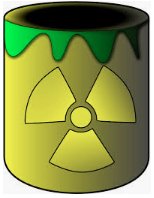
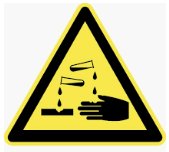
Chemical properties describe a substance's ability to undergo chemical changes, forming new substances. Examples include flammability, reactivity with acids, and radioactivity.
Example: Hydrogen gas reacts explosively with oxygen gas.


Physical Properties
Physical properties can be observed or measured without changing the substance's chemical identity. Examples include color, density, melting point, and state of matter.
Example: Mercury is a silvery liquid at 25ºC.

Intensive vs. Extensive Properties
Intensive Properties
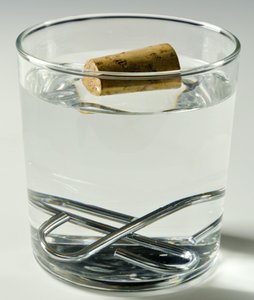
Intensive properties do not depend on the amount of substance present. They are useful for identifying substances.
Examples: Density, melting point, color, temperature, luster

Extensive Properties
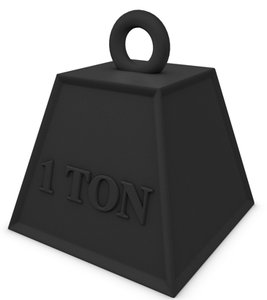
Extensive properties depend on the amount of substance present. They are additive for the same substance.
Examples: Mass, volume, length, energy


Temperature and Heat
Thermal Energy, Temperature, and Heat
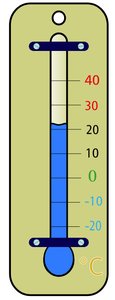
Thermal energy is the total kinetic and potential energy of all atoms in an object. Temperature is the average kinetic energy of particles, while heat is the transfer of thermal energy from a hotter object to a cooler one.

Temperature Conversions
Celsius (ºC), Fahrenheit (ºF), Kelvin (K)
Conversion formulas:
Scientific Notation
Format and Use
Scientific notation expresses very large or small numbers in the form , where and is an integer.
Coefficient: The number
Base: Always 10
Exponent: Indicates how many places the decimal is moved
Example:
SI Units and Metric Prefixes
SI Base Units
The International System of Units (SI) is based on seven base units:
Physical Quantity | Name | Symbol |
|---|---|---|
Mass | kilogram | kg |
Length | meter | m |
Time | second | s |
Temperature | kelvin | K |
Amount of substance | mole | mol |
Electric current | ampere | A |
Luminous intensity | candela | cd |
Metric Prefixes
Metric prefixes indicate multiples or fractions of base units. For example, kilo- (k) means 103, milli- (m) means 10-3.
Prefix | Symbol | Multiplier |
|---|---|---|
kilo | k | 103 |
centi | c | 10-2 |
milli | m | 10-3 |
micro | µ | 10-6 |
nano | n | 10-9 |
Significant Figures
Rules for Significant Figures
All nonzero digits are significant.
Zeros between nonzero digits are significant.
Leading zeros are not significant.
Trailing zeros in a decimal number are significant.
Exact numbers have an infinite number of significant figures.
Example: 0.003840 has 4 significant figures.
Significant Figures in Calculations
Multiplication/Division: The result has the same number of significant figures as the value with the fewest significant figures.
Addition/Subtraction: The result has the same number of decimal places as the value with the fewest decimal places.
Conversion Factors and Dimensional Analysis
Conversion Factors
A conversion factor is a ratio that expresses how many of one unit are equal to another unit. For example, 1 inch = 2.54 cm.
Common conversions: 1 kg = 2.2046 lbs, 1 L = 1.057 qt, 1 m = 100 cm
Dimensional Analysis
Dimensional analysis is a systematic approach to problem-solving that uses conversion factors to move from one unit to another.
Set up the problem so that units cancel, leaving only the desired unit.
Example: To convert 32 inches to centimeters, multiply by the conversion factor (2.54 cm/1 inch).
Density
Definition and Formula
Density is the amount of mass per unit volume. It is a physical property used to identify substances.
For solids and liquids: g/cm3 or g/mL
For gases: g/L
Formula:
Density of Geometric Objects
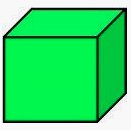
Volume of a cube:
Volume of a sphere:
Volume of a cylinder:

Density by Water Displacement
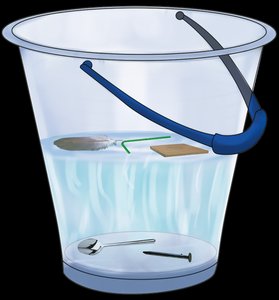
For irregular objects, volume can be determined by the amount of water displaced when the object is submerged.
Density = Mass / (Final volume - Initial volume)

Additional info: These notes cover the foundational concepts of matter, its classification, properties, measurement, and related calculations, as outlined in a typical first chapter of a General Chemistry textbook. All images included are directly relevant to the explanation of the adjacent paragraph and reinforce the academic content.
