 Indietro
Chapter 1: Matter and Energy – Foundations of General Chemistry
Guida di studio - Note intelligenti
 Appunti personalizzati basati sui tuoi materiali, ampliati con definizioni chiave, esempi e contesto.
Introduction to Chemistry
What is Chemistry?
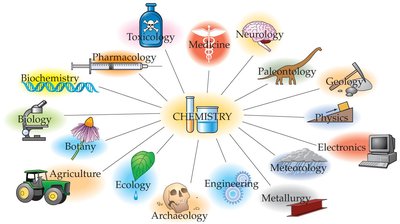
Chemistry is the scientific study of matter, its properties, and the changes it undergoes. It is often referred to as the central science because it connects and overlaps with many other scientific disciplines, including biology, physics, medicine, engineering, and environmental science.
Matter is anything that has mass and occupies space.
Chemistry explores the composition, structure, and transformations of matter.
Branches of chemistry include organic, inorganic, physical, analytical, theoretical, medicinal, and biological chemistry.
Chemistry is relevant in everyday life, from cooking to medicine and technology.

The Properties and Transformation of Matter
Definition and States of Matter
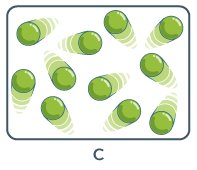
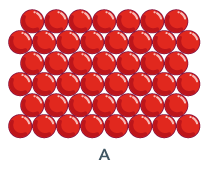
Matter is composed of atoms, which are the fundamental building blocks. Atoms combine to form molecules and compounds. Matter exists in three primary states: solid, liquid, and gas.
Solid: Definite shape and volume; atoms are closely packed and stationary.
Liquid: Definite volume but no definite shape; atoms are less tightly packed and can flow.
Gas: No definite shape or volume; atoms are far apart and move rapidly.
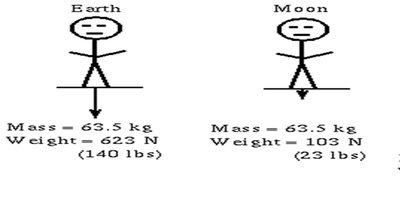
Weight is the force exerted by gravity on an object, while mass is the amount of matter.
The Scientific Method
Process and Terminology
The scientific method is a systematic approach used by scientists to investigate phenomena, acquire new knowledge, or correct and integrate previous knowledge.
Observation: Gathering information about phenomena.
Hypothesis: A tentative explanation based on observations.
Experiment: Testing the hypothesis through controlled procedures.
Theory: A well-supported explanation of natural phenomena.
Law: A statement describing consistent natural phenomena.

Classification of Matter
Pure Substances and Mixtures
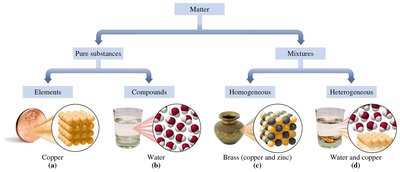
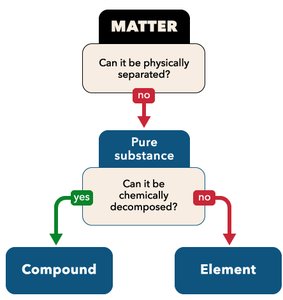
Matter can be classified as pure substances or mixtures. Pure substances include elements and compounds, while mixtures can be homogeneous or heterogeneous.
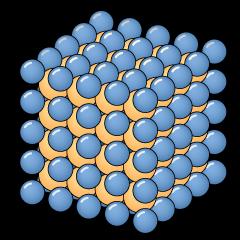
Element: Composed of a single type of atom; cannot be broken down further.
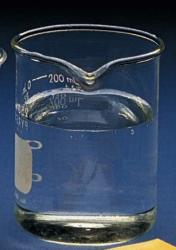
Compound: Composed of two or more elements chemically combined in fixed proportions.
Mixture: Contains two or more pure substances; can be separated by physical means.
Homogeneous mixture (solution): Uniform composition throughout.
Heterogeneous mixture: Non-uniform composition.
Separation Techniques
Methods for Separating Mixtures
Mixtures can be separated into their components using physical methods, such as distillation, filtration, and chromatography.
Distillation: Separates substances based on differences in boiling points.
Filtration: Separates solids from liquids using a porous barrier.
Chromatography: Separates substances based on their movement through a medium.
Separatory funnel: Used to separate immiscible liquids.
Physical and Chemical Properties and Changes
Types of Properties and Changes
Properties of matter are classified as physical or chemical. Changes can also be physical or chemical, depending on whether the composition of the substance is altered.
Physical properties: Can be observed without changing the substance (e.g., size, color, melting point).
Chemical properties: Can only be observed when the substance changes into a different substance (e.g., flammability, acidity).
Physical change: Does not alter the chemical composition (e.g., phase changes, dissolving).
Chemical change: Alters the chemical composition (e.g., combustion, rusting).
Units of Measurement
SI Units and Scientific Notation
Measurements in science require both a number and a unit. The International System of Units (SI) is used for consistency. Scientific notation is used to express very large or small numbers.
Base units: Meter (m), kilogram (kg), second (s), ampere (A), kelvin (K), mole (mol), candela (cd).
Scientific notation: format, where is a number and is an integer.
Example: m
Significant Figures
Precision and Rules
Significant figures reflect the precision of a measurement. The number of significant figures is determined by specific rules.
All nonzero digits are significant.
Interior zeroes (between nonzero digits) are significant.
Leading zeroes are not significant.
Trailing zeroes after a decimal point are significant.
Exact numbers have unlimited significant figures.
Rounding rules: Round down if the last digit dropped is 4 or less; round up if 5 or more.
Multiplication/Division: Result has the same number of significant figures as the measurement with the fewest SFs.
Addition/Subtraction: Result has the same number of decimal places as the measurement with the fewest decimal places.
SI Prefixes and Powers of Ten
Metric Prefixes
Metric prefixes are used to express measurements at different scales. Each prefix represents a power of ten.
Kilo- (), centi- (), milli- (), micro- (), nano- (), pico- ()
Example: 1 kilometer = meters; 1 centimeter = meters
Accuracy of Measurements
Accuracy and Percent Error
Accuracy measures how close a measurement is to the true or accepted value. Percent error quantifies the accuracy of a measurement.
Percent error formula:
Dimensional Analysis
Unit Conversions
Dimensional analysis is a method for converting between units using conversion factors. It is essential for solving problems in chemistry.
Unit equation: Statement of two equivalent quantities (e.g., 2.54 cm = 1 in).
Conversion factor: Fractional quantity used to convert units (e.g., ).
Always include units in calculations and cancel appropriately.
For units raised to a power, raise the conversion factor to that power.
Density
Definition and Measurement
Density is a physical property defined as mass per unit volume. It is used to characterize substances and solve problems involving mass and volume.
Density formula:
Units: g/cm3 or g/mL for solids and liquids; g/L for gases.
Volume of irregular solids can be measured by water displacement.
Example: If a 5.0 g object displaces 25.0 mL of water, density =
Summary Table: Classification of Matter
Type | Description | Examples |
|---|---|---|
Element | Single type of atom, cannot be broken down | Gold (Au), Oxygen (O2), Sulfur (S8) |
Compound | Two or more elements chemically combined | Water (H2O), Sodium chloride (NaCl) |
Homogeneous Mixture | Uniform composition throughout | Salt water, air |
Heterogeneous Mixture | Non-uniform composition | Sand and water, salad |
Additional info: Academic context and examples were expanded for clarity and completeness. All images included are directly relevant to the adjacent explanations.
