 Indietro
Chapter 1
Guida di studio - Note intelligenti
 Appunti personalizzati basati sui tuoi materiali, ampliati con definizioni chiave, esempi e contesto.
Chapter 1: Introduction – Matter, Energy, and Measurement
Chemistry: Definition and Importance
Chemistry is the scientific study of matter, its properties, and the changes it undergoes. It is foundational to many science-related fields, including biochemistry, medicine, energy, and technology.
Matter: Anything that has mass and occupies space.
Properties: Characteristics that define matter, such as color, density, and boiling point.
Changes: Physical or chemical transformations matter can undergo.
Applications: Chemistry is central to understanding biological processes, developing new materials, and solving environmental challenges.

Matter and Its Classification
States of Matter
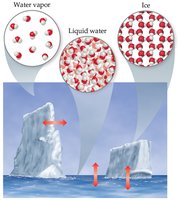
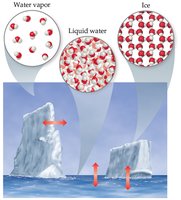
Matter exists in three primary states: solid, liquid, and gas. Each state has distinct physical characteristics.
Solid: Definite shape and volume; particles are closely packed.
Liquid: Definite volume but no definite shape; particles are less tightly packed than solids.
Gas: No definite shape or volume; particles are far apart and move freely.
Example: Water exists as ice (solid), liquid water, and water vapor (gas).
Classification of Matter by Composition
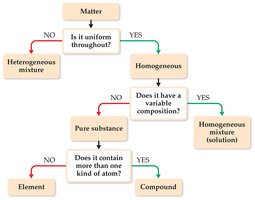
Matter can be classified based on its composition into pure substances and mixtures. Pure substances include elements and compounds, while mixtures can be homogeneous or heterogeneous.
Element: A substance that cannot be decomposed into simpler substances.
Compound: A substance composed of two or more elements chemically combined.
Homogeneous mixture: Uniform composition throughout (also called a solution).
Heterogeneous mixture: Non-uniform composition; components are visibly distinct.
Atoms, Elements, and Compounds
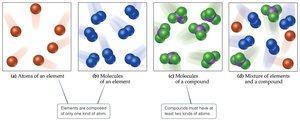
Atoms are the fundamental building blocks of matter. Elements consist of only one type of atom, while compounds are made of atoms from two or more elements.
Atoms: Smallest unit of an element that retains its properties.
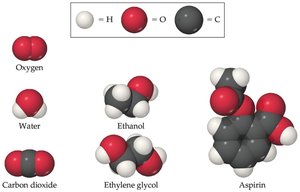
Molecules: Groups of atoms bonded together.
Law of Constant Composition: The relative number of atoms in a compound is always the same.
Example: Water (H2O) always contains two hydrogen atoms and one oxygen atom.
Elemental Abundance
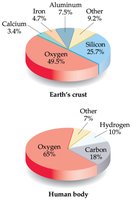
There are 118 named elements, but only a few make up most of the Earth's crust and the human body by mass.
Earth's crust: Oxygen, silicon, aluminum, iron, calcium.
Human body: Oxygen, carbon, hydrogen.
Representing Elements
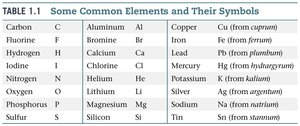
Chemists use symbols to represent elements. These symbols are one or two letters, often derived from Latin or Greek names.
Example: Carbon (C), Oxygen (O), Sodium (Na from 'natrium').
Element | Symbol |
|---|---|
Carbon | C |
Oxygen | O |
Sodium | Na |
Iron | Fe |
Gold | Au |
Silver | Ag |
Lead | Pb |
Mercury | Hg |
Potassium | K |
Calcium | Ca |
Phosphorus | P |
Sulfur | S |
Aluminum | Al |
Magnesium | Mg |
Fluorine | F |
Bromine | Br |
Iodine | I |
Chlorine | Cl |
Lithium | Li |
Tin | Sn |
Mixtures: Homogeneous and Heterogeneous
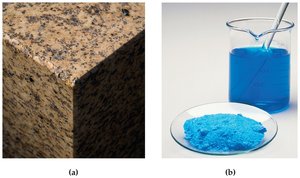
Mixtures are combinations of two or more substances that retain their individual properties. They can be separated by physical means.
Homogeneous mixture: Uniform throughout; also called a solution.
Heterogeneous mixture: Non-uniform; visibly different components.
Properties and Changes of Matter
Physical and Chemical Properties
Properties of matter are classified as physical or chemical. Physical properties can be observed without changing the substance, while chemical properties involve a change in composition.
Physical properties: Color, odor, density, melting point, boiling point, hardness.
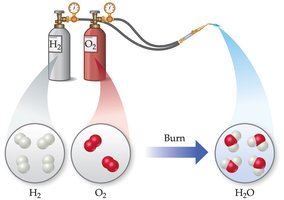
Chemical properties: Flammability, reactivity, ability to burn in oxygen.
Intensive vs. Extensive Properties
Properties are further classified as intensive or extensive. Intensive properties do not depend on the amount of substance, while extensive properties do.
Intensive properties: Density, boiling point, color.
Extensive properties: Mass, volume, energy.
Physical and Chemical Changes
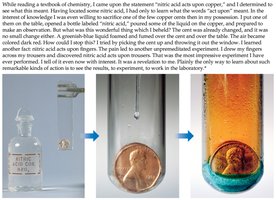
Changes in matter can be physical or chemical. Physical changes do not alter the composition, while chemical changes result in new substances.
Physical changes: Changes of state, temperature, volume.
Chemical changes: Combustion, oxidation, decomposition.
Example: Melting ice is a physical change; burning hydrogen in oxygen to form water is a chemical change.
Separation of Mixtures
Filtration
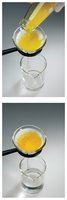
Filtration separates solid substances from liquids or solutions based on particle size.
Example: Separating sand from water.
Distillation
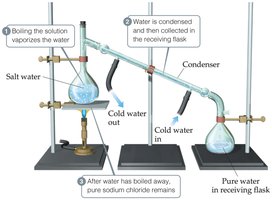
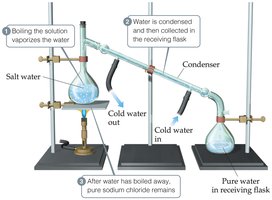
Distillation separates components of a homogeneous mixture based on differences in boiling points.
Example: Separating salt from water by boiling and condensing the vapor.
Chromatography
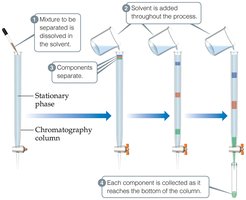
Chromatography separates substances based on their ability to adhere to a solid surface.
Example: Separating dyes in ink using paper chromatography.
Energy in Chemistry
Forms of Energy
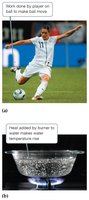
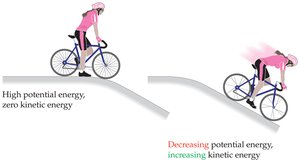
Energy is the capacity to do work or transfer heat. It exists in two fundamental forms: kinetic and potential energy.
Kinetic energy: Energy of motion; depends on mass and velocity.
Potential energy: Energy due to position or arrangement.
Formula:
Measurement and Units in Chemistry
SI Units and Metric System
Chemistry relies on quantitative measurements. The International System of Units (SI) is used for consistency.
Base units: Meter (length), kilogram (mass), second (time), kelvin (temperature), mole (amount of substance).
Metric units: Gram, meter, liter, mole, etc.
Physical Quantity | Name of Unit | Abbreviation |
|---|---|---|
Length | Meter | m |
Mass | Kilogram | kg |
Temperature | Kelvin | K |
Time | Second | s or sec |
Amount of substance | Mole | mol |
Electric current | Ampere | A or amp |
Luminous intensity | Candela | cd |
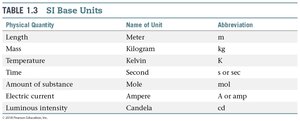
Metric System Prefixes
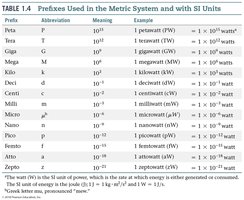
Prefixes are used to express multiples or fractions of base units for practical measurement.
Example: 1 milliliter (mL) = 10-3 liters (L).
Prefix | Abbreviation | Meaning | Example |
|---|---|---|---|
Kilo | k | 103 | 1 kilometer (km) = 1000 meters (m) |
Milli | m | 10-3 | 1 milligram (mg) = 0.001 grams (g) |
Micro | μ | 10-6 | 1 microliter (μL) = 0.000001 liters (L) |
Nano | n | 10-9 | 1 nanometer (nm) = 0.000000001 meters (m) |
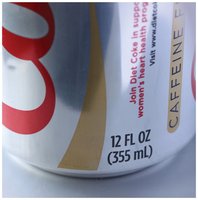
Mass, Length, and Volume
Mass and length are fundamental measurements in science. Volume is a derived unit, commonly measured in liters (L) or milliliters (mL).
Mass: SI unit is kilogram (kg); metric unit is gram (g).
Length: SI unit is meter (m).
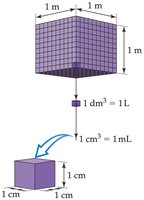
Volume: Derived from length; 1 L = 1 dm3, 1 mL = 1 cm3.
Glassware for Measuring Volume
Various types of glassware are used to measure and deliver specific volumes in laboratory settings.
Graduated cylinder: Used for variable volumes.
Syringe: Used for variable volumes.
Burette: Used to deliver a specific volume.
Pipette: Used to deliver a specific volume.
Volumetric flask: Used to hold a specific volume.
Temperature Scales
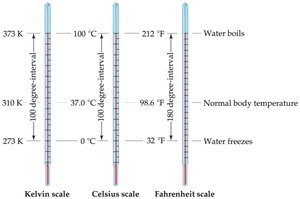
Temperature is measured using Celsius, Kelvin, and Fahrenheit scales. The Kelvin scale is the SI unit and is based on absolute zero.
Celsius scale: 0 °C (freezing point of water), 100 °C (boiling point).
Kelvin scale: Absolute zero (0 K); no negative values.
Fahrenheit scale: Used in weather reports, not scientific measurements.
Conversion formulas:
Energy Units
The SI unit of energy is the joule (J), which is derived from mass, length, and time. The calorie is also used, especially in nutrition.
Joule:
Calorie:
Nutritional Calorie:
Density
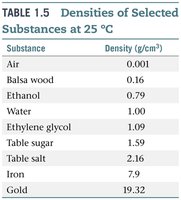
Density is a physical property defined as mass per unit volume. It is useful for identifying substances and predicting their behavior.
Formula:
Common units: g/mL or g/cm3
Substance | Density (g/cm3) |
|---|---|
Air | 0.001 |
Balsa wood | 0.16 |
Ethanol | 0.79 |
Water | 1.00 |
Ethylene glycol | 1.09 |
Table sugar | 1.59 |
Table salt | 2.16 |
Iron | 7.9 |
Gold | 19.32 |
Measurement Accuracy and Precision
Exact vs. Inexact Numbers
Exact numbers are counted or defined, while inexact numbers are measured and subject to uncertainty.
Exact: 12 eggs in a dozen.
Inexact: Mass measured with a balance.
Uncertainty in Measurement
All measurements have some degree of uncertainty, which is reflected in the last digit recorded.
Different devices: Vary in accuracy and precision.
Standard deviation: Used to quantify uncertainty.
Accuracy vs. Precision
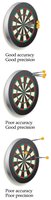
Accuracy refers to how close a measurement is to the true value, while precision refers to how close repeated measurements are to each other.
Good accuracy and precision: Measurements are both correct and consistent.
Poor accuracy, good precision: Measurements are consistent but not correct.
Poor accuracy and precision: Measurements are neither correct nor consistent.
Significant Figures
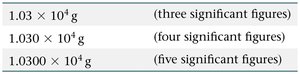
Significant figures indicate the precision of a measured or calculated value. Rules determine which digits are significant.
All nonzero digits are significant.
Zeroes between nonzero digits are significant.
Zeroes at the beginning are not significant.
Zeroes at the end are significant if there is a decimal point.
Significant Figures in Calculations
The number of significant figures in the result of a calculation is determined by the least precise measurement.
Addition/Subtraction: Round to the least significant decimal place.
Multiplication/Division: Round to the same number of digits as the measurement with the fewest significant figures.
Dimensional Analysis
Dimensional analysis is a method for converting units using conversion factors. It ensures that calculations are consistent and accurate.
Conversion factor: An equality used to change units (e.g., 1 in = 2.54 cm).
Process: Set up ratios so units cancel appropriately.
Example: Converting meters to inches using intermediate conversion to centimeters.

Additional info: Academic context and examples were added to ensure completeness and clarity for exam preparation.
