 Indietro
Chapter 1: Matter, Measurement, and Math – General Chemistry Study Notes
Guida di studio - Note intelligenti
 Appunti personalizzati basati sui tuoi materiali, ampliati con definizioni chiave, esempi e contesto.
Matter and Chemistry
Definitions and Fundamental Concepts
Chemistry is the science that seeks to understand how matter behaves by studying the properties and interactions of atoms and molecules. Matter is anything that occupies space and has mass. The properties of matter are determined by the properties of its constituent atoms and molecules.
Atom: The smallest identifiable unit of an element; a submicroscopic particle that is the fundamental building block of matter.
Molecule: Two or more atoms joined chemically in a specific geometric arrangement; the smallest identifiable unit of a compound.
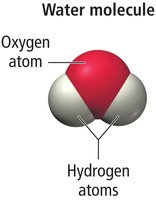
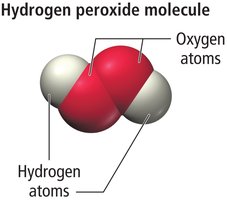
Example: Water (H2O) is a molecule composed of two hydrogen atoms and one oxygen atom. Hydrogen peroxide (H2O2) is a molecule with two hydrogen atoms and two oxygen atoms, demonstrating how different arrangements and ratios of atoms create different substances.
Classification of Matter
States of Matter
Matter exists in three primary states: solid, liquid, and gas. Each state is characterized by the arrangement and movement of atoms or molecules.
Solid: Atoms or molecules are packed closely together in fixed positions, resulting in a definite shape and volume. Solids can be crystalline (long-range repeating order, e.g., diamond, NaCl) or amorphous (no long-range order, e.g., glass, plastic).
Liquid: Atoms or molecules are close together but can move past one another, resulting in a definite volume but no fixed shape.
Gas: Atoms or molecules are far apart and move freely, resulting in no fixed shape or volume. Gases are compressible.
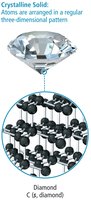
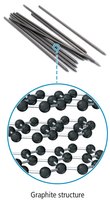
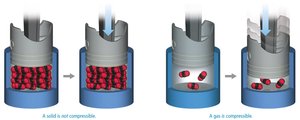
Example: Diamond is a crystalline solid with a regular three-dimensional pattern, while graphite is an amorphous solid with layers of carbon atoms.
Classification by Composition
Matter can be classified as a pure substance or a mixture based on its composition.
Element: A pure substance that cannot be chemically broken down; composed of individual atoms.
Compound: A pure substance composed of two or more different elements in fixed, definite proportions; can be broken down into elements.
Mixture: A combination of two or more pure substances that can be separated by physical means. Mixtures can be homogeneous (uniform throughout) or heterogeneous (not uniform).
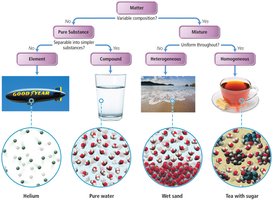
Example: Pure water is a compound, helium is an element, wet sand is a heterogeneous mixture, and tea with sugar is a homogeneous mixture.
Physical and Chemical Properties & Changes
Physical Properties and Changes
Physical properties can be observed without changing the composition of the substance (e.g., odor, color, appearance, taste, boiling and melting point, solubility, density). Physical changes do not alter the composition of matter (e.g., changes of state, appearance, dissolving).
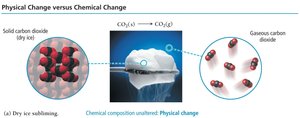
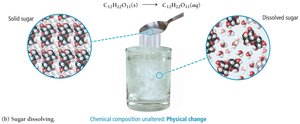
Example: Dry ice (solid CO2) sublimates to gaseous CO2 without changing its chemical composition. Sugar dissolving in water is a physical change.
Chemical Properties and Changes
Chemical properties can only be observed by changing the composition of the substance (e.g., flammability, corrosiveness, toxicity). Chemical changes (reactions) alter the composition of matter (e.g., burning, rusting, bleaching).
Law of Conservation of Mass: In a chemical reaction, mass is neither created nor destroyed; mass is conserved.
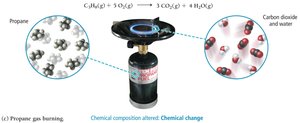
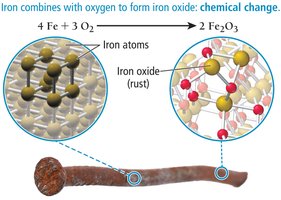
Example: Burning propane produces carbon dioxide and water, changing the chemical composition. Iron rusting forms iron oxide.
Energy in Chemistry
Types of Energy
Physical and chemical changes involve energy transformations. Energy is the capacity to do work. Types include:
Kinetic energy: Energy of motion.
Thermal energy: Related to temperature; arises from the motion of atoms or molecules.
Potential energy: Energy due to position or composition (e.g., gravitational, chemical).
Law of Conservation of Energy: Energy is conserved during a change; it cannot be created or destroyed, only converted or transferred.
Temperature and Measurement
Temperature Scales
Temperature measures the average kinetic energy of particles. Common scales:
Fahrenheit (°F)
Celsius (°C)
Kelvin (K): SI unit, absolute scale
Conversion formulas:
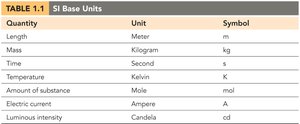
SI Base Units
Measurements are quantitative and require both a numeric value and a unit. The SI system is a base-10 metric system.
Quantity | Unit | Symbol |
|---|---|---|
Length | Meter | m |
Mass | Kilogram | kg |
Time | Second | s |
Temperature | Kelvin | K |
Amount of substance | Mole | mol |
Electric current | Ampere | A |
Luminous intensity | Candela | cd |
Metric Prefix Multipliers
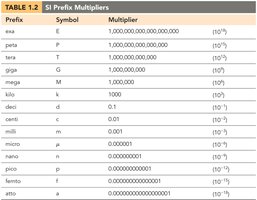
Metric prefixes allow expression of large and small numbers conveniently.
Prefix | Symbol | Multiplier |
|---|---|---|
giga | G | 1,000,000,000 |
mega | M | 1,000,000 |
kilo | k | 1,000 |
centi | c | 0.01 |
milli | m | 0.001 |
micro | μ | 0.000001 |
nano | n | 0.000000001 |
pico | p | 0.000000000001 |
Density
Definition and Calculation
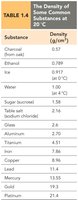
Density (d) is the ratio of a substance’s mass to its volume. It is an intensive property, independent of the amount of material.
Formula:
Units: g/cm3 or g/mL
Example: A ring with mass 4.53 g and volume 0.212 cm3 has a density of (rounded).
Substance | Density (g/cm3) |
|---|---|
Water | 1.00 |
Ice | 0.917 |
Glass | 2.48 |
Iron | 7.86 |
Gold | 19.3 |
Platinum | 21.4 |

Measurements and Significant Figures
Significant Figures and Uncertainty
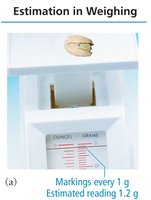
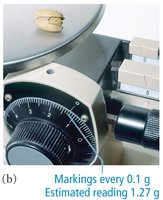
Significant figures reflect the precision of a measurement. The uncertainty is indicated in the last digit, which is estimated. More significant figures mean higher certainty.
All nonzero digits are significant.
Zeros between significant digits are significant.
Leading zeros are not significant.
Trailing zeros after a decimal point are significant.
Exact numbers (counts, conversion factors) have unlimited significant figures.
Calculating with Significant Figures
Multiplication and Division: The answer has the same number of significant figures as the factor with the fewest.
Addition and Subtraction: The answer has the same number of decimal places as the quantity with the fewest.
Example: (rounded to 2 significant figures).
Scientific Notation
Writing Numbers in Scientific Notation
Scientific notation expresses numbers as a decimal part (between 1 and 9.999...) and an exponential part (10n).
Example: 12,502,424 =
Example: 0.0000380 =
Precision and Accuracy
Definitions and Types of Error
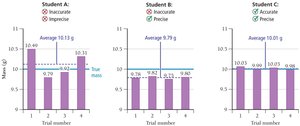
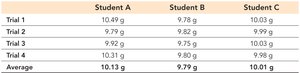
Accuracy refers to how close a measured value is to the actual value. Precision refers to how close a series of measurements are to one another.
Random error: Equal probability of being too high or too low; can be averaged out.
Systematic error: Consistently too high or too low; cannot be averaged out.
Solving Chemical Problems
Dimensional Analysis
Dimensional analysis uses units as a guide to solving problems. Units are multiplied, divided, and canceled like algebraic quantities. Always include units in calculations.
Conversion factor: Used to convert between units using equivalent quantities.
Strategy: Identify the starting point (given), the end point (what to find), and devise a way to get from start to end using conversion factors.
The Scientific Method
Process and Key Concepts
The scientific method is a systematic approach to learning based on observation and experimentation. It involves:
Observation and data collection
Forming a hypothesis (testable, falsifiable)
Designing and conducting experiments
Analyzing data and drawing conclusions
Reporting results and revising hypotheses
Law and Theory
Scientific Law vs. Theory
Scientific Law: A brief statement or equation summarizing repeated past observations and predicting future ones (e.g., Law of Conservation of Mass).
Scientific Theory: Combines well-established hypotheses and laws to provide a deeper explanation or model of some aspect of the physical world. Theories predict behavior beyond current laws and can be modified as new evidence arises.
Example: Dalton’s Atomic Theory explains the nature of atoms and their role in chemical reactions.
*Additional info: Academic context was added to clarify definitions, examples, and the application of concepts for self-contained study notes.*
