 Indietro
Chapter 1: Matter, Measurement, and Problem Solving – Study Notes
Guida di studio - Note intelligenti
 Appunti personalizzati basati sui tuoi materiali, ampliati con definizioni chiave, esempi e contesto.
Matter, Atoms, and Molecules
Atoms and Molecules
Understanding the nature of matter begins with atoms and molecules, which are the fundamental building blocks of all substances. Chemistry seeks to explain the properties and behavior of matter by studying these particles at the molecular level.
Atom: The smallest unit of an element that retains its chemical identity.
Molecule: A group of two or more atoms held together by chemical bonds in a specific arrangement.
Free atoms are rare in nature; most exist as part of molecules.
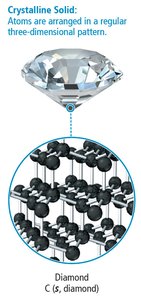
Small differences in atomic or molecular structure can lead to large differences in properties (e.g., graphite vs. diamond, both made of carbon).
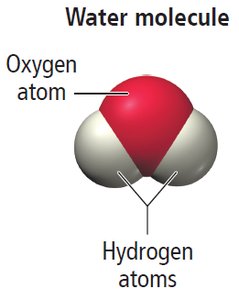
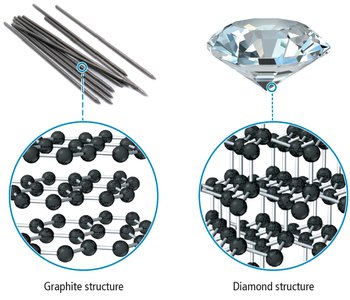
Additional info: The arrangement of atoms in a molecule determines the substance's properties, such as hardness, conductivity, and reactivity.
The Scientific Approach to Knowledge
The Scientific Method
The scientific method is a systematic approach to understanding nature through observation, hypothesis formation, experimentation, and the development of laws and theories.
Observation: Gathering data about natural phenomena.
Hypothesis: A tentative explanation for observations, which must be testable and falsifiable.
Experiment: Controlled tests to validate or refute hypotheses.
Law: A concise statement summarizing consistent observations (e.g., Law of Conservation of Mass).
Theory: A well-substantiated explanation of some aspect of nature, based on a body of evidence.
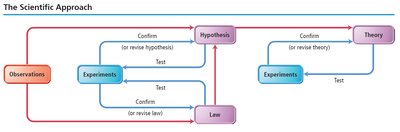
Additional info: Theories can never be proven absolutely; they are always subject to revision with new evidence.
The Classification of Matter
States of Matter
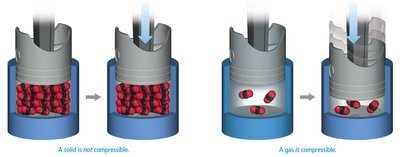
Matter can exist in three primary states: solid, liquid, and gas. Each state is defined by the arrangement and movement of its particles.
Solid: Fixed shape and volume; particles vibrate but do not move past each other.
Liquid: Fixed volume but no fixed shape; particles move relative to each other.
Gas: No fixed shape or volume; particles are far apart and move freely, making gases compressible.
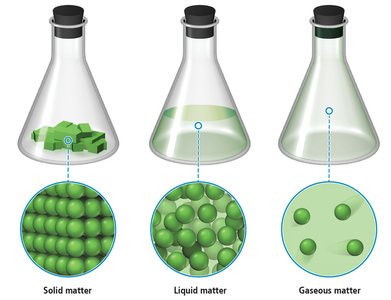
Crystalline vs. Amorphous Solids
Crystalline: Atoms/molecules are arranged in a regular, repeating pattern (e.g., diamond, table salt).
Amorphous: Atoms/molecules lack long-range order (e.g., glass, plastic).
Classification by Composition
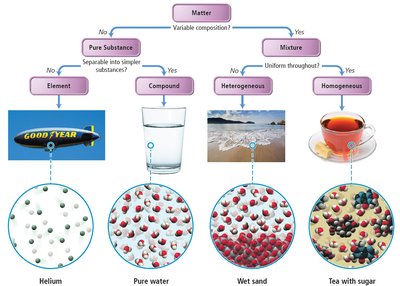
Matter can also be classified based on its composition:
Pure Substance: Composed of only one type of particle (element or compound).
Mixture: Composed of two or more particles physically combined; can be homogeneous (uniform) or heterogeneous (non-uniform).
Separation of Mixtures
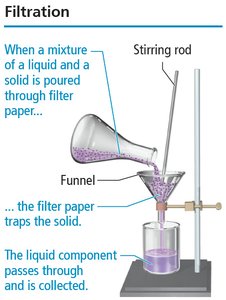
Mixtures can be separated by exploiting differences in physical or chemical properties:
Filtration: Separates solids from liquids using filter paper.
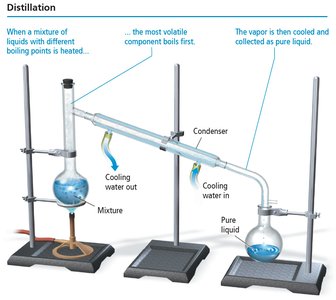
Distillation: Separates components based on differences in volatility (boiling points).
Decanting: Carefully pouring off a liquid to separate it from a solid.
Physical and Chemical Changes and Properties
Physical vs. Chemical Change
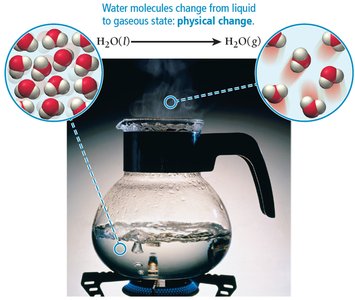
Physical Change: Alters state or appearance without changing composition (e.g., boiling water).
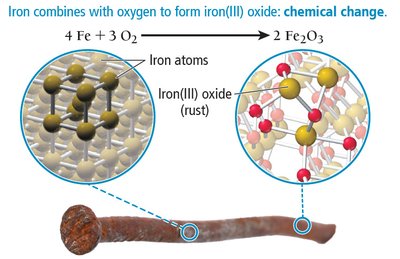
Chemical Change: Alters composition; atoms rearrange to form new substances (e.g., rusting iron).
Physical vs. Chemical Properties
Physical Property: Can be observed without changing composition (e.g., color, melting point, density).
Chemical Property: Can only be observed by changing composition (e.g., flammability, acidity).
Energy in Physical and Chemical Change
Types of Energy
Kinetic Energy: Energy of motion.
Potential Energy: Energy due to position or composition.
Thermal Energy: Energy associated with temperature; a form of kinetic energy.
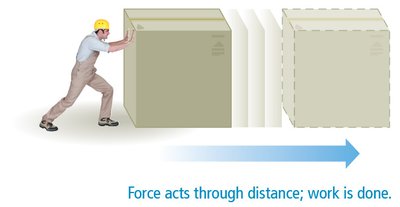
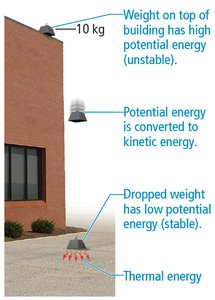
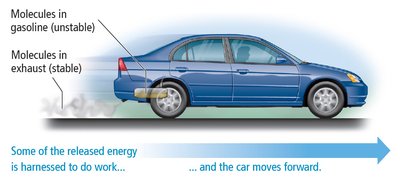
Law of Conservation of Energy: Energy cannot be created or destroyed, only transformed.
Measurement and Units
SI Base Units
The International System of Units (SI) is used for scientific measurements. Key base units include:
Quantity | Unit | Symbol |
|---|---|---|
Length | meter | m |
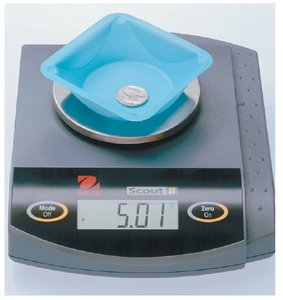
Mass | kilogram | kg |
Time | second | s |
Temperature | kelvin | K |
Amount of substance | mole | mol |

Temperature Scales
Celsius (°C): Water freezes at 0°C and boils at 100°C.
Kelvin (K): Absolute zero is 0 K; same increment as Celsius.
Fahrenheit (°F): Used mainly in the United States.
Conversion formulas:
Prefix Multipliers
SI units use prefixes to indicate powers of ten (e.g., kilo-, milli-, micro-). For example, 1 kilometer (km) = meters (m).
Derived Units: Volume and Density
Volume:
Density: , where is mass and is volume.
Density is an intensive property and helps determine if a substance will float or sink in another.
Substance | Density (g/cm3) |
|---|---|
Water (4°C) | 1.00 |
Aluminum | 2.70 |
Iron | 7.86 |
Gold | 19.3 |
Platinum | 21.4 |
Significant Figures and Measurement Reliability
Significant Figures
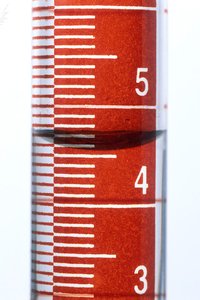
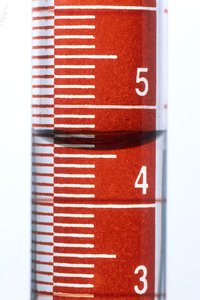
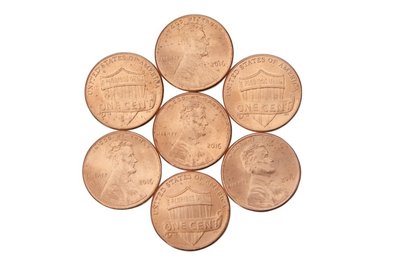
All nonzero digits are significant.
Zeros between nonzero digits are significant.
Leading zeros are not significant.
Trailing zeros are significant only if there is a decimal point.
Rules for Calculations
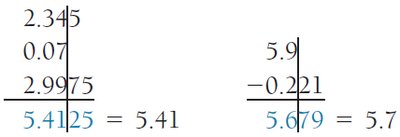
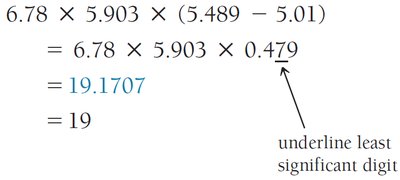
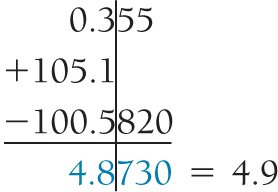
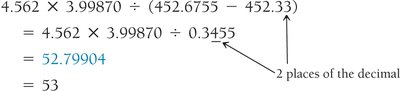
Multiplication/Division: Result has the same number of significant figures as the factor with the fewest significant figures.
Addition/Subtraction: Result has the same number of decimal places as the quantity with the fewest decimal places.

Precision and Accuracy
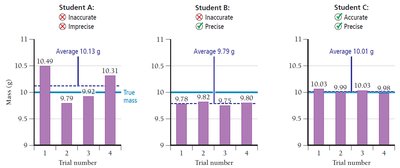
Accuracy: How close a measurement is to the true value.
Precision: How close repeated measurements are to each other.
Random Error: Causes measurements to be scattered around the true value (affects precision).
Systematic Error: Causes measurements to be consistently too high or too low (affects accuracy).
Dimensional Analysis and Problem Solving
Dimensional Analysis
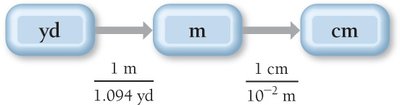
Dimensional analysis is a method for solving problems using conversion factors to ensure units are consistent and correct.
Unit Equation: Statement of two equivalent quantities (e.g., 1 in = 2.54 cm).
Conversion Factor: Fraction derived from a unit equation (e.g., ).
For units raised to a power, raise both the number and the unit (e.g., ).


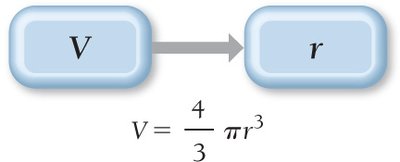
General Problem Solving Strategy
Sort: Identify given and required information.
Strategize: Devise a conceptual plan using known relationships and conversion factors.
Solve: Carry out the calculation, keeping track of units and significant figures.
Check: Ensure the answer makes sense and units are correct.
Summary Table: SI Prefix Multipliers
Prefix | Symbol | Multiplier |
|---|---|---|
kilo | k | |
centi | c | |
milli | m | |
micro | μ | |
nano | n | |
pico | p |
These notes provide a comprehensive overview of the foundational concepts in general chemistry, focusing on matter, measurement, and problem solving. Mastery of these topics is essential for success in all subsequent chemistry coursework.
