 Indietro
Chapter 1: Matter, Measurement, and Problem Solving – General Chemistry Study Notes
Guida di studio - Note intelligenti
 Appunti personalizzati basati sui tuoi materiali, ampliati con definizioni chiave, esempi e contesto.
Chapter 1: Matter, Measurement, and Problem Solving
Introduction to Chemistry
Chemistry is the science that seeks to understand the behavior of matter by studying the properties and interactions of atoms and molecules. The properties of matter are fundamentally determined by the properties of the constituent atoms and molecules.
Atoms and Molecules
Definition and Importance
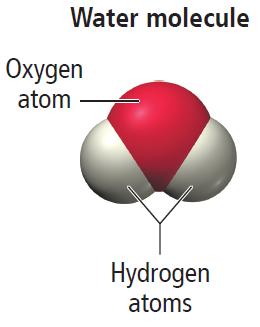
Atoms are the submicroscopic particles that constitute the fundamental building blocks of ordinary matter.
Molecules are groups of atoms bonded together in specific geometrical arrangements.
The structure and composition of atoms and molecules determine the properties of substances.
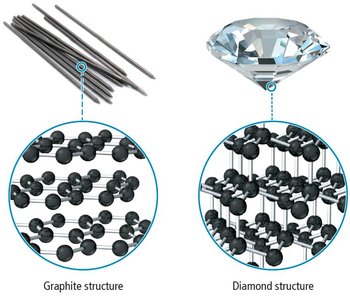
Small differences in atomic or molecular structure can result in large differences in properties (e.g., graphite vs. diamond).
The Scientific Approach to Knowledge
The Scientific Method
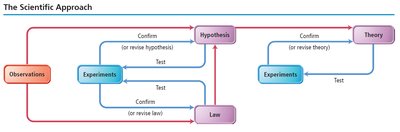
The scientific method is an empirical approach based on observation and experimentation. It is a systematic process for understanding nature.
Observation: Gathering data about the characteristics or behavior of nature.
Hypothesis: A tentative explanation for observations, which must be testable and falsifiable.
Law: A brief statement summarizing past observations and predicting future ones (e.g., Law of Conservation of Mass).
Theory: A model explaining why nature behaves as it does, validated by experiments but never conclusively proven.
The Classification of Matter
States of Matter
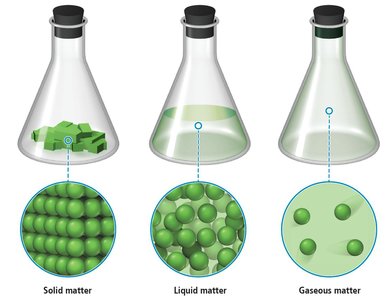
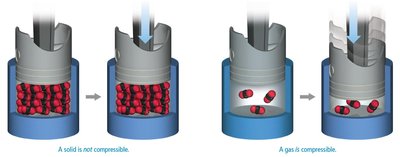
Matter can exist as a solid, liquid, or gas, depending on temperature and the arrangement of atoms or molecules.
Solid: Fixed volume and shape; atoms/molecules are closely packed in fixed positions.
Liquid: Fixed volume but not shape; atoms/molecules are close but can move past each other.
Gas: No fixed volume or shape; atoms/molecules are far apart and move freely, making gases compressible.
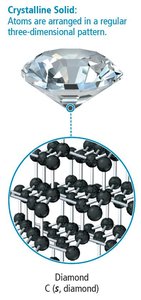
Crystalline vs. Amorphous Solids
Crystalline solids: Atoms/molecules are arranged in a regular, repeating pattern (e.g., diamond, table salt).
Amorphous solids: Atoms/molecules lack long-range order (e.g., glass, plastic).
Classification by Composition
Pure Substance: Composed of only one type of component; composition is invariant.
Mixture: Composed of two or more components in variable proportions.
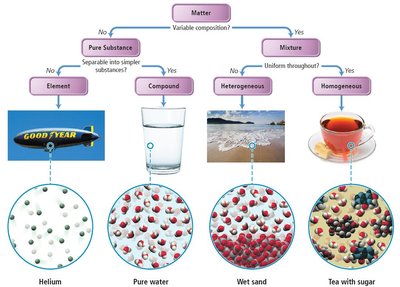
Types of Pure Substances
Element: Cannot be chemically broken down into simpler substances (e.g., helium).
Compound: Composed of two or more elements in fixed proportions (e.g., water).
Types of Mixtures
Heterogeneous Mixture: Composition varies from one region to another (e.g., salt and sand mixture).
Homogeneous Mixture: Uniform composition throughout (e.g., sweetened tea).
Visualizing Pure Substances and Mixtures
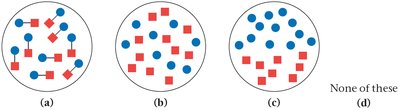
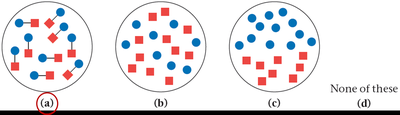
Separation of Mixtures
Physical Separation Techniques
Decanting: Separates mixtures by carefully pouring off a liquid from a solid.
Distillation: Separates mixtures based on differences in volatility; the more volatile component is vaporized and then condensed.
Filtration: Separates an insoluble solid from a liquid using filter paper.
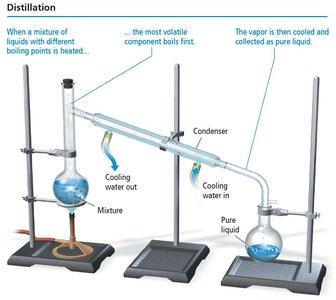
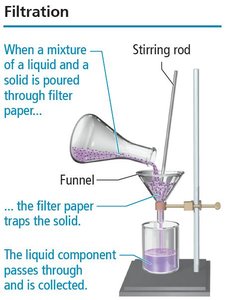
Physical and Chemical Changes
Physical Changes
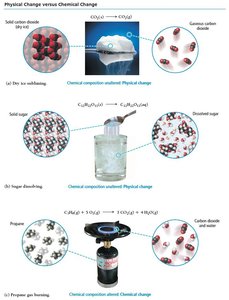
Changes that alter only the state or appearance, not the composition (e.g., boiling water).
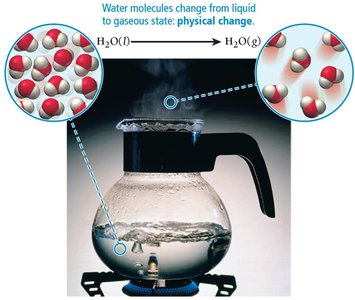
Chemical Changes
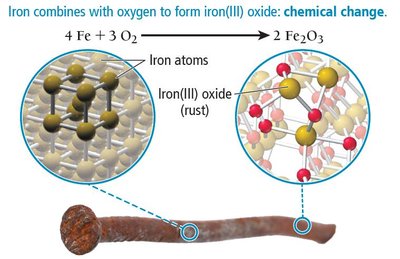
Changes that alter the composition of matter; atoms rearrange to form new substances (e.g., rusting of iron).
Physical and Chemical Properties
Physical property: Observed without changing composition (e.g., odor, color, melting point).
Chemical property: Observed only by changing composition (e.g., flammability, acidity).
Energy in Physical and Chemical Changes
Types of Energy
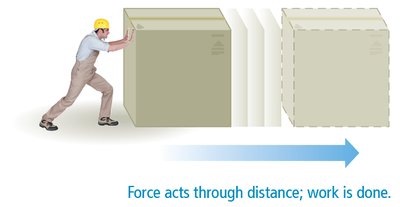
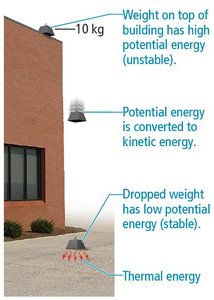
Kinetic energy: Energy of motion.
Potential energy: Energy due to position or composition.
Thermal energy: Energy associated with temperature; a form of kinetic energy.
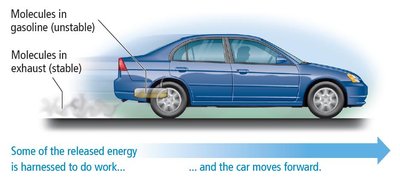
Law of Conservation of Energy
Energy is neither created nor destroyed in physical or chemical changes.
Systems with high potential energy tend to change to lower potential energy, releasing energy to the surroundings.
Measurement and Units
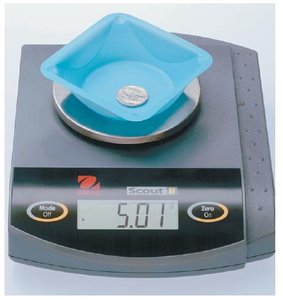
SI Base Units
Quantity | Unit | Symbol |
|---|---|---|
Length | Meter | m |
Mass | Kilogram | kg |
Time | Second | s |
Temperature | Kelvin | K |
Amount of substance | Mole | mol |
Electric current | Ampere | A |
Luminous intensity | Candela | cd |

Temperature Scales
Celsius (°C): Water freezes at 0°C and boils at 100°C.
Kelvin (K): Absolute zero is 0 K; no negative temperatures.
Fahrenheit (°F): Water freezes at 32°F and boils at 212°F.
Temperature conversions:
Prefix Multipliers
Prefix | Symbol | Multiplier |
|---|---|---|
kilo | k | |
centi | c | |
milli | m | |
micro | μ | |
nano | n | |
pico | p |
Derived Units: Volume and Density
Volume: ;
Density:
Substance | Density (g/cm3) |
|---|---|
Water (4°C) | 1.00 |
Ice (0°C) | 0.917 |
Aluminum | 2.70 |
Iron | 7.86 |
Gold | 19.3 |
Intensive vs. Extensive Properties
Intensive property: Independent of amount (e.g., density).
Extensive property: Dependent on amount (e.g., mass).
Significant Figures and Measurement Reliability
Counting Significant Figures
All nonzero digits are significant.
Interior zeros are significant.
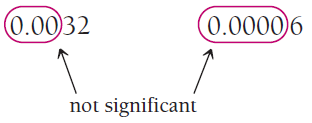
Leading zeros are not significant.
Trailing zeros are significant only if after a decimal point or before a decimal point and after a nonzero digit.
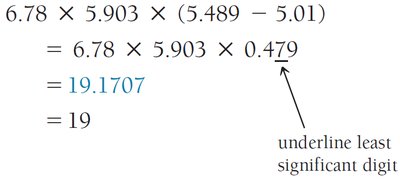
Significant Figures in Calculations
Multiplication/Division: Result has the same number of significant figures as the factor with the fewest significant figures.
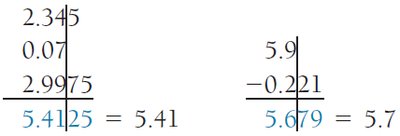
Addition/Subtraction: Result has the same number of decimal places as the quantity with the fewest decimal places.

Precision and Accuracy
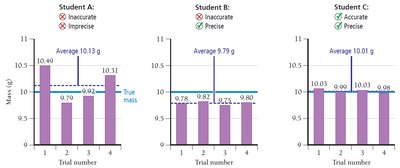
Accuracy: How close a measurement is to the true value.
Precision: How close repeated measurements are to each other.
Random error: Equal probability of being too high or too low.
Systematic error: Consistently too high or too low.
Problem Solving and Dimensional Analysis
Dimensional Analysis
Use units as a guide in calculations; units are multiplied, divided, and canceled like algebraic quantities.
Conversion factors are ratios derived from unit equations (e.g., ).
For units raised to a power, raise both the number and the unit (e.g., ).
Interpreting Data and Graphs
Data Interpretation
Analyze patterns in experimental data (e.g., mass ratios in chemical reactions).
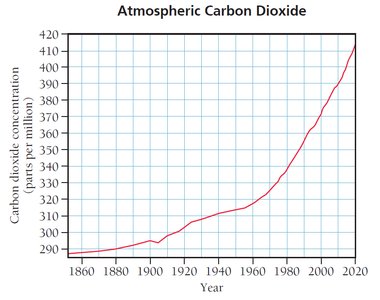
Graphical analysis is essential for visualizing trends (e.g., atmospheric CO2 concentration over time).
Additional info: This guide covers the foundational concepts of matter, measurement, and problem solving in chemistry, including the scientific method, classification of matter, physical and chemical changes, energy, units, significant figures, and data interpretation. It is designed for introductory college-level general chemistry students.
