 Indietro
Chapter 1: Matter, Measurement, and Problem Solving – General Chemistry Study Notes
Guida di studio - Note intelligenti
 Appunti personalizzati basati sui tuoi materiali, ampliati con definizioni chiave, esempi e contesto.
Chapter 1: Matter, Measurement, and Problem Solving
Chemistry and the Nature of Matter
Chemistry is the science that seeks to understand the behavior of matter by studying the properties and interactions of atoms and molecules. Matter is anything that occupies space and has mass, and it can be classified according to its composition and physical state.
Atoms: The smallest units of matter that retain the properties of an element.
Molecules: Groups of atoms bonded together, which can be identical or different.
Classification by Composition: Matter can be an element (identical atoms), a compound (different atoms bonded), or a mixture (two or more substances combined).
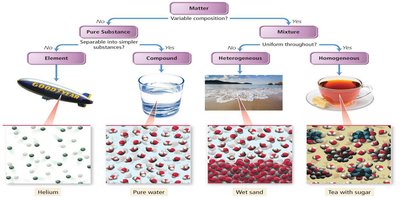
Pure Substances and Mixtures
A pure substance contains only one type of particle (atom or molecule), while mixtures contain two or more different particles. Mixtures can be classified as homogeneous (uniform throughout, also called solutions) or heterogeneous (not uniform).
Homogeneous Mixture: Uniform composition, e.g., sugar water.
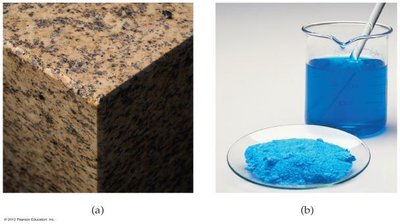
Heterogeneous Mixture: Non-uniform composition, e.g., granite, sand.
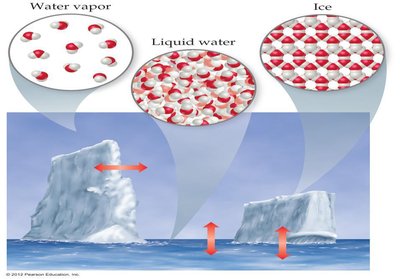
States of Matter
Matter exists in three primary states: solid, liquid, and gas. Each state is characterized by the arrangement and spacing of its molecules, which affects its properties.
Solid: Molecules are closely packed in a fixed structure.
Liquid: Molecules are close but can move past each other.
Gas: Molecules are far apart and move freely.
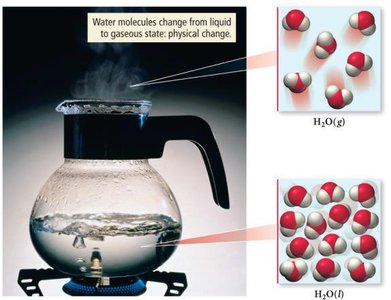
Physical vs. Chemical Changes
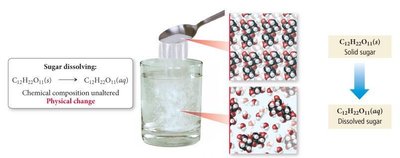
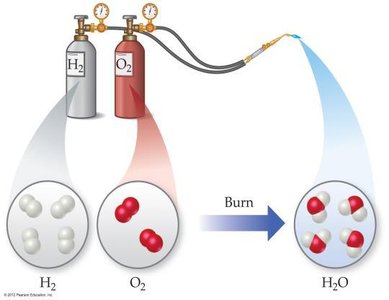
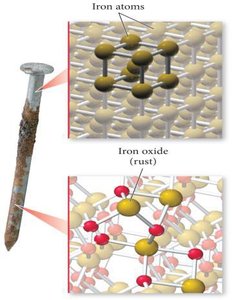
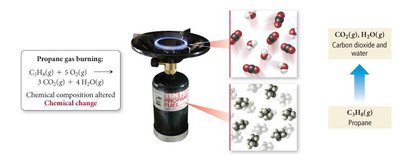
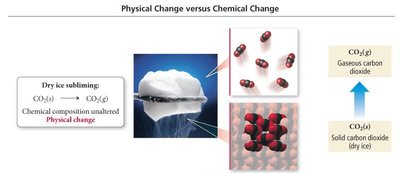
Physical changes alter the form or appearance of matter without changing its composition. Chemical changes (reactions) result in the formation of new substances through the rearrangement of atoms.
Physical Change: Change of state (e.g., boiling water), dissolving substances.
Chemical Change: Formation of new substances (e.g., rusting iron, burning hydrogen).
Units of Measurement and Metric System
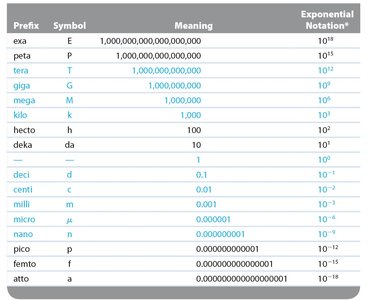
Measurements in chemistry use the metric system and SI units. Common base units include meter (length), gram (mass), and liter (volume). Prefixes are used to indicate multiples or fractions of base units.
Base Units: Meter (m), gram (g), liter (L).
Metric Prefixes: kilo (k, ), centi (c, ), milli (m, ), micro (μ, ), nano (n, ), mega (M, ).

Volume and Its Measurement
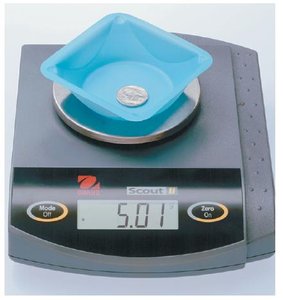
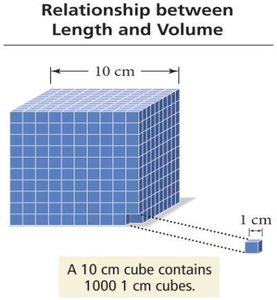
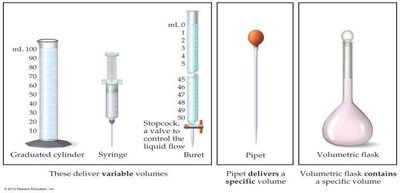
Volume is the amount of space occupied by a substance. The base unit is the liter (L), and 1 mL is equivalent to 1 cm3. Measuring devices vary in precision.
Relationship: 1 dm3 = 1 L; 1 cm3 = 1 mL.
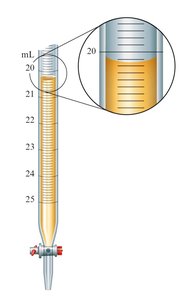
Precision: Different devices (graduated cylinder, buret, pipet, volumetric flask) offer varying degrees of accuracy.
Temperature Scales
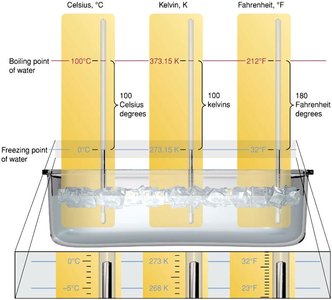
Temperature is measured using Celsius (°C), Kelvin (K), and Fahrenheit (°F) scales. The Kelvin scale is the SI unit for temperature.
Conversion Formulas:
Significant Figures and Measurement Reliability
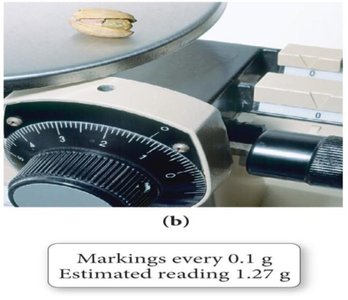
Significant figures reflect the precision of a measurement. The number of significant figures depends on the instrument and the method used.
Rules: All nonzero digits are significant; zeros between nonzero digits are significant; leading zeros are not significant; trailing zeros are significant if a decimal point is present.
Exact Numbers: Counting numbers and defined quantities have infinite significant figures.
Significant Figures in Calculations
When performing calculations, the result must reflect the precision of the measured quantities.
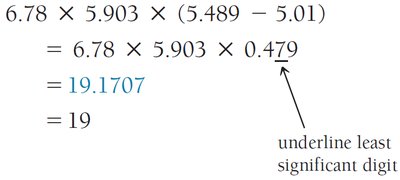
Multiplication/Division: The result has the same number of significant figures as the factor with the fewest significant figures.
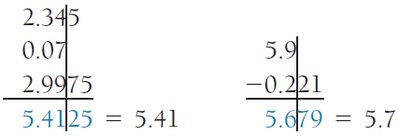
Addition/Subtraction: The result has the same number of decimal places as the quantity with the fewest decimal places.

Accuracy vs. Precision
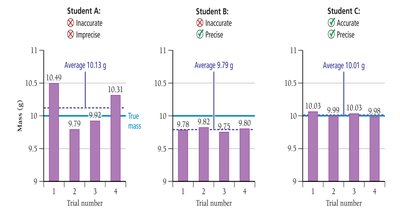
Accuracy describes how close a measurement is to the true value, while precision describes how close repeated measurements are to each other.
Accurate: Close to the true value.
Precise: Consistent results upon repetition.
Dimensional Analysis and Unit Conversions
Dimensional analysis is a systematic method for converting between units using conversion factors. Units are treated algebraically and can be multiplied, divided, and canceled.
General Form: Information given × conversion factor(s) = information sought.
Example:

Units Raised to a Power
When converting units raised to a power, both the number and the unit must be raised to the power.
Example:
Percentage, ppm, and ppb as Conversion Factors
Percentages, parts per million (ppm), and parts per billion (ppb) are used as conversion factors to express the relationship between parts and the whole.
Percentage:
Example: Air is 21% oxygen by volume.
Intensive and Extensive Properties
Properties of matter can be classified as intensive or extensive. Intensive properties do not depend on the amount of substance, while extensive properties do.
Intensive Property: Density, temperature.
Extensive Property: Mass, volume.
Derived Units: Volume and Density
Derived units are combinations of base units. Volume is measured in cubic centimeters (cm3) or liters (L), and density is the ratio of mass to volume.
Density Formula:
Units: g/cm3, g/mL, kg/m3
Density and Temperature: Density decreases as temperature increases due to expansion.
Interpreting Graphs and Data
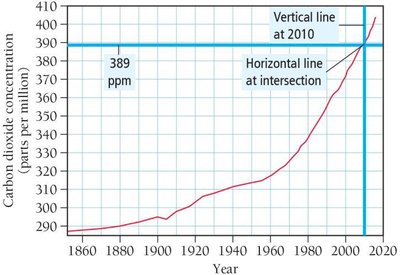
Analyzing scientific data is a key skill. For example, the mass ratios of hydrogen and oxygen produced from water decomposition are consistent, illustrating the law of definite proportions. Trends in atmospheric CO2 concentration can be visualized and quantified using graphs.
Additional info:
All equations are provided in LaTeX format for clarity and academic rigor.
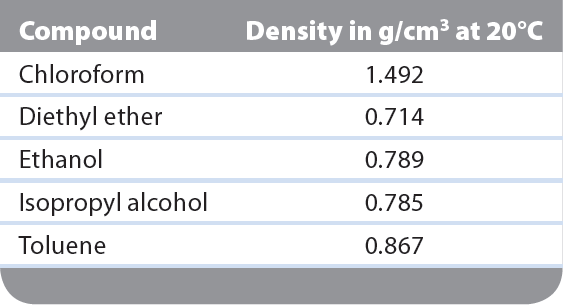
Tables are recreated in HTML where relevant, such as the density table.
Images are included only when directly relevant to the explanation.
