 Indietro
Chapter 2: The Components of Matter – Structured Study Notes
Guida di studio - Note intelligenti
 Appunti personalizzati basati sui tuoi materiali, ampliati con definizioni chiave, esempi e contesto.
The Components of Matter
Elements, Compounds, and Mixtures: An Atomic Overview
This section introduces the fundamental types of matter: elements, compounds, and mixtures. Understanding their differences is essential for classifying substances and predicting their behavior in chemical reactions.
Element: The simplest type of substance with unique physical and chemical properties. Consists of only one type of atom and cannot be broken down by physical or chemical means.
Molecule: A structure of two or more atoms chemically bound together, acting as an independent unit.
Compound: A substance composed of two or more elements chemically combined in fixed ratios.
Mixture: A physical combination of two or more elements and/or compounds, which can be separated by physical means.
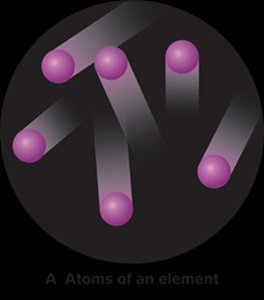
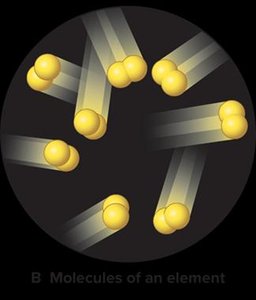
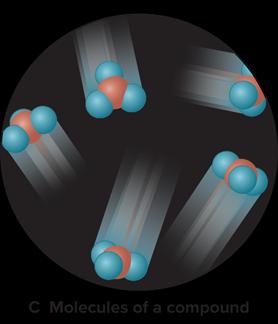
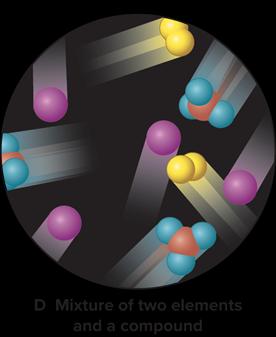
Example: Sodium (element), chlorine (element), and sodium chloride (compound) have distinct properties.
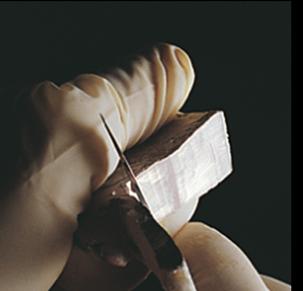
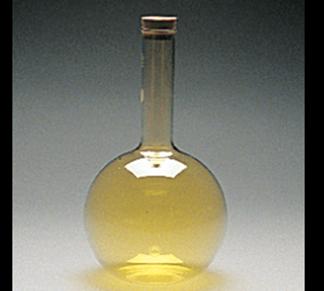
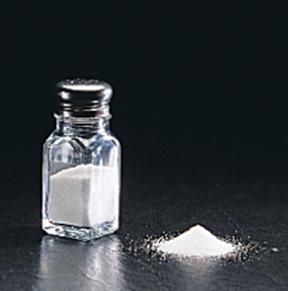
Properties of Elements, Compounds, and Mixtures
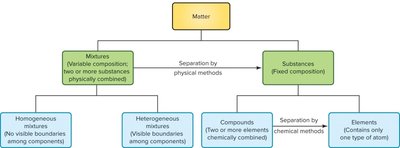
Elements and compounds have fixed compositions, while mixtures have variable compositions. Mixtures can be classified as heterogeneous or homogeneous.
Heterogeneous mixture: Visible boundaries between components; composition varies throughout.
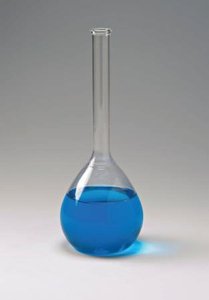
Homogeneous mixture (solution): No visible boundaries; uniform composition.
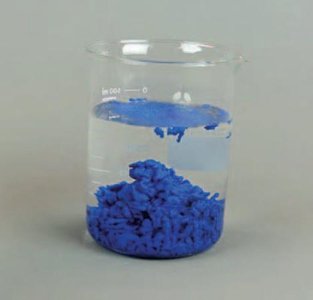
Separation Techniques for Mixtures
Mixtures can be separated by physical methods based on differences in properties:
Filtration: Separates based on particle size.
Crystallization: Based on solubility differences.
Distillation: Based on volatility.
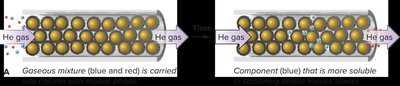
Chromatography: Based on solubility in a solvent versus a stationary phase.
Classification of Matter
Matter is classified as either a mixture or a substance. Substances are further divided into elements and compounds.
The Mass Laws
Three fundamental mass laws govern chemical reactions:
Name | Explanation/Example |
|---|---|
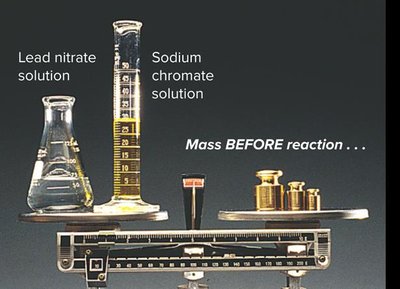
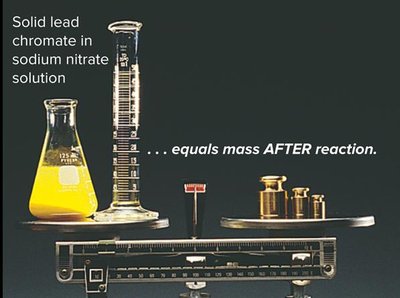
Law of Mass Conservation | The total mass of substances does not change during a chemical reaction. |
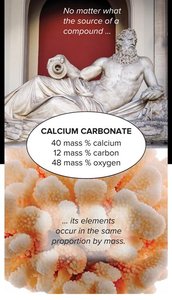
Law of Definite Composition | A compound is composed of the same elements in the same parts by mass. |
Law of Multiple Proportions | In two compounds of the same elements, the masses of one element which combine with a fixed mass of the other can be expressed as a ratio of small whole numbers. |
Dalton’s Atomic Theory
Dalton’s atomic theory explains the mass laws and the nature of chemical reactions:
All matter consists of atoms, indivisible particles that cannot be created or destroyed.
Atoms of one element cannot be converted into atoms of another element.
Atoms of an element are identical in mass and properties, and different from those of other elements.
Compounds result from the chemical combination of specific ratios of atoms of different elements.
Development of the Nuclear Atom Model
Key experiments led to the modern understanding of atomic structure:
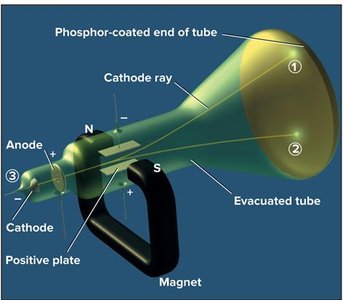
Cathode Ray Experiment: Showed that atoms contain negatively charged particles (electrons).
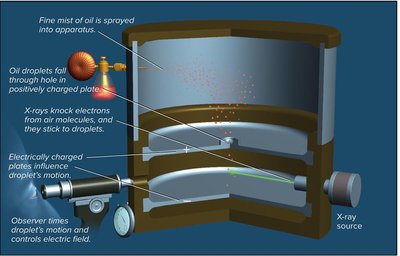
Millikan’s Oil-Drop Experiment: Measured the charge of the electron.
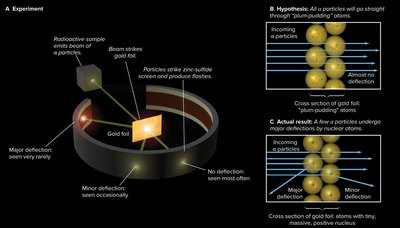
Rutherford’s α-Scattering Experiment: Revealed the existence of a dense, positively charged nucleus.
Structure and Properties of the Atom
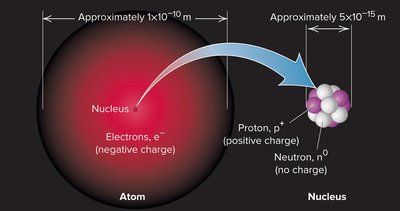
An atom consists of a central nucleus (protons and neutrons) surrounded by electrons. The nucleus contains most of the atom’s mass but occupies a tiny fraction of its volume.
Proton (p+): Positive charge, located in nucleus.
Neutron (n0): No charge, located in nucleus.
Electron (e−): Negative charge, outside nucleus.
Name (Symbol) | Charge | Mass (amu) | Location |
|---|---|---|---|
Proton (p+) | +1 | 1.00727 | Nucleus |
Neutron (n0) | 0 | 1.00866 | Nucleus |
Electron (e−) | −1 | 0.00054858 | Outside Nucleus |
Atomic Symbol, Number, and Mass
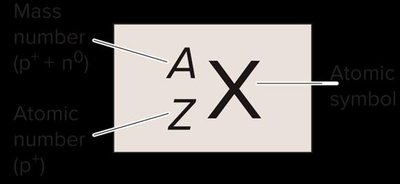
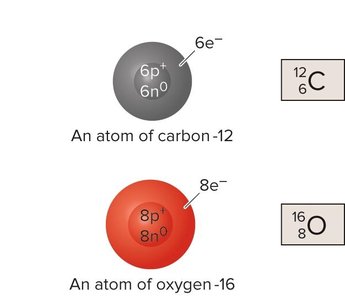
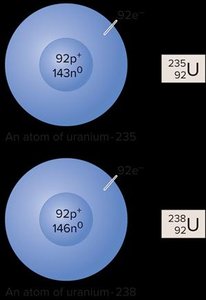
Atoms are described by their atomic symbol (X), atomic number (Z), and mass number (A):
Atomic number (Z): Number of protons in the nucleus.
Mass number (A): Sum of protons and neutrons.
Number of neutrons (N): N = A − Z.
Isotopes
Isotopes are atoms of the same element with the same number of protons but different numbers of neutrons, resulting in different mass numbers.
Mass Spectrometry and Atomic Mass
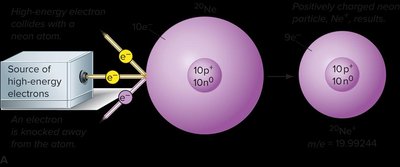
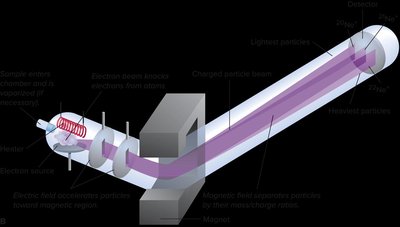
Mass spectrometry measures the relative masses and abundances of isotopes, allowing calculation of atomic mass as a weighted average:
Atomic mass:
The Periodic Table and Classification of Elements
The periodic table organizes elements by increasing atomic number and groups them by similar properties. Elements are classified as metals, metalloids, or nonmetals.
Type | Location | Properties |
|---|---|---|
Metals | Left and middle portions | Shiny, good conductors, malleable, ductile |
Metalloids | Along staircase line | Shiny but brittle, semiconductors |
Nonmetals | Upper-right (except H) | Gases or dull solids, poor conductors |
Formation of Ionic and Covalent Compounds
Ionic compounds form by transfer of electrons from metals to nonmetals, resulting in ions. Covalent compounds form by sharing electrons between nonmetals.
Polyatomic Ions and Chemical Formulas
Polyatomic ions are groups of covalently bonded atoms with an overall charge. Chemical formulas indicate the type and number of each atom in a substance.
Naming Ionic and Covalent Compounds
Systematic naming rules are used for binary ionic compounds, compounds with polyatomic ions, acids, and binary covalent compounds. The name reflects the composition and structure of the compound.
Type | Naming Rule | Example |
|---|---|---|
Binary ionic (one ion) | Metal name + nonmetal root + -ide | BaF2: barium fluoride |
Binary ionic (multiple ions) | Metal name (Roman numeral) + nonmetal root + -ide | SnO: tin(II) oxide |
Polyatomic ions | Metal name + polyatomic ion name | Na2CO3: sodium carbonate |
Hydrated compounds | Metal name + nonmetal root + -ide + prefix + hydrate | CoCl2·6H2O: cobalt(II) chloride hexahydrate |
Molecular Masses and Formula Masses
The molecular mass is the sum of atomic masses in a molecule. For ionic compounds, the term formula mass is used.
Molecular mass:
Example (H2O): amu
Summary Table: Common Monatomic and Polyatomic Ions
Charge | Cation Formula | Name | Anion Formula | Name |
|---|---|---|---|---|
1+ | H+ | Hydrogen | F− | Fluoride |
2+ | Mg2+ | Magnesium | O2− | Oxide |
3+ | Al3+ | Aluminum | N3− | Nitride |
Polyatomic Ion | Name |
|---|---|
NH4+ | Ammonium |
CO32− | Carbonate |
NO3− | Nitrate |
SO42− | Sulfate |
Numerical Prefixes for Covalent Compounds
Prefixes indicate the number of atoms in binary covalent compounds:
1: mono-
2: di-
3: tri-
4: tetra-
5: penta-
6: hexa-
7: hepta-
8: octa-
9: nona-
10: deca-
Summary
This chapter provides a comprehensive overview of the components of matter, their classification, properties, and the rules for naming and representing chemical substances. Mastery of these concepts is foundational for further study in general chemistry.
