 Indietro
Chapter 3 – Matter: Properties & Changes (General Chemistry Study Notes)
Guida di studio - Note intelligenti
 Appunti personalizzati basati sui tuoi materiali, ampliati con definizioni chiave, esempi e contesto.
Chapter 3 – Matter: Properties & Changes
What is Chemistry?
Chemistry is the scientific study of matter and its properties, composition, and changes. It explores the substances that make up the universe, their interactions, and the energy involved in these processes.
Matter and Its Characteristics
Matter is anything that has mass and occupies space. It is present in all living and nonliving things. Examples include solids, liquids, and gases. Things that are not matter include light, heat, and sound, as they do not have mass or occupy space.
Types of Changes in Matter
Matter can undergo two main types of changes:
Physical Change: Alters physical properties without changing the substance's identity. Examples: melting, boiling, cutting.
Chemical Change: Results in the formation of new substances with different properties. Examples: rusting, burning, reacting.
Properties of Matter
A property is a characteristic of matter that can be observed or measured. Properties are classified as:
Extensive Properties: Depend on the amount of matter present (e.g., mass, volume).
Intensive Properties: Depend on the type of matter, not the amount (e.g., density, color, boiling point).
Properties can be used to identify a substance.
Substances and Their Properties
A substance has a definite composition and a unique set of properties. Every sample of the same substance has identical properties.
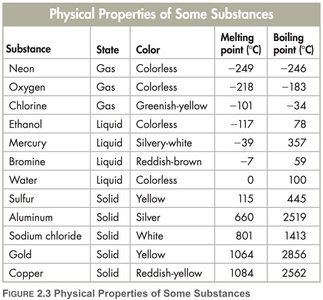
Table: Physical Properties of Some Substances
Substance | State | Color | Melting Point (°C) | Boiling Point (°C) |
|---|---|---|---|---|
Neon | Gas | Colorless | -249 | -246 |
Oxygen | Gas | Colorless | -218 | -183 |
Chlorine | Gas | Greenish-yellow | -101 | -34 |
Ethanol | Liquid | Colorless | -117 | 78 |
Mercury | Liquid | Silvery-white | -39 | 357 |
Bromine | Liquid | Reddish-brown | -7 | 59 |
Water | Liquid | Colorless | 0 | 100 |
Sulfur | Solid | Yellow | 115 | 445 |
Aluminum | Solid | Silver | 660 | 2519 |
Sodium chloride | Solid | White | 801 | 1413 |
Gold | Solid | Yellow | 1064 | 2856 |
Copper | Solid | Reddish-yellow | 1084 | 2562 |
Physical vs. Chemical Properties
Physical properties can be observed without changing the substance's identity (e.g., color, melting point, density). Chemical properties are observed as the substance undergoes a chemical change (e.g., flammability, ability to rust).
States of Matter
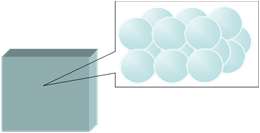
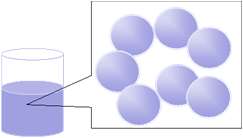
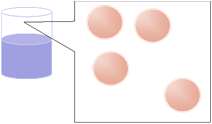
Matter exists in three primary states: solid, liquid, and gas. Each state has distinct characteristics:
Solid: Definite shape and volume; particles are closely packed.
Liquid: Definite volume but indefinite shape; particles are less tightly packed.
Gas: Indefinite shape and volume; particles are far apart and move freely.
Vapor
Vapor refers to the gaseous form of a substance that is usually a liquid or solid at room temperature, such as water vapor.
Physical Changes
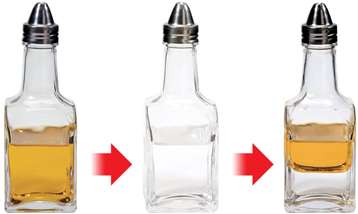
A physical change alters the physical properties of a substance but does not change its chemical identity. Physical changes can be reversible (e.g., melting, freezing) or irreversible (e.g., cutting, breaking).
Mixtures
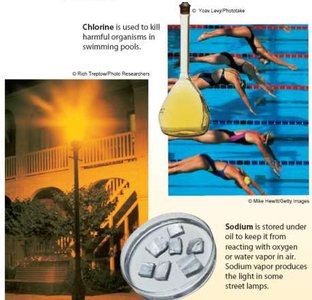
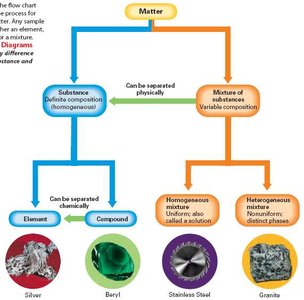
A mixture is a physical blend of two or more substances. Mixtures can be:
Homogeneous: Uniform composition throughout; also called a solution.
Heterogeneous: Non-uniform composition; distinct phases are visible.
A phase is any part of a mixture with uniform composition and properties.
Separation of Mixtures
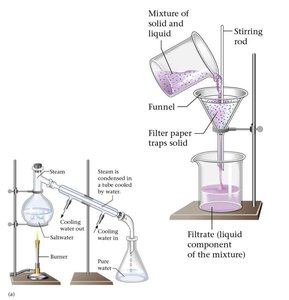
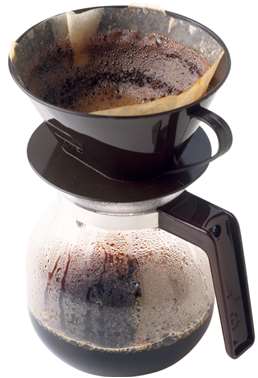
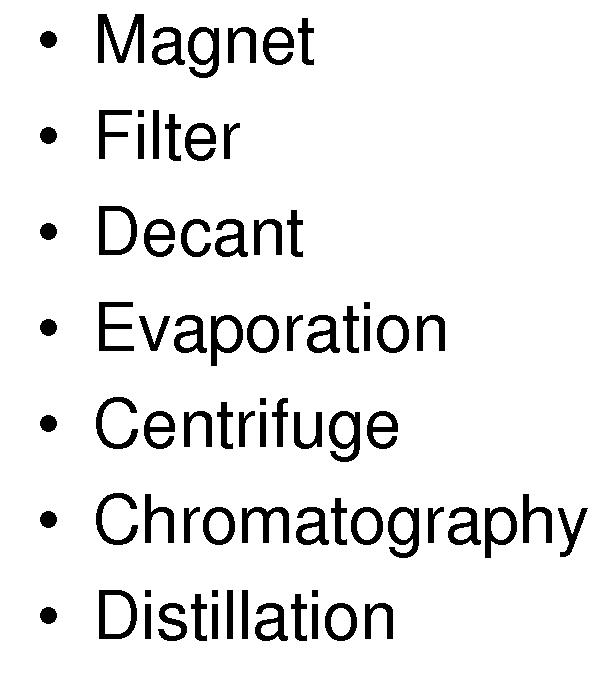
Mixtures can be separated by physical means, such as:
Filtration: Separates a solid from a liquid.
Distillation: Separates substances based on differences in boiling points.
Elements and Compounds
Elements are the simplest form of matter with a unique set of properties. Each element is represented by a chemical symbol, often derived from its Latin name.
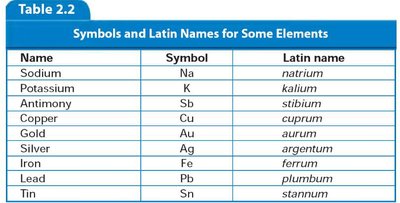
Name | Symbol | Latin Name |
|---|---|---|
Sodium | Na | natrium |
Potassium | K | kalium |
Antimony | Sb | stibium |
Copper | Cu | cuprum |
Gold | Au | aurum |
Silver | Ag | argentum |
Iron | Fe | ferrum |
Lead | Pb | plumbum |
Tin | Sn | stannum |
Compounds are substances composed of two or more elements chemically bonded in a fixed ratio. They can only be broken down into simpler substances by chemical means.
Example: Water (H2O) is a compound made of hydrogen and oxygen.
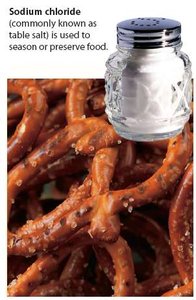
The properties of a compound are vastly different from the properties of the elements within the compound.
Chemical Reactions
A chemical change involves the rearrangement of atoms to form new substances. The substances present at the start of a reaction are called reactants, and those formed at the end are products.
Precipitate: A solid that forms and settles out of a liquid mixture.
Catalyst: A substance that speeds up a reaction without being consumed.
Signs of a chemical reaction include color change, gas production, temperature change, odor production, light emission, and formation of a precipitate.
Writing Chemical Equations
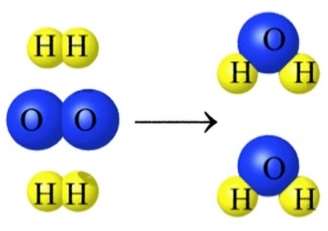
Chemical equations represent reactions using symbols and formulas. For example:
Hydrogen gas and oxygen gas react to form water:
Octane combustion:
Law of Conservation of Matter
The law of conservation of matter states that mass is always conserved in a chemical reaction. It is neither created nor destroyed.
Sample Problems
If 8.0 g of hydrogen reacts with 64.0 g of oxygen, how many grams of water will be formed?
If 228.2 g of octane reacts and forms 709.2 g of carbon dioxide and 324.4 g of water, how many grams of oxygen reacted?
Classification Practice
Determine if each is an element, compound, homogeneous mixture, or heterogeneous mixture:
Tin foil: Element
Copper pipe: Element
Concrete: Heterogeneous mixture
Carbon tetrachloride: Compound
Sports drink: Homogeneous mixture
Applications and Examples
Additional info: These notes expand on the original content by providing definitions, examples, and academic context for each topic, ensuring completeness and clarity for exam preparation.
