 Indietro
Chapter 3: Nomenclature, Elements, and Compounds – General Chemistry Study Notes
Guida di studio - Note intelligenti
 Appunti personalizzati basati sui tuoi materiali, ampliati con definizioni chiave, esempi e contesto.
Chapter 3: Nomenclature, Elements, and Compounds
Introduction to Compounds and Chemical Bonds
Elements combine to form compounds, which possess properties distinct from their constituent elements. Compounds are held together by chemical bonds, which are forces of attraction between atoms, primarily due to interactions between protons and electrons.
Elements are pure substances consisting of only one type of atom.
Compounds are substances composed of two or more different elements chemically bonded together.
Chemical bonds can be ionic (transfer of electrons) or covalent (sharing of electrons).
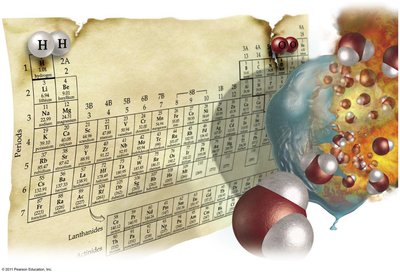
Properties of Elements vs. Compounds
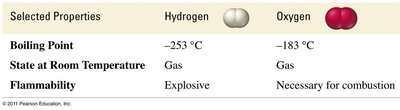
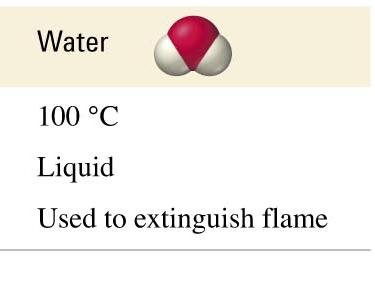
The properties of compounds are often drastically different from those of the elements that compose them. For example, hydrogen and oxygen are both gases with distinct properties, but when combined, they form water, a liquid with unique characteristics.
Selected Properties | Hydrogen | Oxygen | Water |
|---|---|---|---|
Boiling Point | −253 °C | −183 °C | 100 °C |
State at Room Temperature | Gas | Gas | Liquid |
Flammability | Explosive | Necessary for combustion | Used to extinguish flame |
Chemical Bonds
Types of Chemical Bonds
Chemical bonds are the attractive forces that hold atoms together in compounds. The two main types are:
Ionic bonds: Formed by the transfer of electrons from one atom to another, resulting in oppositely charged ions that attract each other. Typically occur between metals and nonmetals.
Covalent bonds: Formed when two atoms share electrons. Typically occur between nonmetals.
Bond Stability
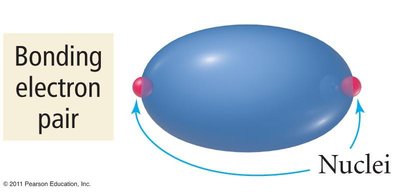
The most stable arrangement of atoms in a molecule is the one with the lowest potential energy. Atoms adjust their positions to achieve this stability.

Formulas and Types of Compounds
Types of Chemical Formulas
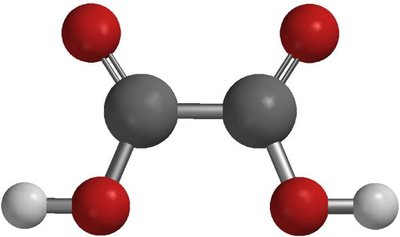
Empirical formula: Shows the simplest whole-number ratio of atoms in a compound. Example: The empirical formula for oxalic acid is CHO2.
Molecular formula: Shows the actual number of atoms of each element in a molecule. Example: The molecular formula for oxalic acid is C2H2O4.
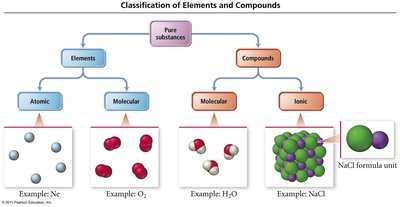
Classification of Elements and Compounds
Pure substances can be classified as elements or compounds. Elements can be atomic or molecular, while compounds can be molecular or ionic.
Atomic elements: Exist as single atoms (e.g., Ne).
Molecular elements: Exist as molecules composed of two or more atoms of the same element (e.g., O2).
Molecular compounds: Composed of molecules made only of nonmetals (e.g., H2O).
Ionic compounds: Composed of cations and anions (e.g., NaCl).
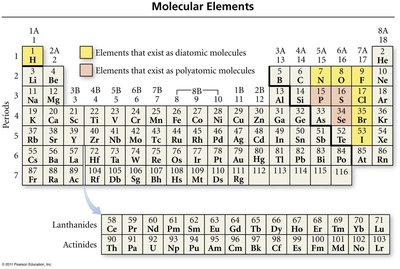
Molecular Elements
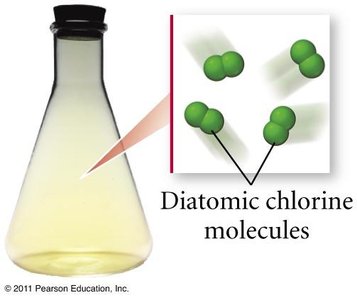
Certain elements exist naturally as molecules rather than individual atoms. The most common are the diatomic elements (H2, N2, O2, F2, Cl2, Br2, I2), often remembered by the "rule of 7's." Some elements form polyatomic molecules (e.g., P4, S8).
Naming Ionic Compounds
General Rules for Naming Ionic Compounds
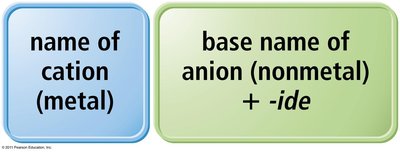
Ionic compounds are named by identifying the cation (usually a metal) and the anion (usually a nonmetal or polyatomic ion).
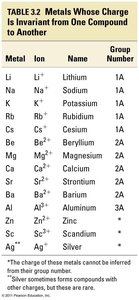
If the metal forms only one type of ion (invariant charge), simply use the metal name.
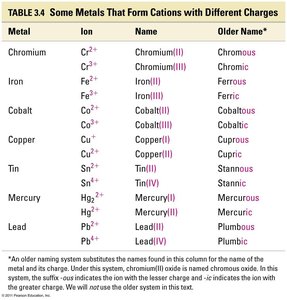
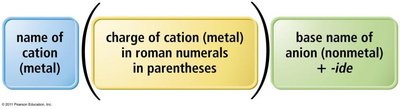
If the metal can form more than one type of ion (variable charge), indicate the charge with a Roman numeral in parentheses.
The anion is named by changing the ending of the nonmetal to -ide or by using the name of the polyatomic ion.
Examples
KCl: potassium chloride
MgBr2: magnesium bromide
Fe2S3: iron(III) sulfide
Polyatomic Ions and Compounds
Polyatomic Ions
Polyatomic ions are ions composed of two or more atoms covalently bonded, carrying a net charge. Common examples include sulfate (SO42−), nitrate (NO3−), and ammonium (NH4+).
Names and charges of polyatomic ions do not change in compounds.
Patterns exist for naming related ions (e.g., -ate, -ite, per-, hypo- prefixes and suffixes).
Hydrates
Definition and Naming
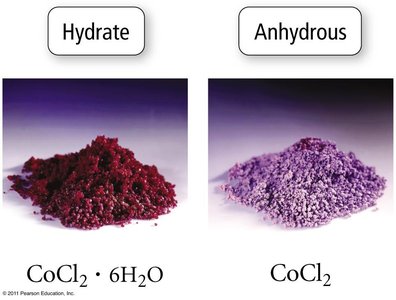
Hydrates are ionic compounds that include a specific number of water molecules per formula unit. The water can be removed by heating, resulting in an anhydrous compound.
The number of water molecules is indicated by a prefix (e.g., hexahydrate for six waters).
Example: CoCl2·6H2O is cobalt(II) chloride hexahydrate.
Naming Molecular (Covalent) Compounds
Rules for Naming Binary Molecular Compounds
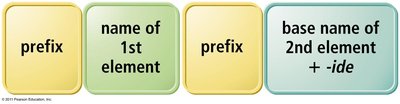
Binary molecular compounds are composed of two nonmetals. Naming uses prefixes to indicate the number of each atom present.
The first element is named in full; the second element is named with an -ide suffix.
Prefixes (mono-, di-, tri-, tetra-, etc.) indicate the number of atoms. Mono- is not used for the first element.
Examples
BF3: boron trifluoride
NO2: nitrogen dioxide
N2O5: dinitrogen pentoxide
Naming Acids
Types of Acids
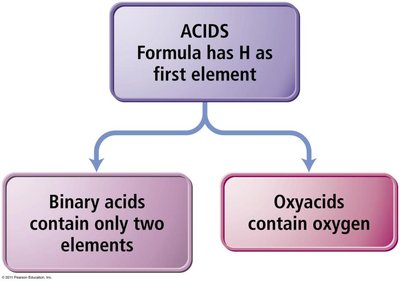
Acids are molecular compounds that release H+ ions in water. They are classified as binary acids (H and one other element) or oxyacids (H, O, and another element).
Naming Binary Acids
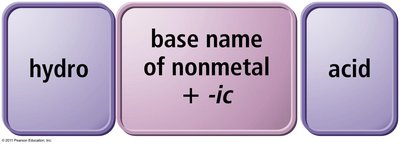
Prefix "hydro-" + base name of nonmetal + "-ic" + "acid"
Example: HCl(aq) is hydrochloric acid.
Naming Oxyacids
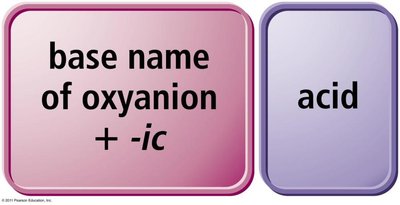
If the polyatomic ion ends in -ate, change to -ic acid (e.g., H2SO4: sulfuric acid).
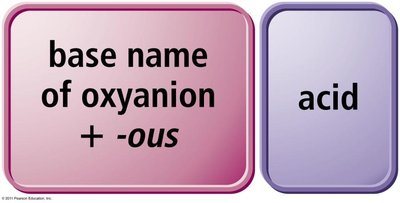
If the polyatomic ion ends in -ite, change to -ous acid (e.g., H2SO3: sulfurous acid).
Introduction to Organic Compounds
Carbon Bonding
Carbon atoms form four covalent bonds and can create a vast array of structures, including chains and rings. Organic compounds are primarily based on covalent bonding of carbon with other elements, especially hydrogen, oxygen, and nitrogen.
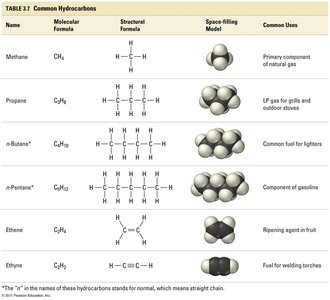
Summary Table: Common Hydrocarbons
Name | Molecular Formula | Structural Formula | Space-filling Model | Common Uses |
|---|---|---|---|---|
Methane | CH4 | H | H–C–H | H | • | Primary component of natural gas |
Propane | C3H8 | CH3CH2CH3 | • | LP gas for grills and outdoor stoves |
n-Butane | C4H10 | CH3CH2CH2CH3 | • | Common fuel for lighters |
n-Pentane | C5H12 | CH3CH2CH2CH2CH3 | • | Component of gasoline |
Ethene | C2H4 | H2C=CH2 | • | Ripening agent in fruit |
Ethylene | C2H2 | HC≡CH | • | Fuel for welding torches |
Additional info: This guide covers the essential nomenclature and classification concepts for elements and compounds, including ionic and covalent bonding, molecular and ionic compounds, hydrates, acids, and an introduction to organic compounds. For further study, refer to the periodic table and practice naming and writing formulas for a variety of compounds.
